


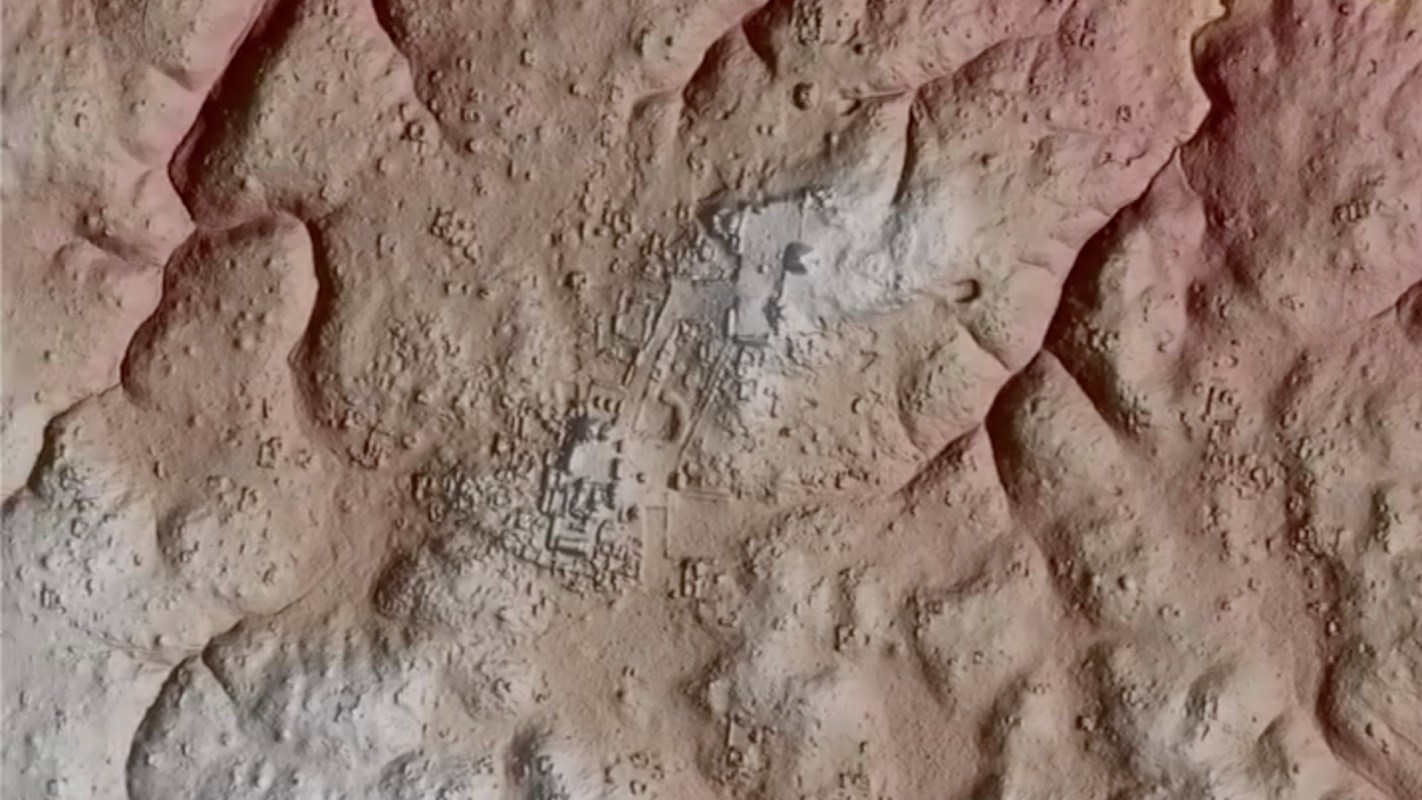
Researchers studying ancient wall markings in Guatemala have identified something previously unknown in Maya science: a named astronomer and mathematician.
The person named in the inscriptions is Sak Tahn Waax, or "White-chested Fox," giving scholars an individual to associate with scientific work from one of the ancient world's most sophisticated civilizations.
What happened?
At the San Bartolo-Xultun archaeological site near Guatemala's border with Mexico, archaeologists deciphered hieroglyphs that pointed to a Maya scholar connected to mathematical and astronomical writings, according to CBS News.
Those murals and inscriptions date from roughly 400 BC to 900 AD.
According to CBS News, Guatemala Culture Minister Luis Mendez said researchers at Xultun found a "complete mathematical and astronomical formula" by Sak Tahn Waax, a name rendered as White-chested Fox.
The ministry said the breakthrough was "made possible by the epigraphic analysis of more than 50 mathematical and astronomical microtexts written on the wall."
TCD Picks » Quince Spotlight
💡These best-sellers from Quince deliver affordable, sustainable luxury for all




According to CBS News, researchers relied on drawings, photographs, and digitally enhanced scans to clarify 11 hieroglyphs that had not previously been fully understood.
Along with the name, the team also identified, according to CBS News, calculations and tables organized around astronomical and calendrical time units.
Why does it matter?
For researchers, the find means this body of ancient scientific material is no longer entirely anonymous.
Rather than only knowing that the Maya tracked time, stars, and calendars with extraordinary precision, scholars can now connect at least one set of ideas to a specific individual.
What's being done?
This discovery was made possible by a combination of traditional archaeology and newer imaging tools.
Researchers paired on-site documentation with digital enhancement to make faded inscriptions readable.
Guatemala has also continued directing attention to major Maya sites. The same ministry recently announced, according to CBS News, that archaeologists had uncovered Maya city remains in northern Guatemala dating back nearly 3,000 years, while other researchers in the region have used laser-based scanning from aircraft to detect ruins beneath dense jungle canopies.
As more inscriptions are scanned and reexamined, researchers may be able to identify additional named scholars and better understand how ancient Maya knowledge was taught, shared, and recorded.
Mendez said the glyphs appeared in "a context where art was intertwined with science, mathematics, astronomy and everyday life," while the ministry said the discovery was "made possible by the epigraphic analysis of more than 50 mathematical and astronomical microtexts written on the wall."

Get TCD's free newsletters for easy tips, smart advice, and a chance to earn $5,000 toward home upgrades. To see more stories like this one, change your Google preferences here.






