


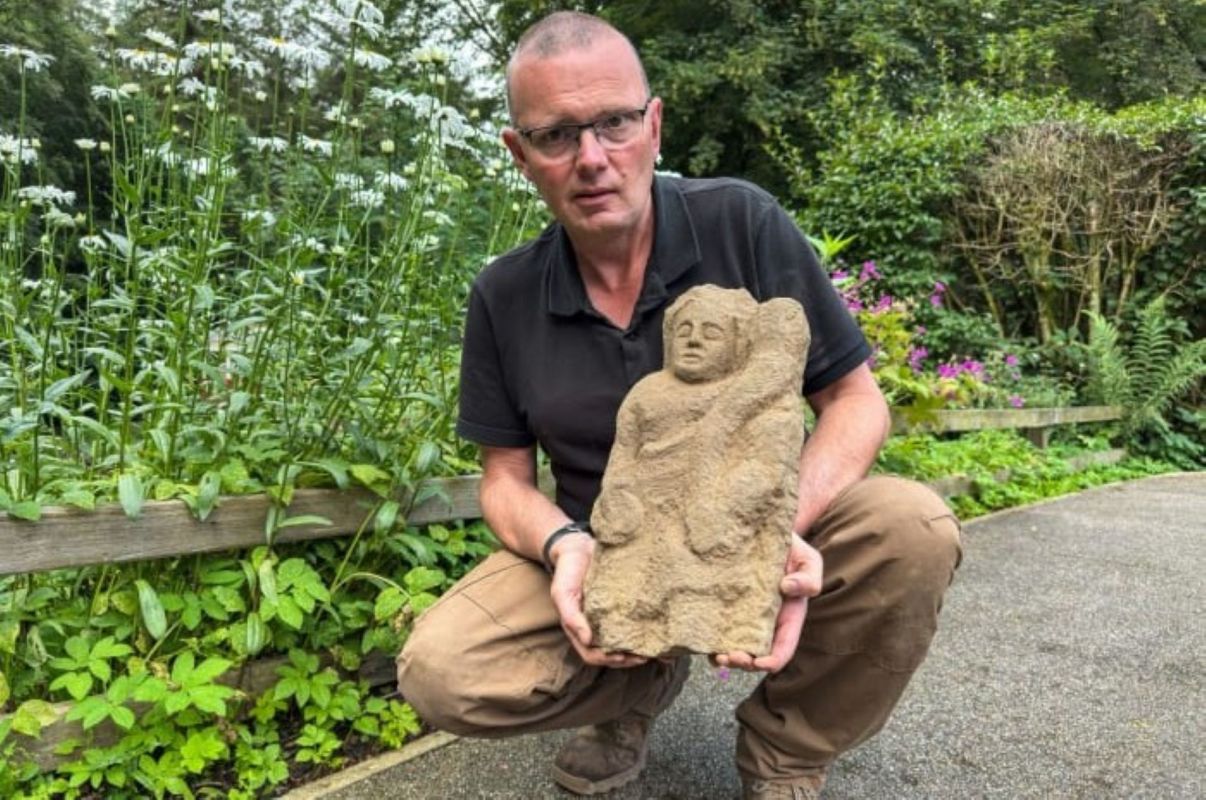
A slightly rounded flagstone at a Roman fort in northern England turned out to be hiding something extraordinary: a rare carving of a protective spirit that had been buried for around 1,600 years. The discovery offers a reminder of how ancient people sought luck, safety, and prosperity in their everyday lives.
What happened?
While digging in a fourth-century barrack at Vindolanda, the Roman fort near Hadrian's Wall, archaeologist Andrew Birley noticed a stone that stood out. Smithsonian Magazine reported that the flagstone had been covering a rare relief of a Roman genius, a guardian spirit linked to good fortune and prosperity for a person, household, or place.
Birley told the Telegraph's Dalya Alberge, "I gave it a bit of a pull, and this beautiful little carving came out perfectly preserved. What a lovely moment."
After consulting other scholars, Birley identified the sandstone figure as a genius. The relief, which measures about 17 inches tall and 9 inches wide, shows the spirit holding a cornucopia in one hand and a patera, or offering dish, in the other — symbols of abundance and ritual devotion.
Archaeologists believe the figurine was deliberately buried beneath the barrack floor. They think it may have previously belonged to a domestic shrine and was later reused in construction.
Why does it matter?
Although ancient writers mention genii regularly, carved examples are rare in Roman Britain, making a discovery at a frontier site like Vindolanda especially uncommon.
TCD Picks » Quince Spotlight
💡These best-sellers from Quince deliver affordable, sustainable luxury for all




The carving adds detail to historians' understanding of the beliefs held by soldiers and families living at the edge of the Roman Empire, where Vindolanda operated from roughly 85 C.E. into the ninth century.
Beyond walls, roads, and weapons, artifacts like this reveal what people hoped for in their homes and communities: protection, prosperity, and the comfort of feeling watched over.
What's being done?
Since the June 16 find, archaeologists have been stabilizing the relief ahead of exhibiting it at Vindolanda's museum. Sandstone carvings can remain fragile even after centuries spent underground.
The discovery also continues Vindolanda's long tradition of careful excavation, with digs underway there since the 1830s. Each new artifact helps researchers build a fuller picture of Roman life along Hadrian's Wall, one of Britain's most important archaeological landscapes.
Birley said that once he knew what the carving was, the discovery "somehow felt entirely appropriate." He added, "That's really what we're looking for as archaeologists — that connection with the real people who lived there."

Get TCD's free newsletters for easy tips, smart advice, and a chance to earn $5,000 toward home upgrades. To see more stories like this one, change your Google preferences here.






