


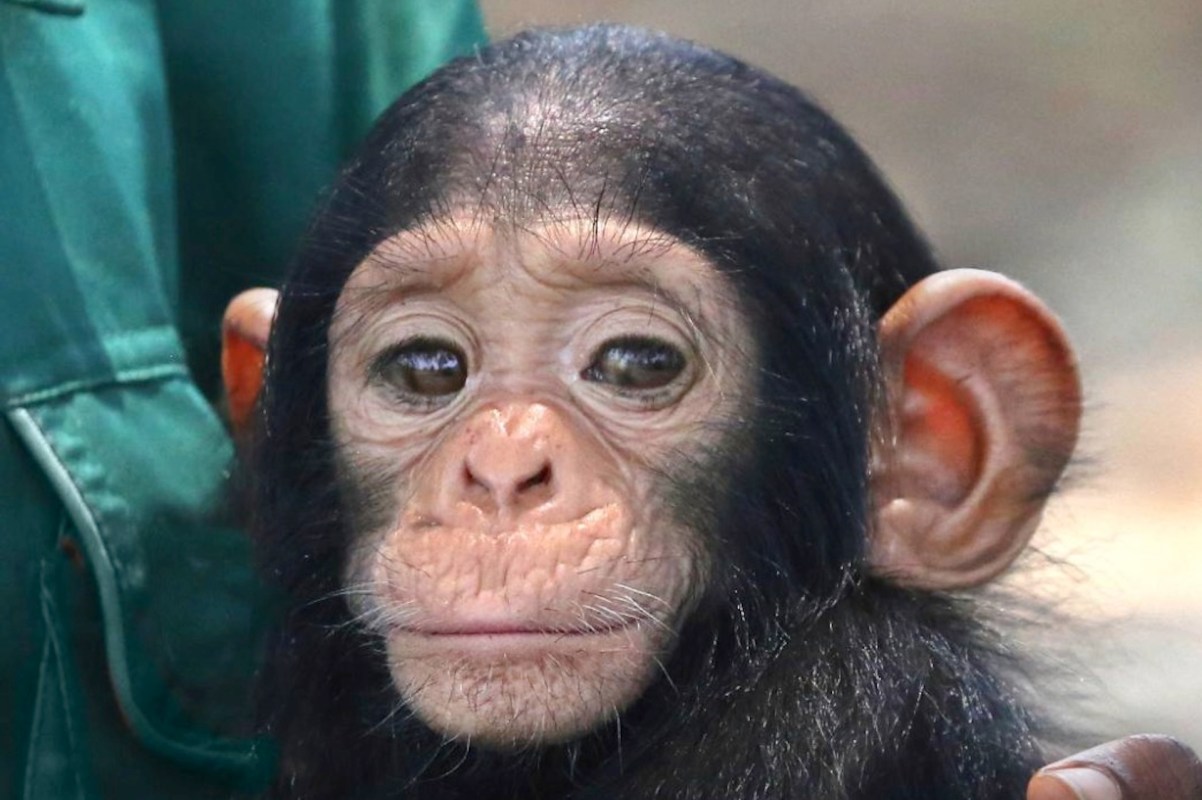
A baby chimpanzee rescued from the illegal wildlife trade in the Republic of the Congo is now safe at a sanctuary equipped to care for animals just like him.
Kuseka is now receiving expert care after authorities confiscated him near Dolisie and quickly transferred him to the sanctuary.
What happened?
A recent post on primatologist Jane Goodall's Instagram account shared the rescue of Kuseka, a baby chimpanzee who had been caught up in the illegal wildlife trade. According to the post, Congolese authorities confiscated the young animal near the city of Dolisie in the Republic of the Congo before sending him to the Jane Goodall Institute's Tchimpounga sanctuary.
The post announced, "Meet Kuseka, a baby chimpanzee who now gets to live with dignity at JGI's Tchimpounga sanctuary!"
After Kuseka reached the sanctuary, the organization said veterinarians began caring for him. The post added that authorities had viewed Tchimpounga as "the only place to go," which is why he was moved there so quickly.
Why does it matter?
Chimpanzees are highly intelligent, social animals that rely on close family groups to survive. When a baby chimp is pulled into the wildlife trade, the harm rarely ends with that one animal. Young chimps are often separated from their mothers and communities, and they can face trauma, stress, injury, and lasting health problems.
TCD Picks » Quince Spotlight
💡These best-sellers from Quince deliver affordable, sustainable luxury for all




Rescues like Kuseka's point to the ongoing threat of wildlife trafficking and the role local authorities can play in stopping it before more harm is done.
Conservation work often depends on a chain of coordinated action. Law enforcement must intervene, transport must be arranged, and trained animal care teams must be ready to respond. Without all three, confiscation does not necessarily lead to recovery.
The illegal wildlife trade directly affects living animals and creates ripple effects across ecosystems that depend on species such as chimpanzees.
What's being done?
Sanctuaries like Tchimpounga are a critical part of that response system. They provide rescued animals with medical treatment, safety, and a more stable environment after exploitation or trafficking. For baby chimps in particular, that support can be especially important in the first days after rescue.
Supporting reputable wildlife conservation groups, avoiding attractions or businesses that exploit wild animals, and reporting suspected illegal animal sales can help reduce demand for trafficking.
The post mentioned that July 14 was World Chimpanzee Day, and the Institute was trying to reach a goal of 200 new Chimpanzee Guardians — a way to support its efforts by symbolically adopting a chimp. While the day has come and gone, you can still adopt a chimp or support the organization in a number of ways.

Get TCD's free newsletters for easy tips, smart advice, and a chance to earn $5,000 toward home upgrades. To see more stories like this one, change your Google preferences here.







