


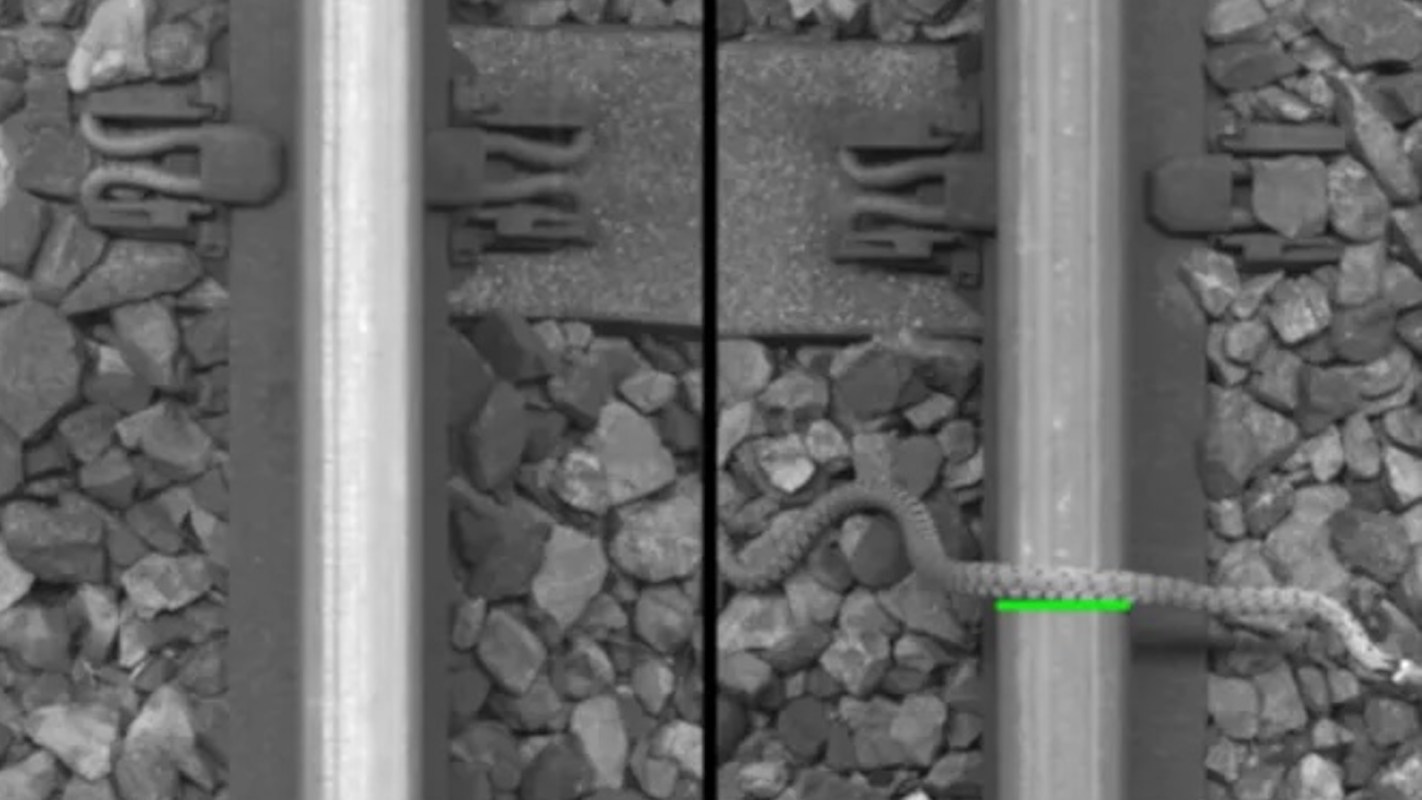
An artificial intelligence-powered inspection system on a London North Eastern Railway train, designed to spot damage on one of the U.K.'s busiest rail routes, recently flagged something far less mechanical: a snake.
What happened?
On July 3, LNER communications director Stuart Thomas posted about the incident on X: "This is an incredible picture. The AI track inspection system on an LNER train thought it had found a rail defect. Actually – it was a snake, slithering across the line."
This is an incredible picture.
— Stuart Thomas (@stuartthomas) July 3, 2026
The AI track inspection system on an @LNER train thought it had found a rail defect.
Actually - it was a snake, slithering across the line. 🐍😱 pic.twitter.com/v4EXfqFCRG
The picture was captured by an AI-based inspection tool fitted to some LNER trains, which is used to spot possible railway issues and pass that information to LNER and Network Rail, New Civil Engineer reported.
Explaining how the setup is used, an LNER spokesperson told the outlet, "We have the tech on a number of our trains and the info is fed back to Network Rail to help them proactively target areas for attention."
Network Rail indicated that the alert was consistent with the system's cautious design, rather than simply a failure. As a spokesperson told NCE, "It would be standard practice for this snake to be automatically raised in the way it has been, but not necessarily in error as a 'defect'."
Why does it matter?
The incident points to a reality about AI safety systems: they are often built to over-report rather than risk missing a legitimate problem.
TCD Picks » Quince Spotlight
💡These best-sellers from Quince deliver affordable, sustainable luxury for all




On a rail network, that can be a worthwhile trade-off if it helps crews identify hazards before they become safety issues or major disruptions.
The episode also points to a broader issue involving the built environment and the natural world. Railways, like roads and other human-made infrastructure, cut through landscapes used by animals, increasing the likelihood of unexpected encounters. Human expansion into natural spaces can intensify contact between people and wildlife.
Missed defects can result in delays, costly repairs, and safety concerns. These encounters can be dangerous for wildlife as well, especially when animals are forced to cross busy corridors that were never designed with them in mind.
What's being done?
Pointing to an April announcement, LNER said the technology is already helping limit disruption. In that description, Pandas and AIVR tools — pantograph damage assessment and automated video review systems — "constantly assess overhead line equipment (OLE) and track, reports any potential damage, and helps engineers proactively fix any issues before they can lead to severe disruption," per New Civil Engineer.
The company pointed to a January 2026 track defect in Cambridgeshire that resulted in more than 10,000 minutes of delays, several cancellations, and a daylong disruption. A week later, LNER said AIVR spotted a lesser fault near Retford in time for engineers to fix it overnight, which New Civil Engineer said caused "zero delay minutes."
Early detection could make train travel more reliable while reducing the waste, costs, and commuter frustration that can come with major service interruptions.

Get TCD's free newsletters for easy tips, smart advice, and a chance to earn $5,000 toward home upgrades. To see more stories like this one, change your Google preferences here.






