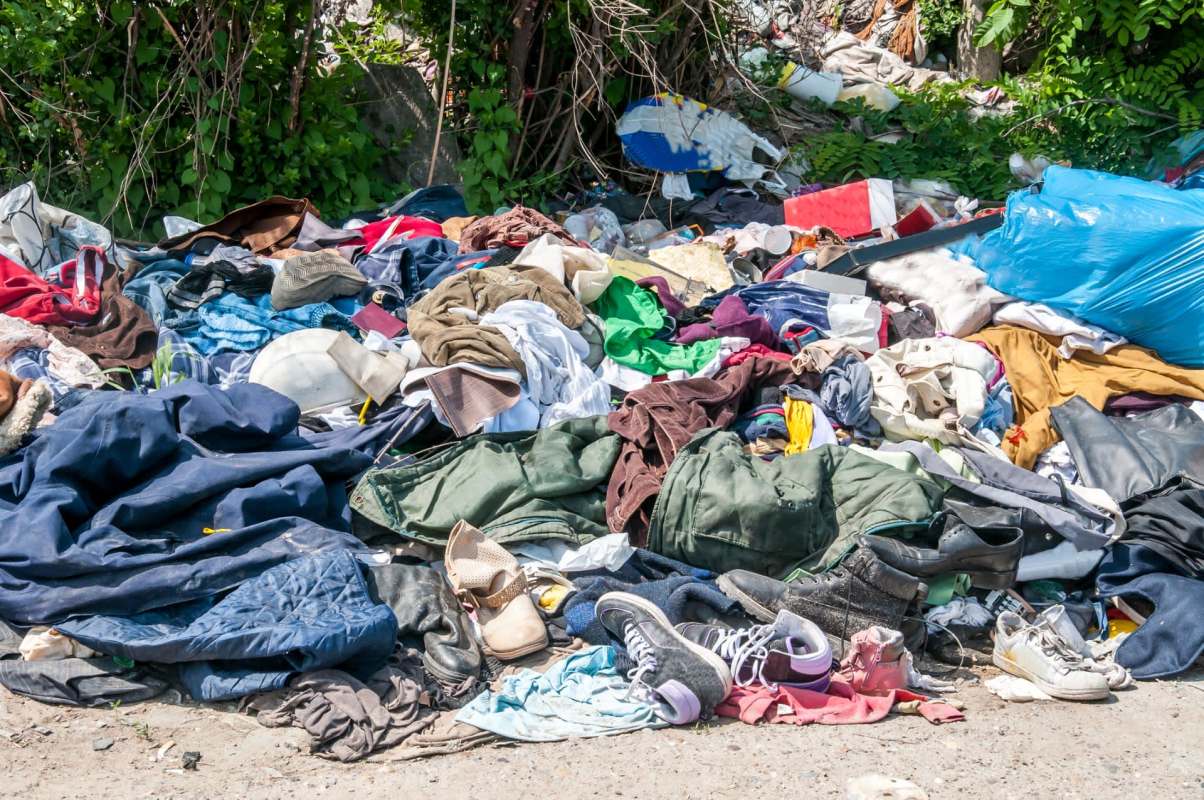
A striking visual from Australia puts the fashion waste crisis into stark terms: Every 10 minutes, the country sends about 6.6 tons (6 tonnes) of clothing to landfill.
What's happening?
In a clip from the first season of the Australian documentary series War on Waste, host Craig Reucassel stands atop a 6.6-ton (six-tonne) pile of discarded clothing and asks passersby how long they think it took to create that much waste, according to Ethos.
The answer: just 10 minutes.
As Circularity Hub put it, "Fast fashion has made clothing cheaper, faster, and more accessible than ever before."
Environmental Protection Agency figures from 2018 translate to roughly 215 tons of textiles going to landfills in the United States every 10 minutes.
In all, the agency counted 17 million tons generated that year, including 11.3 million tons that were landfilled. Of that EPA total, about 15% was recycled, 19% was burned for energy, and 66% ended up in landfills. Taken across the bloc, the European Union was discarding more than 143 tons (130 tonnes) of textiles every 10 minutes.
TCD Picks » Quince Spotlight
💡These best-sellers from Quince deliver affordable, sustainable luxury for all




The European Environment Agency estimated that textile waste reached about 35.3 pounds (16 kilograms) per person in 2020, and only one-quarter was separately collected for reuse or recycling.
Why does it matter?
A big reason is fast fashion, which encourages a cycle of rapidly produced, low-cost clothing that gets worn fewer times and discarded sooner.
The European Environment Agency said EU textile consumption hit a 2022 high, with the average person buying 41.9 pounds (19 kilograms) of clothing, footwear, and household textiles.
According to U.N. figures, fashion accounts for up to 8% of global greenhouse gas emissions and uses 56.8 trillion gallons (215 trillion liters) of water each year.
Experts cited by the U.N. estimate that a garment's emissions could be cut by 44% if its usable life were doubled.
Clothing waste is also part of the plastic pollution problem. An estimated 60% to 70% of textiles are made from synthetic materials such as polyester, and washing them sheds microfibers into waterways.
The International Union for Conservation of Nature says washing synthetic textiles accounts for about 30% of the primary microplastics reaching the ocean.
What's being done?
Some governments are starting to respond.
In Chile, textiles were added to an extended producer responsibility law that places the responsibility for disposal on clothing importers rather than local communities. That change could help address the growing piles of used and unsold garments dumped in the Atacama Desert.
Resale and repair are also part of the solution, though they come with limits. United Nations Secretary-General António Guterres has noted that consumers are asking for more sustainable options and that resale markets are growing.
Still, secondhand exports can overwhelm the countries that receive them, especially when the clothing is too damaged or poorly made to be resold.
Buying less, wearing items longer, repairing what you can, and being more selective about what you donate can save money while reducing waste that someone else eventually has to manage.
António Guterres said, "Dressing to kill could kill the planet."
Rosario Hevia, founder of the Chilean textile-recycling company Ecocitex, sees signs of change: "But now, people are starting to question themselves."

Get TCD's free newsletters for easy tips, smart advice, and a chance to earn $5,000 toward home upgrades. To see more stories like this one, change your Google preferences here.