


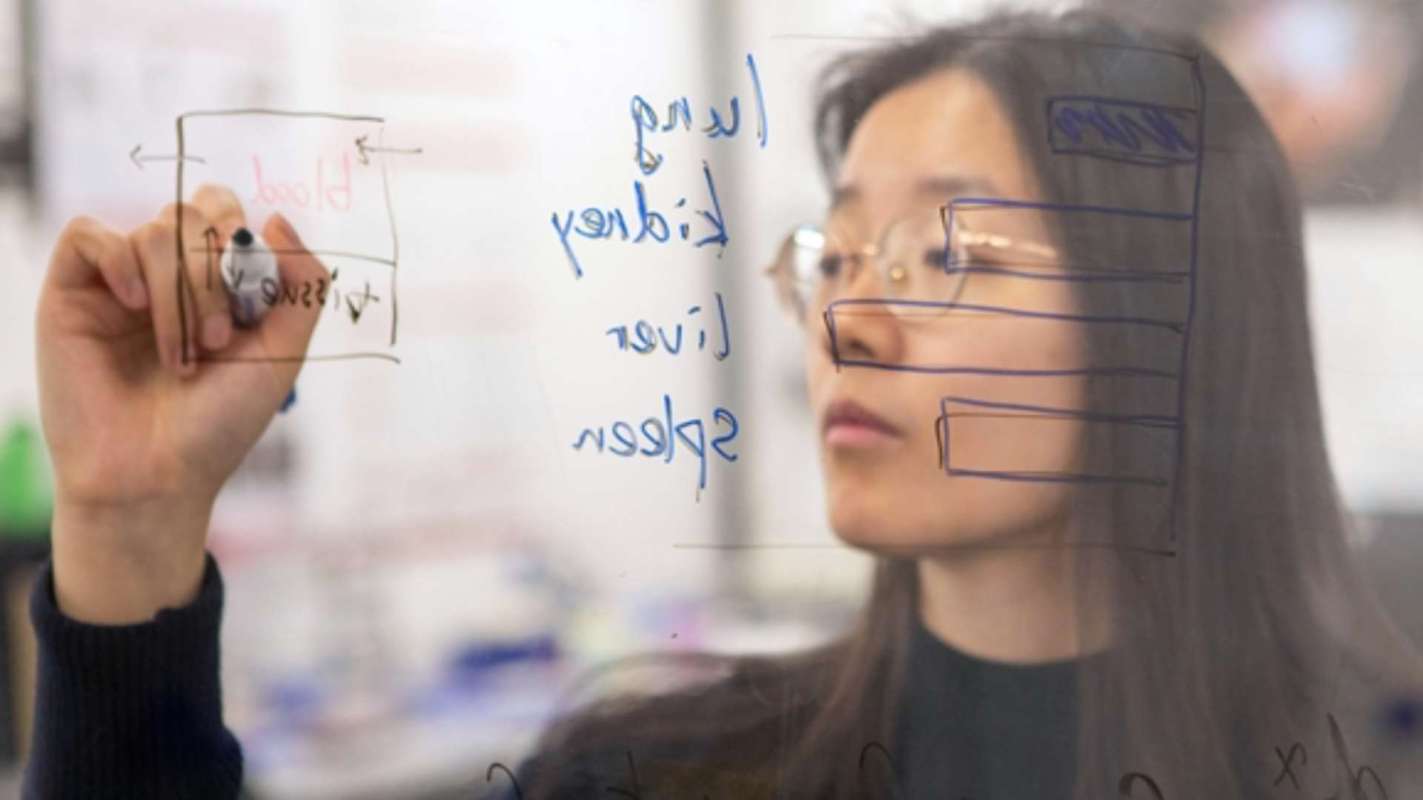
An Empa researcher has created an AI-powered "virtual mouse" that could help scientists test nanomedicine treatments without relying as heavily on live animals.
The idea could accelerate the search for better therapies for hard-to-treat illnesses, including brain tumors that are often shielded from drugs by the body's natural defenses.
What's happening?
An Empa researcher has developed a digital model that predicts how nanoparticles move through a mouse's body, according to Newswise.
The work is meant to advance nanomedicine, in which ultra-small materials are used to carry drugs to specific parts of the body.
Because some nanoparticles can bypass protective barriers that block many standard drugs, researchers think they could help deliver treatments that are otherwise hard to deliver. One possible application is carrying chemotherapy across the blood-brain barrier so it can reach brain tumors while reducing damage to the rest of the body.
To build the system, doctoral student Jimeng Wu used results from 18 mouse studies and paired a physiologically based pharmacokinetic model with Bayesian analysis and machine learning.
TCD Picks » Quince Spotlight
💡These best-sellers from Quince deliver affordable, sustainable luxury for all




"The model can adapt its parameters to the measurable properties of the respective nanoparticle," Wu explained.
Using inputs such as particle size, coatings, and surface electrical charge, researchers can digitally screen nanoparticle designs and estimate where they are likely to accumulate in the body before making and testing them in animals.
Why does it matter?
Early-stage biomedical screening often depends on animal experiments that take significant time and money and raise welfare concerns. Cutting back on that work at the front end of research could reduce costs, shorten timelines, and lower the number of animals used.
That matters especially for diseases in which getting a drug to the right place is still a major obstacle. Brain tumors are a key example because the blood-brain barrier blocks many medicines from reaching them.
It also fits a wider effort to factor safety into new materials and therapies as early as possible.
As Peter Wick, one of Wu's supervisors, put it, "The model thus contributes to the concept of Safe and Sustainable by Design (SSbD)."
What's being done?
Wu said, "This AI-supported screening tool allows researchers to virtually test which type of nanoparticles are best suited for a specific task before they even manufacture these particles."
In practical terms, that lets scientists narrow the field before committing to expensive lab work or clinical development.
One current limitation is the size of the training base. The model drew on only 18 peer-reviewed studies that met the necessary quality standard.
Wick noted, "In many studies, the properties of the nanoparticles used are not described in adequate detail."
Researchers now want to include more high-quality studies and evaluate the model's predictions to make its results more dependable.
Wu is also developing a "bridge strategy" to carry the approach into human research through a human PBPK model.
If that effort works, a future version could be used to estimate nanoparticle behavior in sensitive organs, including the brain.
"Our long-term goal is to shorten the process of developing nanomedicine materials all the way to their use as a drug in patients, while ideally being able to avoid animal testing," Wick emphasized.
With better predictions, reaching tumors beyond the blood-brain barrier may become easier.

Get TCD's free newsletters for easy tips, smart advice, and a chance to earn $5,000 toward home upgrades. To see more stories like this one, change your Google preferences here.






