


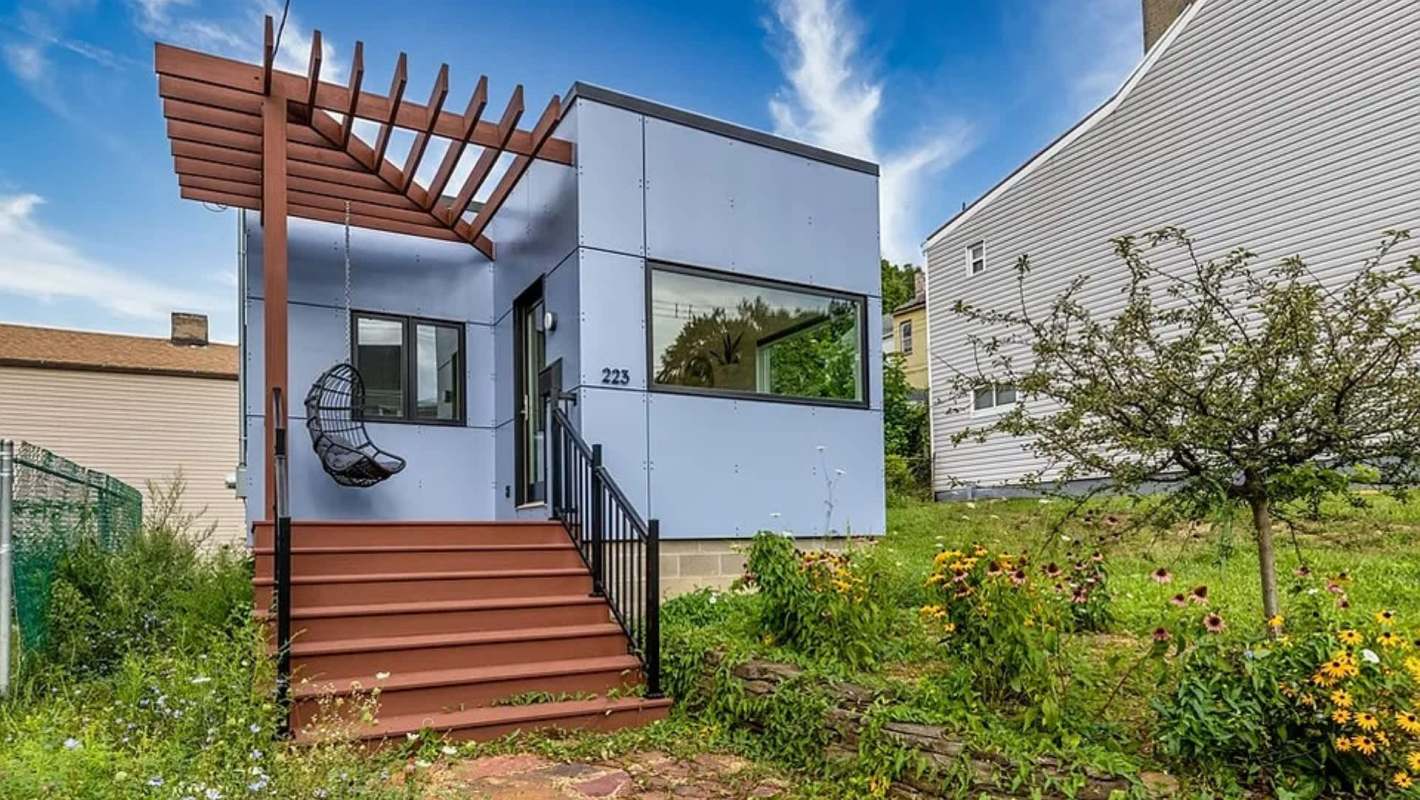
Pittsburgh's first tiny house has returned to the market at $225,000, roughly 10 years after the tiny-home boom first drew widespread attention.
What happened?
223 North Atlantic Ave. in Garfield was built in 2015 on a small infill lot and promoted as Pittsburgh's first tiny house.
According to Pittsburgh Magazine, Adam Hoppel of Venture Real Estate has operated the property as a short-term rental for the past several years.
Hoppel described the studio-style home this way: "It was originally built as a highly publicized cityLAB project."
A key part of the sales pitch is not just the size but how the home is designed to handle storage in a very limited footprint.
At 500 square feet, the Garfield house includes a full basement, a Murphy bed, and even a standard-size tub, details aimed at making small-space living more workable.
TCD Picks » Quince Spotlight
💡These best-sellers from Quince deliver affordable, sustainable luxury for all




Unlike many tiny homes intended to move or serve as temporary housing, this one was constructed as a permanent single-story house with a basement and a green-ready roof.
Inside, the compact layout centers on a single main room that can serve multiple purposes.
The kitchen includes standard-size appliances, such as a full-size stove and dishwasher, steel cabinetry, an under-counter fridge, and a compact washer/dryer, while built-in storage hides a Murphy bed, so the space can function as both a living room and a bedroom.
Hoppel, who is also the seller and listing agent, said: "This home offers the perfect blend of minimalist living and structural permanence, making it an incredibly rare find on the Pittsburgh market."
Why does it matter?
Part of the appeal of tiny homes is practical: they can require less upkeep and sometimes less energy, while encouraging a simpler routine.
A smaller house can also reduce spending on furniture and on the ongoing costs of heating, cooling, and general maintenance.
But the listing also underscores why tiny houses have not become a catch-all fix for housing costs. Even when a home measures just 500 square feet, custom design, efficient use of space, and permanent construction can still make it expensive to build, as the original builders found.
That tradeoff stands out most in costly housing markets. A property like this can offer a manageable amount of space without sacrificing core comforts, yet tiny homes remain more of a specialized option than a broad solution for affordability.
What's being done?
Calling the home "meticulously maintained," Hoppel added: "Everything is turnkey, and there are no major known repairs needed in the near future, allowing a new owner or investor to move right in or rent it out immediately."
In a market where renovations and deferred maintenance often add major costs after closing, a move-in-ready small home can help reduce uncertainty around ownership costs.
"We've loved welcoming guests from all over the world through Airbnb and hearing how staying in a true 'tiny home' changed their perspective on how much space they actually need to feel comfortable," Hoppel said. "It would absolutely make a wonderful permanent home for anyone looking to downsize, embrace a minimalist lifestyle, or own a distinct piece of local architecture while staying deeply connected to the city's cultural pulse."

Get TCD's free newsletters for easy tips, smart advice, and a chance to earn $5,000 toward home upgrades. To see more stories like this one, change your Google preferences here.






