


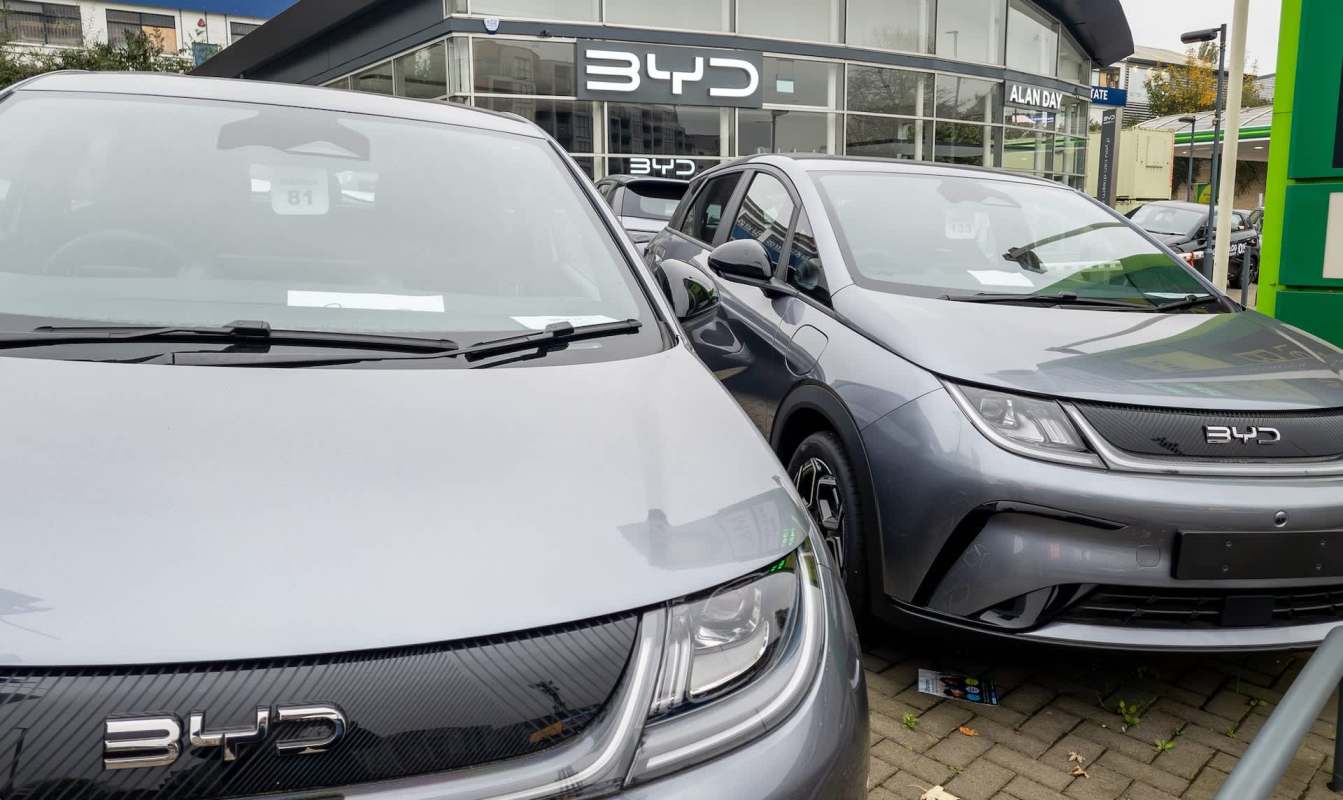
Around the world, Chinese automakers are moving beyond selling EVs overseas and setting up their own factories and supply networks. That broader expansion could shape the next chapter of transportation, manufacturing, and clean-tech investment.
For the United States, failing to match that push could mean losing clout in an industry that is increasingly important for employment, industrial capacity, and the shift away from gas-powered cars.
What's happening?
A recent CNBC analysis found a significant gap in overseas spending between Chinese and American automakers. Chinese firms made nearly $101 billion in foreign EV and battery commitments from 2019 through 2025, compared with just over $38 billion from U.S. companies, according to data from Atlas Public Policy.
That lead emerged after 2021, according to analysts. Kyle Chan, a fellow at the Brookings Institution, said China's crowded home market has become a tough place for automakers to turn a profit, which has encouraged them to look into selling abroad as EV demand has been rising worldwide.
Chinese brands have already taken a commanding share in some overseas markets. Referencing data cited by CNBC, auto industry analyst Felipe Muñoz there's a robust overseas market for Chinese EVs. Muñoz found that Chinese companies account for four of every five EVs sold in Latin America, and he wrote in a recent report, "The unprecedented growth of the Chinese cars demand outside China is accelerating."
Automaker's decision to tap into the expanding market also crafts stronger relationships with other countries, CNBC notes. Chan stated: "China's doing a process that I call industrial diplomacy," He added: "The countries that they are investing in ... [are] countries where China either has a pretty good relationship or seeks to cultivate a better one."
TCD Picks » Quince Spotlight
💡These best-sellers from Quince deliver affordable, sustainable luxury for all




Why does it matter?
EV manufacturing supports battery plants, software development, sensors, and power trains, all of which can create jobs and strengthen local economies.
Chan said the payoff can reach well beyond cars themselves: "That has spillover effects into other industries that are actually kind of connected, like robotics." Falling behind on EVs could therefore cost the U.S. ground in adjacent technologies that will help power a cleaner economy.
More domestic clean-tech investment can mean more factory jobs, more resilient supply chains, and eventually more affordable EVs for drivers hoping to save money on gas and maintenance.
Companies tied to electrification and clean energy are increasingly seen as growth opportunities, while fossil fuel businesses remain exposed to volatile fuel prices and a global shift away from combustion.
The Cool Down's green business coverage and electric vehicle reporting have tracked how battery production, charging expansion, and EV adoption are creating new economic opportunities.
What's being done?
Countries around the world are using industrial policy to attract clean-tech factories, jobs, and supplier networks. In many cases, tariffs are doing more than blocking imports; they are pressuring automakers to build locally.
Governments are using those tools strategically as part of an approach to "industrial diplomacy," as Chan notes. Chinese investment could be a means for Beijing to strengthen ties across Europe, Asia, North Africa, and Latin America. CNBC also said Rhodium Group analyst Armand Meyer believes U.S. automakers may face less pressure to add overseas factories because many already operate globally.
As Meyer put it, "It's accelerating this domination." And Chan warned that Chinese EV leaders are "benefiting from scale from building out these global supply chains" — a position that could become "increasingly difficult to dislodge."

Get TCD's free newsletters for easy tips, smart advice, and a chance to earn $5,000 toward home upgrades. To see more stories like this one, change your Google preferences here.






