


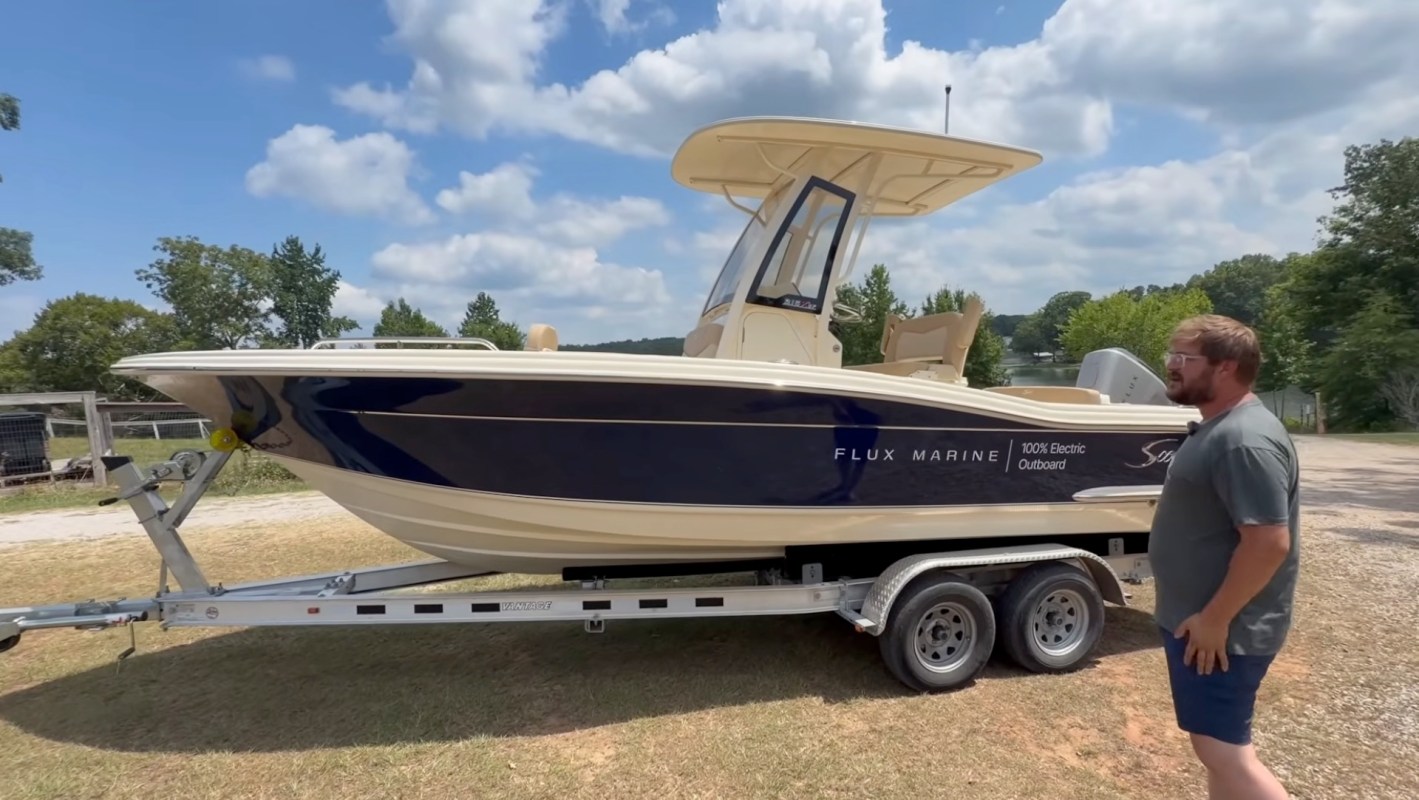
A hands-on lake test in North Carolina has suggested electric boating may already work well enough for most people, giving skeptics something to think about.
What happened?
Out of Spec Reviews spent several days on Lake Gaston testing a Scout 215XSF center-console powered by a Flux Marine electric outboard. The vessel was much-needed after a gas-powered boat at a family lake house became unusable just before the Fourth of July weekend.
Battery-powered boats appear to be at their best during quiet cruising, docking, and short recreational outings, while long, high-speed runs still reveal the technology's current limits. However, Out of Spec also pointed out that electric boats might not be for everyone.
The setup combined an 84-kilowatt-hour battery pack with an electric outboard the reviewer described as being in the 115- to 120-horsepower range. In the video, the creator said the boat usually ran about 27 to 30 miles per hour, while a separate wide-open-throttle test showed roughly 25 miles of range before the system reduced power.
The test also showed how much efficiency changes at lower speeds. At trolling speed, the host said the boat could theoretically travel 160 to 180 miles, adding, "We can cruise around in here all day. We're not polluting. We're not bothering anyone."
Why does it matter?
Many lake boaters spend far more time maneuvering near docks, floating, fishing, or taking short rides than they do speeding across the water for hours at a time.
TCD Picks » Quince Spotlight
💡These best-sellers from Quince deliver affordable, sustainable luxury for all




Electric propulsion may be better matched to those routines than many people expect. In the review, the advantages included very quiet operation, easier low-speed handling, and the absence of exhaust around passengers or swimmers.
The closed-loop cooling system also means the drivetrain does not pull in raw lake water or saltwater, which could help reduce maintenance concerns. The host also noted, "You don't need to winterize this boat."
There may also be fuel savings. While that does not erase the high upfront cost of an electric boat, day-to-day energy expenses would be more predictable than refilling a gasoline tank, particularly for frequent short trips.
What's being done?
Out of Spec Reviews said Flux Marine's package offered app connectivity and remote telemetry, and the boat even received an overnight over-the-air software update that added 20 horsepower, a feature often associated with electric cars.
The bigger challenge is still charging. The host said the boat could go from empty to full in about 12 hours on 240-volt power, but using 120-volt dock service could stretch that closer to 20 to 24 hours.
Hot weather can slow charging on land as well, since the system still has to deal with heat while replenishing the battery.
A commenter wrote, "Remember that for range, Flux says it's designed to throttle power down after the battery SoC falls below 10% to make sure that you can go as far on the last 10% of battery as you did on the first 90%. Not totally idiot proof, but close."
In the Lake Gaston test, the host said, "It is as silent as you could imagine."

Get TCD's free newsletters for easy tips, smart advice, and a chance to earn $5,000 toward home upgrades. To see more stories like this one, change your Google preferences here.






