


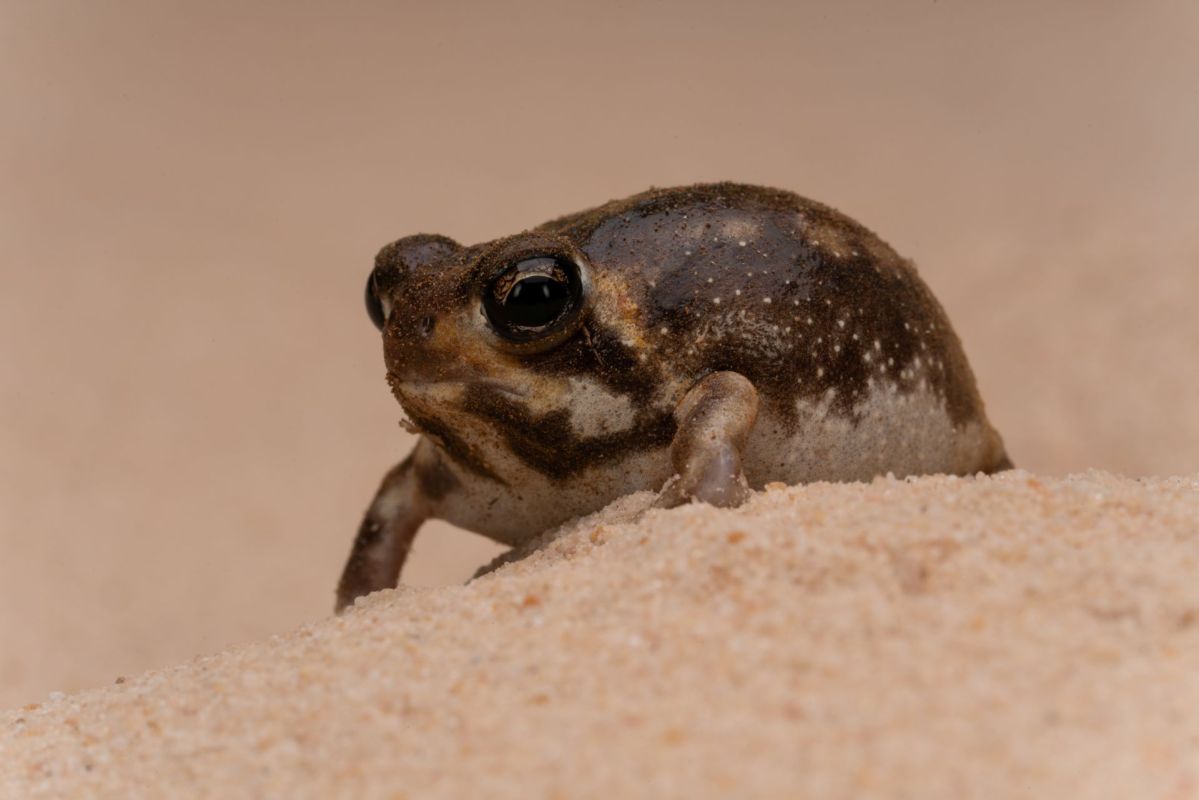
Known online for its squeaky call and almost toy-like look with wide eyes and a notably round body, the desert rain frog has drawn a huge fanbase. Scientists now warn that the popularity has come at a cost to the species.
What's happening?
Discover reported that the desert rain frog is among the species included in the latest International Union for Conservation of Nature Red List update, which now assesses 175,909 species worldwide, with 49,505 listed as threatened with extinction.
Found on the western shores of South Africa and Namibia, the species is facing growing pressure. The IUCN said its habitat was already being disrupted, and interest from the pet trade increased after online videos made the frog widely known.
Future development could take a large toll on the frog's range. Over the next 20 years, diamond mining and energy projects — including a proposed green hydrogen development — may affect up to one-third of the places it occupies in South Africa and about two-thirds of its range in Namibia.
Without steps to protect it, Discover reports, the species could lose about one-fifth of its population within the next decade.
Why does it matter?
Development tied to cleaner energy can still harm fragile habitats if it is poorly planned. Biodiversity losses can weaken ecosystems that communities depend on.
TCD Picks » Quince Spotlight
💡These best-sellers from Quince deliver affordable, sustainable luxury for all




The Red List update highlighted other species facing similar pressure. It found that 125 of the 201 mollusk species known only from deep-sea hydrothermal vents are now at risk of extinction, with seafloor disruption from mining contributing to the threat.
Losses like these can send ripple effects through ecosystems in ways scientists are still working to understand, making it harder to protect the natural systems that support food webs, coastlines, and local livelihoods.
What's being done?
The Red List update helps guide conservation efforts by giving scientists and policymakers a clearer picture of which species are most at risk and where protections are most urgently needed.
More than 30 vent mollusk species were classified as Least Concern because they live inside Marine Protected Areas where mining is not allowed. One bright spot came from Australia, where predator control, captive breeding, and reintroduction efforts helped move the numbat from Endangered to Near Threatened.
As Julia Sigwart, a member of the IUCN SSC Mollusk Specialist Group, said, "IUCN's position is clear: in 2021, the Union voted for a moratorium on deep-sea mining unless all risks are understood and the marine environment is effectively protected."
As Grethel Aguilar, director general of the IUCN, put it, "even the creatures with the most ingenious survival strategies are under threat." But, she added, "there is a clear path out of the biodiversity crisis: nature conservation works."

Get TCD's free newsletters for easy tips, smart advice, and a chance to earn $5,000 toward home upgrades. To see more stories like this one, change your Google preferences here.






