


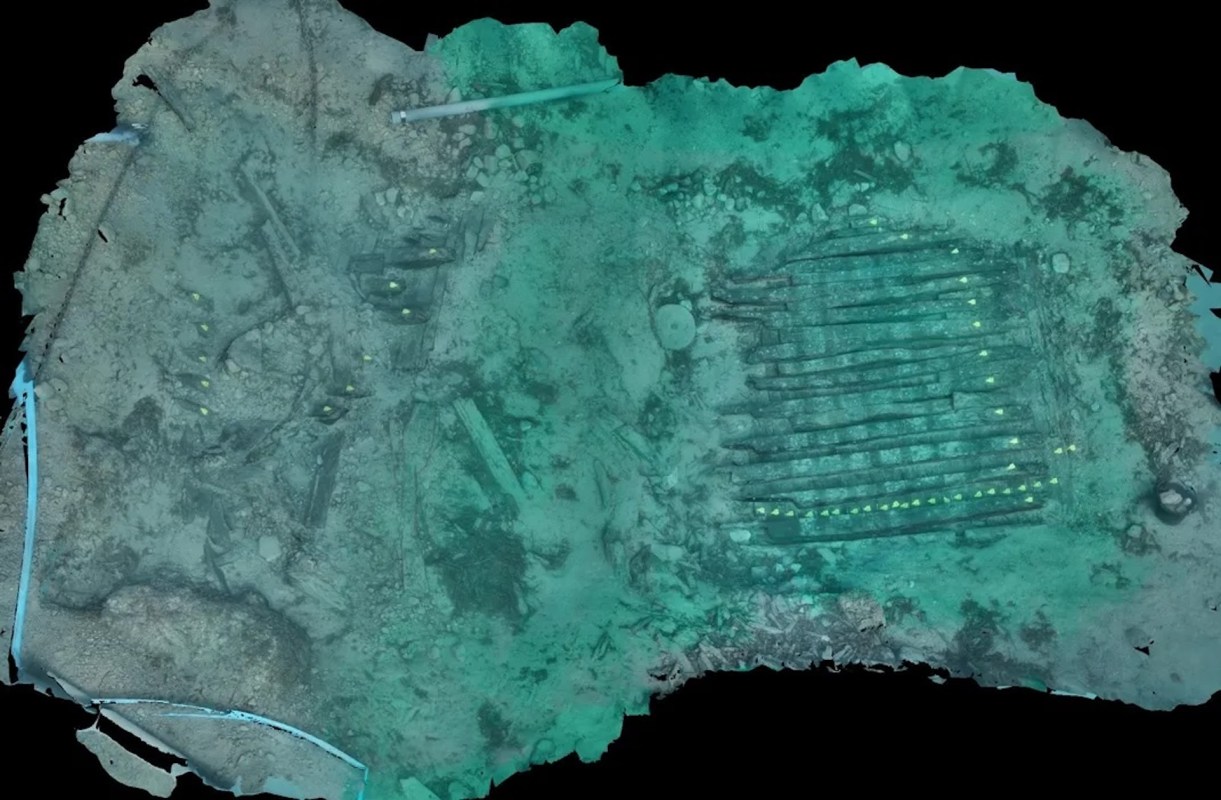
Off Menorca, Spain, archaeologists are reevaluating three medieval shipwrecks that together offer an unusually vivid look at life in the 1200s, including a Christian reliquary recovered from the seabed that may still hold something inside.
What happened?
A site in Cala en Busquets, an old harbor off Ciutadella nicknamed the "Cove of Mysteries," has been redated dramatically as three overlapping wrecks once assigned to the 18th century are now understood to belong to the 13th, Smithsonian Magazine reported.
Xavier Aguelo Mas, a Catalan archaeologist with the Menorca Shipwreck Project, first surveyed the site in 2009. Full excavations, however, did not begin until 2023, and a 2025 wood-dating analysis showed that the vessels are far older than researchers had initially expected.
Project founder and expedition leader Trevor J. Wallace calls the ships Busquets I, II, and III.
Evidence suggests the vessels were all lost in the late 1240s, possibly in a single meteotsunami event, one of Menorca's sudden sea-level surges that can swamp harbors within hours.
One of the standout finds is a 13th-century encolpium, or religious reliquary, which Aguelo Mas called Menorca's "artifact of the decade," it was recovered with intact Islamic pottery.
TCD Picks » Quince Spotlight
💡These best-sellers from Quince deliver affordable, sustainable luxury for all




Marine geoarchaeologist Beverly Goodman-Tchernov of the University of Haifa, who was not involved in the excavation, said the wrecks are "especially significant."
Why does it matter?
Compared with Roman wrecks, medieval ones are much harder to find in the Mediterranean, so these ships provide uncommon evidence from a period marked by both conflict and connection.
Goodman-Tchernov noted that shipwrecks from this period are "relatively rare in the Mediterranean archaeological record, particularly outside the eastern" region.
Because the Busquets wrecks appear to have avoided the looting that has damaged many older sites, archaeologists are working with a much fuller record than usual. That preservation offers a clearer view of trade, religion, and daily life in Moorish Menorca, which sat between Christian and Muslim powers.
The cargo also pushes back on simple assumptions about the medieval Western Mediterranean. Marcel Pujol Hamelink, who studies medieval shipbuilding and worked on the project, said the finds show Christian traders and Muslim Moors "were not two worlds apart."
What's being done?
The Menorca Shipwreck Project is a partnership between the New York City-based Explorers Club and local archaeologists and cultural heritage experts.
Archaeologists have finished excavating Busquets I and II, while work on Busquets III remains underway.
Conservation is now a major focus. The encolpium is undergoing professional desalination at the local Museum of Menorca, and archivists are expected to open it later to see what it contains.
"Maybe a bone?" Aguelo Mas speculated. "Parchment? We don't know."
The team is also refining excavation techniques for difficult underwater conditions, where poor visibility and thick sediment can conceal fragile objects for centuries.
Wallace recalled spotting the reliquary while diving. "I was working next to a millstone, and I saw a black corner of something that I thought was contemporary trash," he said. "As I uncovered it, I saw a king with a scepter."
Researchers hope to publish a paper on the wrecks in spring 2027, and they believe additional medieval vessels may still lie nearby.
"This tiny little cove, this underwater museum … still has a lot to tell," Wallace said.
Aguelo Mas is hopeful as well. "We [could] have Busquets IV, V," he shared.

Get TCD's free newsletters for easy tips, smart advice, and a chance to earn $5,000 toward home upgrades. To see more stories like this one, change your Google preferences here.






