


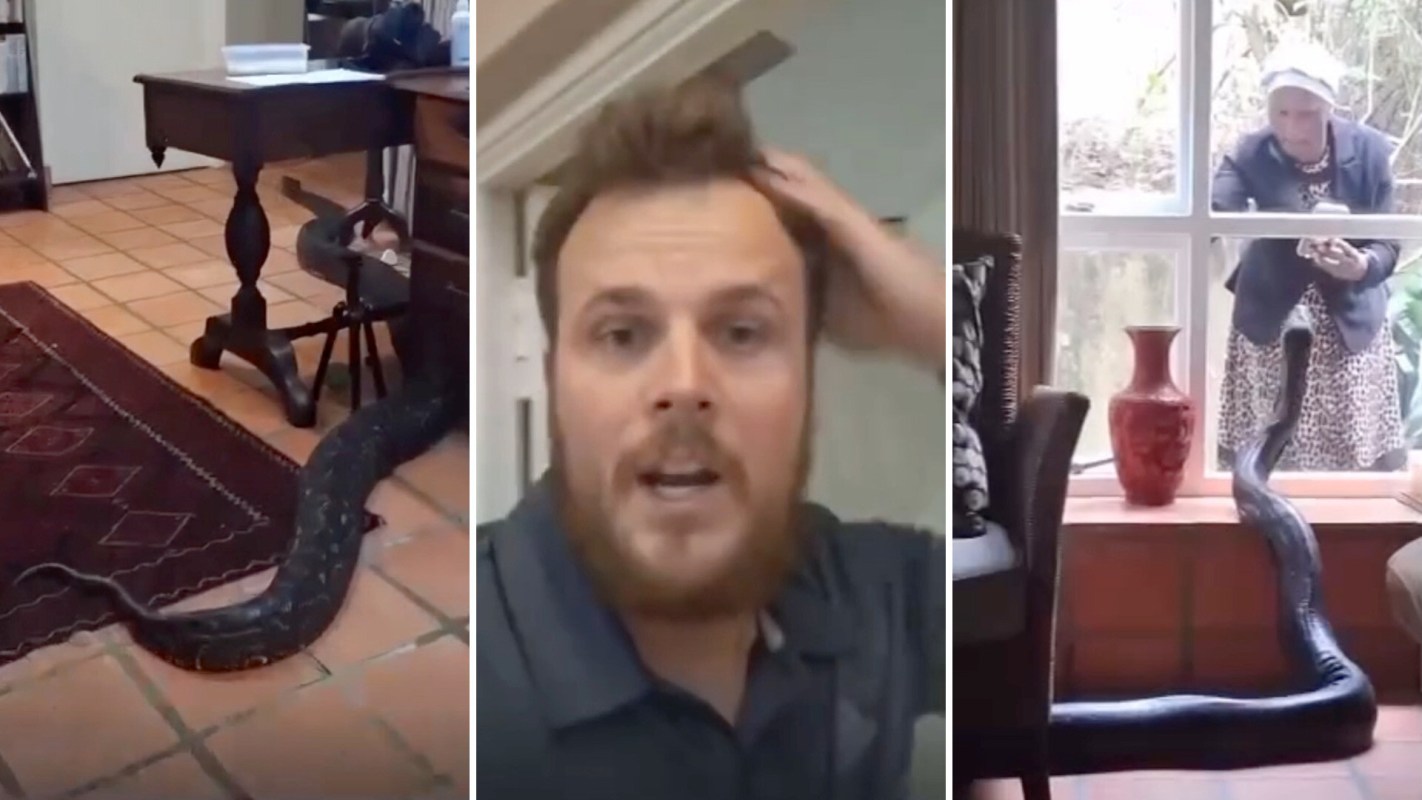
The viral snake video from South Africa began with a startling interruption to an otherwise ordinary day. While at his parents' house, a South African software engineer came across an enormous python inside — a vivid example of how often people and wildlife now end up sharing space.
What happened?
Before relocating to the Western Cape, 33-year-old software engineer Simeon Combrink was spending time at his parents' home in Mbombela, Mpumalanga, Netwerk24 reported. It was there that he realized something inside the house was not right.
As Jacaranda FM reported, citing Netwerk24, the source of the alarm was a python that left both Combrink and housekeeper Linah Vilakazi shocked. He recorded the encounter and shared the video online, where it quickly spread across social media.
Jacaranda FM's report, again citing Netwerk24, said experts later removed the snake and relocated it a few miles from the property.
The snake was identified as a Southern African Python, or Python natalensis. The African Snakebite Institute says it is the largest snake in South Africa, growing to around 20 feet long and weighing more than 140 pounds. While it is nonvenomous, it is still capable of delivering a seriously painful bite.
Why does it matter?
Wildlife encounters are often tied to the way humans reshape landscapes. As towns and cities expand, natural habitat becomes fragmented, pushing animals into closer contact with neighborhoods, gardens, roads, and buildings.
TCD Picks » Quince Spotlight
💡These best-sellers from Quince deliver affordable, sustainable luxury for all




Homes can also unintentionally attract snakes. Yards may offer shade, water, shelter, and prey such as rodents, birds, or lizards, making residential areas an easy stop for a wild animal simply trying to survive.
These close encounters can lead to panic and possible injury, while animals that end up in human spaces are often harmed or killed out of fear. Experts say Southern African pythons are not typically aggressive toward humans. The African Snakebite Institute has noted that these snakes seldom attack people and that fatalities are "virtually unheard of."
What can I do?
In this case, snake specialists removed the python from the house and relocated it rather than kill it. The Southern African Python is protected in most South African provinces.
Experts say the safest response is not to try to catch, trap, or corner a snake yourself. Wildlife professionals have the training and equipment needed to remove animals while lowering the risk to everyone involved.
There are also practical steps people can take to make their property less appealing to snakes. Keeping grass cut short, clearing clutter, sealing easy access points, and reducing food sources for rodents can all help lower the chances of a snake lingering nearby.
Human-wildlife conflict is often less about "problem animals" than about overlapping space. Greater awareness, humane removal, and habitat-conscious planning can help keep people safer while giving wildlife a better chance to remain in the wild.

Get TCD's free newsletters for easy tips, smart advice, and a chance to earn $5,000 toward home upgrades. To see more stories like this one, change your Google preferences here.






