


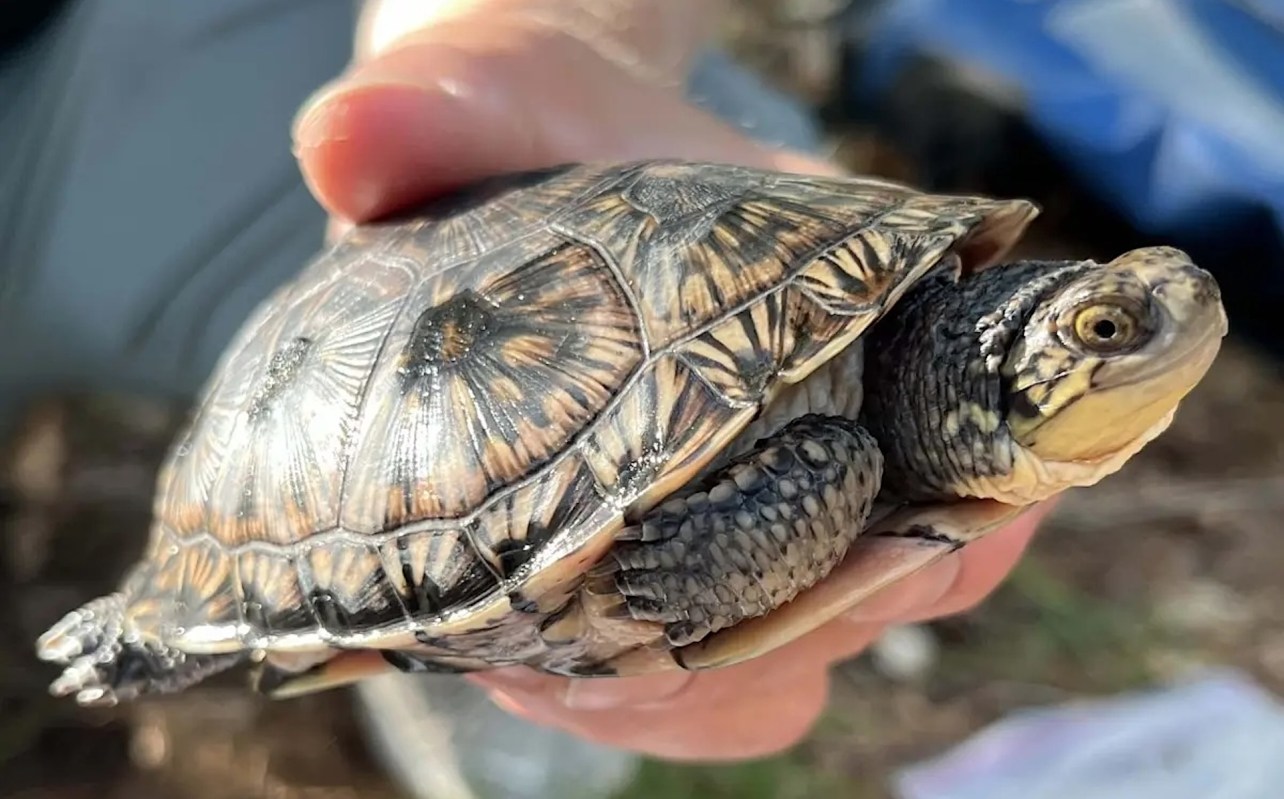
Massachusetts' long-running effort to support a state-listed turtle has reached a monumental benchmark after 20 years.
Among the baby Blanding's turtles released this spring were hatchlings descended from a mother who had once been raised through the same headstart program, a development that underscores the value of sustained recovery work.
What happened?
According to the U.S. Fish and Wildlife Service, partners at Great Meadows National Wildlife Refuge in Concord released two 9-month-old Blanding's turtles, the first known young from a turtle previously reared through the refuge's headstart effort.
Started in 2003, the program is meant to help hatchlings survive their most dangerous first winter. In the wild, baby Blanding's turtles are only about the size of coins, which leaves them highly vulnerable to predators.
Rather than spending that first winter outside, hatchlings in the headstart program remain in human care long enough to grow substantially before release.
Since the project began, more than 800 headstarted Blanding's turtles have been returned to Great Meadows and nearby wetlands.
TCD Picks » Quince Spotlight
💡These best-sellers from Quince deliver affordable, sustainable luxury for all




Their mother, a female named Ivy, came from a 2010 nest of 11 hatchlings that was discovered near an office park.
After a decade without any sightings, Zoo New England field technicians found Ivy again in 2023. In 2025, they followed her to a protected nest on nearby conservation land, where seven healthy hatchlings emerged, including the two released in late June.
Why does it matter?
For conservationists, the release suggested that a long-horizon, research-driven strategy can help a state-listed species continue to survive even in a developed landscape.
Grace Bottitta, project leader for the Service's Eastern Massachusetts National Wildlife Refuge Complex, said, "The turtles we're releasing tonight are living proof that when we invest in habitat, science, partnerships, and the next generation of conservationists, we can make a lasting difference for species in need."
Helping this turtle also helps conserve wetlands and connected open spaces that contribute to cleaner water, healthier ecosystems, and more resilient local communities.
Mike Jones, state herpetologist for MassWildlife, said, "The Zoo New England team has shown that it's possible to muster a network of unconventional partners to help this species persist in relatively developed areas like Concord."
What's being done?
Sustaining the headstart approach requires a wide network of partners. Zoo New England, local schools, and other facilities care for hatchlings through the winter, while researchers watch adult turtles, follow nesting movements, and protect nests from threats.
The method created by Dr. Bryan Windmiller, who founded the refuge's Blanding's turtle conservation program for Zoo New England, is being repeated at other Massachusetts sites, including the Assabet River and Oxbow refuges.

Get TCD's free newsletters for easy tips, smart advice, and a chance to earn $5,000 toward home upgrades. To see more stories like this one, change your Google preferences here.







