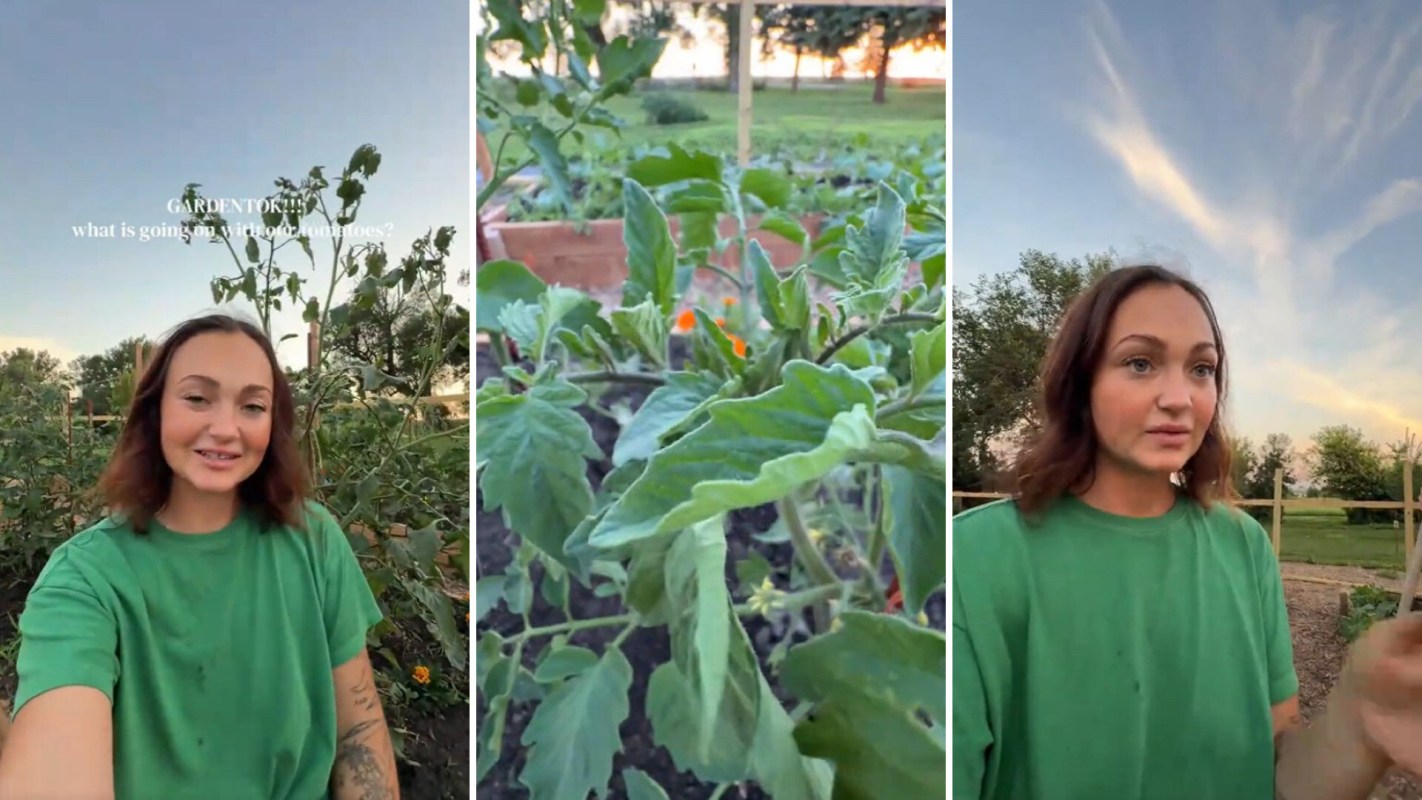
A Zone 4b gardener went online to seek answers to a troubling issue. In a video, she described leaves that curled even though plants were still growing, blooming, and producing fruit.
What's happening?
Hitchcock Homestead (@hitchcockhomestead) showed the struggling plants and asked others to weigh in.
@hitchcockhomestead calling all the gardeners! what is going on with our tomato plants? we are in zone 4b! #garden #gardening #homestead #homesteading #vegetablegarden ♬ original sound - hitchcockhomestead
"Hey, gardeners of TikTok, we need your help because we are currently stumped with these tomato plants," the creator said.
Another homesteader said this had happened before, two years earlier at another home, which made the problem hard to pin down.
The first signs showed up in the back row, where the plants started to "shrivel up," and later the same curling appeared in additional beds.
Elsewhere in the garden, conditions looked better. Marigolds were "doing amazing," and even some tomato plants were flowering or setting fruit.
TCD Picks » Quince Spotlight
💡These best-sellers from Quince deliver affordable, sustainable luxury for all




While trying to make sense of it, the gardeners pointed to weather swings and nearby pesticide spraying.
"If you know what the cause of this could be, or if you have any tips or ideas, please leave them in the comments," the creator asked.
Why does it matter?
Tomatoes are one of the most popular backyard crops, so a mystery such as curling leaves can be frustrating, especially when plants keep growing despite showing signs of stress.
Commenters focused on moisture and temperature. "Heat stress. They need more watering," one wrote, while another added: "Water more frequently in raised beds. They lose water quick."
Hot weather and raised beds can cause soil to dry out faster than expected.
What can I do?
With tomato leaf curl, it helps to observe before trying a fix.
Check whether the soil is drying out too quickly, whether symptoms worsen when heat spikes, and whether only certain varieties or beds are affected.
Commenters offered a range of ideas, including "More water and some fertilizer," "My grandma swore by using milk to water them every once and while," and "Epsom salt, fungicide, egg shells, so many options!! Please keep us updated on what you try!"
But trying many remedies at once can make it hard to tell which one worked.
Troubleshooting garden problems can also be time-consuming and require a lot of water. One way to free up time and resources is to make your yard easier to manage. Reducing high-maintenance turf and adding native plants or drought-tolerant alternatives can free up time and water for food-growing spaces.
One user offered a simple suggestion, writing, "Water your garden really well first thing every morning before the sun gets too hot."

Get TCD's free newsletters for easy tips, smart advice, and a chance to earn $5,000 toward home upgrades. To see more stories like this one, change your Google preferences here.