


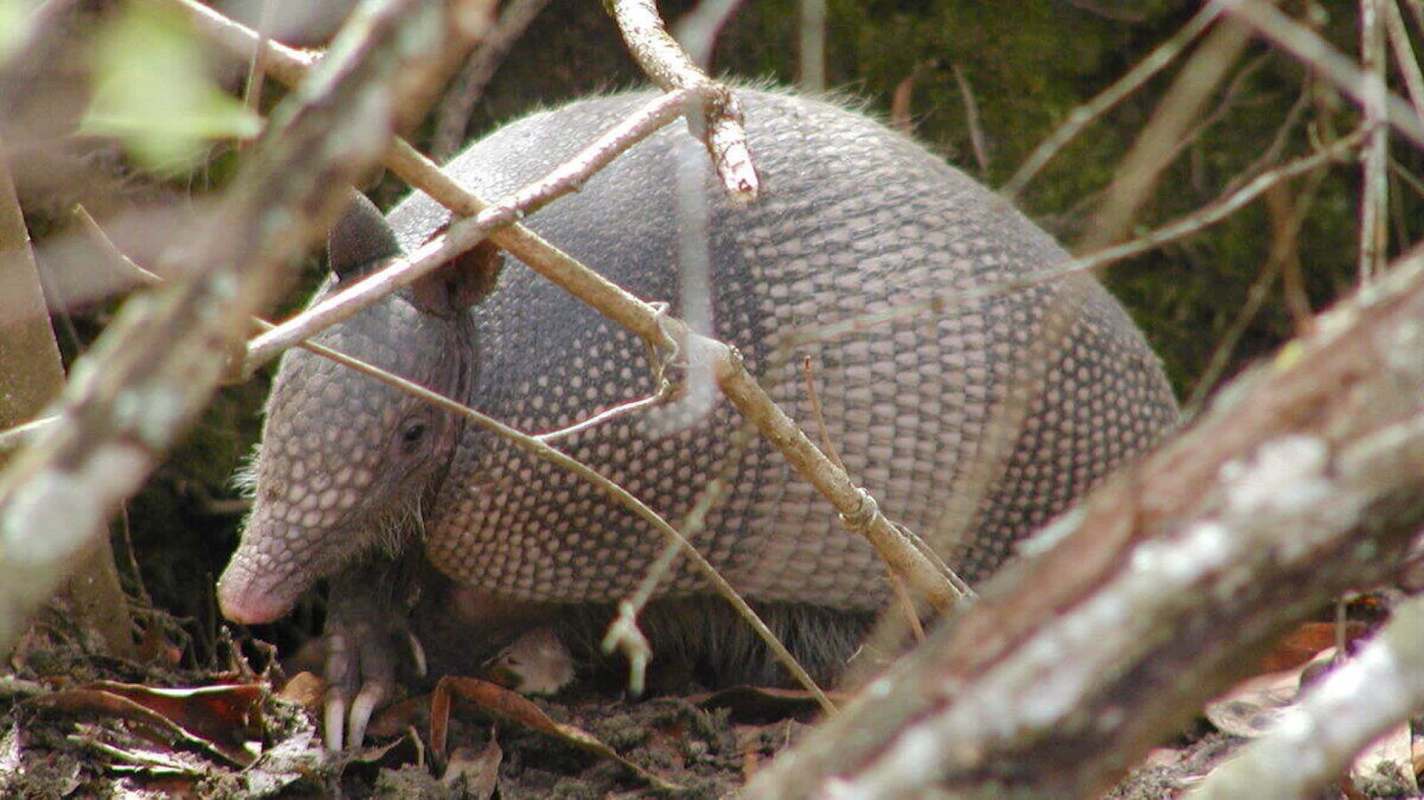
North Carolina residents may want to get used to seeing a new armored neighbor rooting around in the yard.
As the News & Observer reports, wildlife experts expect the nine-banded armadillo to become a more familiar sight in North Carolina as the species continues moving into more parts of the state.
What's happening?
Armadillos have now been confirmed in 42 of North Carolina's 100 counties, and state officials expect that number to keep rising, according to The News & Observer.
"Armadillos are our newest resident," Colleen Olfenbuttel, game mammals and surveys supervisor for the North Carolina Wildlife Resources Commission, told the outlet. "Even though they're non-native, they're here to stay. We anticipate that probably in the next 10 to 20 years we'll have observations from all 100 counties."
The News & Observer reported the earliest credible armadillo report in North Carolina came from Macon County in 2007. The outlet said most confirmed sightings have been in the western part of the state near areas where armadillo populations were already established, though a handful have also been reported in the Triangle.
Olfenbuttel told The News & Observer residents will likely start seeing more of them over time.
TCD Picks » Quince Spotlight
💡These best-sellers from Quince deliver affordable, sustainable luxury for all




"I do expect we will start to see an increase in observation. It might take another five or 10 years, though," she said to the outlet.
Why does it matter?
Most people are more likely to find armadillos annoying than dangerous, The News & Observer reported. As they search for insects, earthworms, and fire ants, they dig shallow holes that can leave a lawn covered in small divots.
"It can be extensive," Olfenbuttel told The News & Observer. "I've seen yards in which it looked like 100 little landmines went off."
Their spread also reflects a broader pattern of increasing wildlife encounters tied to human development. As roads, neighborhoods, and landscaped yards continue to push into natural areas, adaptable animals have more opportunities to wander into spaces people use every day and more chances to be hit by cars or treated as pests.
There is also a health concern, though experts say it should be kept in perspective, The News & Observer said. Armadillos can carry leprosy, but Olfenbuttel told the paper that studies have found infection rates ranging from zero to 10% in populations.
"I jokingly always tell people you don't have to worry about leprosy as long as you don't pick up the armadillo and try and kiss it or lick it," she quipped to The News & Observer.
What's being done?
The publication reports the North Carolina Wildlife Resources Commission is asking residents to report sightings so officials can better track the species' spread. People can submit observations through the NC Armadillo Project in iNaturalist or call the NC Wildlife Helpline at 866-318-2401.
Officials ask for a photo or video if possible, along with the date, location, and whether the animal was alive or dead. That information can help map where the species is moving next.
Homeowners dealing with digging damage do have some options. The Texas A&M AgriLife Extension Service says barriers can help.
Armadillos can also be hunted year-round in North Carolina and trapped during set seasons or with a depredation permit, The News & Observer noted. However, relocating one to another property is illegal, so anyone trapping an armadillo needs to be prepared to either release it elsewhere on the same property or euthanize it, the outlet said.

Get TCD's free newsletters for easy tips, smart advice, and a chance to earn $5,000 toward home upgrades. To see more stories like this one, change your Google preferences here.







