


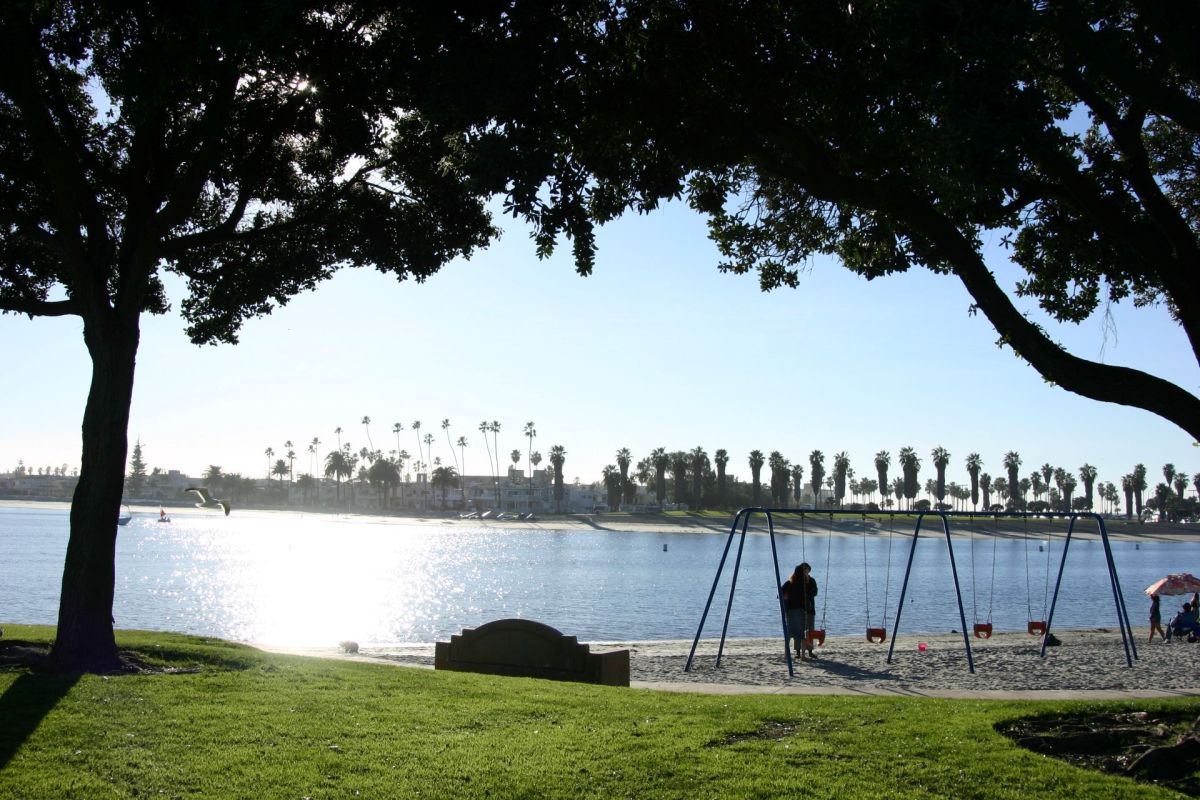
For more than 30 years, public access to a California waterfront park was reportedly constrained by the affluent neighborhood beside it.
Now, the consequences of that long-running restriction could help fund changes meant to make the space more inviting to everyone.
What happened?
According to the Long Beach Post, a proposed settlement would require Bay Harbour's Homeowners Association to put $2.5 million toward improvements at Jack Nichol Park because it illegally blocked public access routes for more than three decades.
When the California Coastal Commission approved the nearly 200-home development in 1976, it required the HOA to create multiple public pathways to the bay. Officials said those pathways were eventually built, but from the early 1980s through 2024, locked gates at each entrance and no-trespassing signs kept the public from using them freely.
After Jack Nichol Park opened in 2006, the HOA installed "Bay Harbour" signs on both sides of the public road leading to the park.
Commission staff said that made the entrance appear to belong to a private gated community, though those signs have since been taken down.
TCD Picks » Quince Spotlight
💡These best-sellers from Quince deliver affordable, sustainable luxury for all




If the Coastal Commission approves the settlement, the funds would pay for a public restroom, benches, trees, native plants, and signs guiding people to the waterfront park and the roughly 1,500-foot public path through the development.
Why does it matter?
Access to parks, shorelines, and other public green spaces is meant to be shared by everyone — not just those who can afford multimillion-dollar homes nearby. When access is blocked for decades, communities lose out on recreation, scenic views, and the assurance that public spaces are truly public.
Boat owners are the only ones currently allowed to use the restroom at Jack Nichol Park, limiting how long other visitors can comfortably stay.
Adding a public bathroom could make the park much more usable for families, walkers, dog owners, and anyone looking for a quiet outdoor space.
Belmont Shore resident Chelsea McGehee, who has been visiting the park with her four small dogs, told the Post she hadn't realized the route through the neighborhood was public.
Lisa Haage, head of enforcement for the Coastal Commission, summed up the problem clearly, saying the path and park are "underutilized, and that's one thing that we hope this changes."
What's being done?
The Coastal Commission has been working with the HOA since 2019 to restore public access.
Two years ago, the association took down the locked gates after the agency threatened a cease-and-desist order.
If it had not complied, the commission could have pursued penalties of $11,250 per day for each violation.
Officials instead worked out a consent resolution intended to keep the money focused on improving the public space itself rather than sending it elsewhere.
The plan also includes more visible signage so visitors can find the park more easily and understand that the access route is public.
"Had they not settled with us, we definitely would have pursued more monetary penalties than $2.5 million," said Rob Moddelmog, enforcement counsel for the Coastal Commission.
Haage added, "They don't have to spend it on lawyers, they can spend it on trees and benches instead."

Get TCD's free newsletters for easy tips, smart advice, and a chance to earn $5,000 toward home upgrades. To see more stories like this one, change your Google preferences here.







