


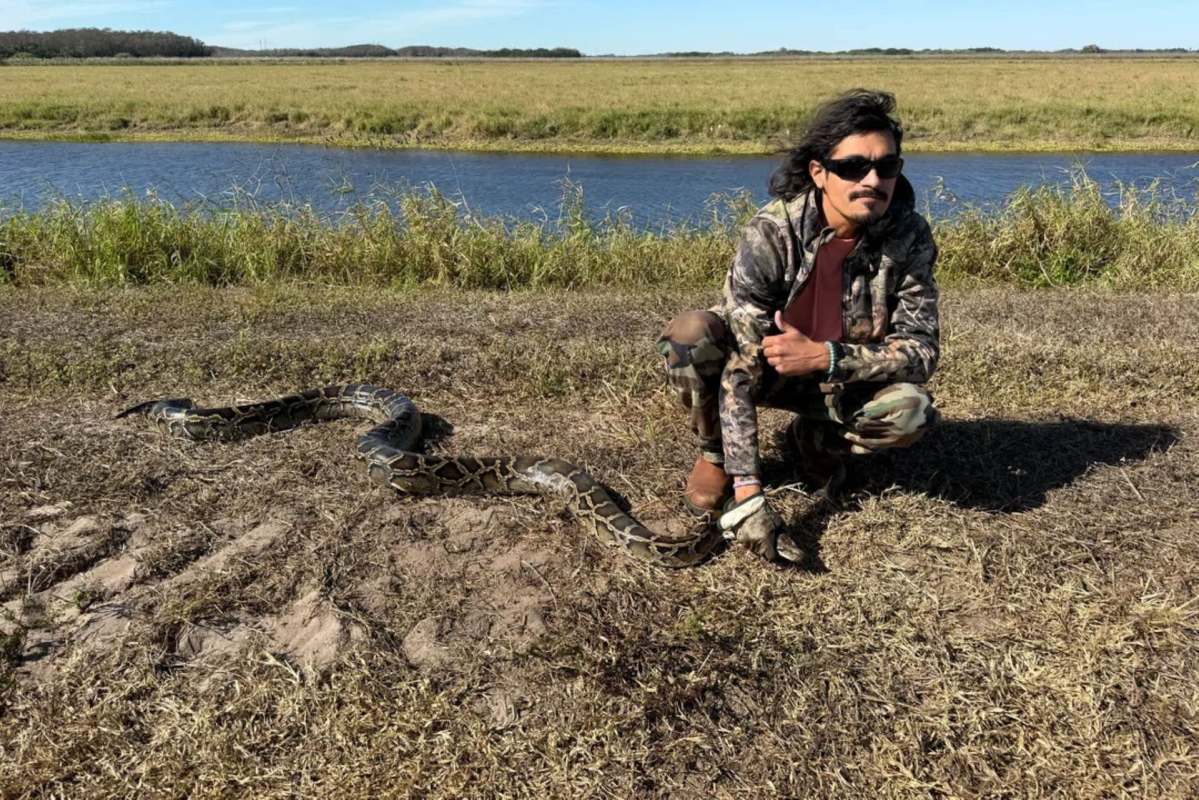
One of Florida's most notorious invasive predators became easier to spot as wildfires and cold snaps pushed Burmese pythons out of the brush — and a 10-foot python into one resident's path.
What happened?
In r/Florida, a Reddit user shared a photo of a 10-foot python. "Such a beautiful creature too bad they're invasive and had to be destroyed soon after picture was taken," the hunter wrote.
While the annual python removal competition didn't begin until July, several months after the Reddit post, the Florida Fish and Wildlife Commission permits the humane killing of Burmese pythons on private lands without a permit because the snakes have wreaked ecological havoc in the Sunshine State.
"Round em up," one commenter remarked.
"It has to be done but sucks, not the snakes fault they ended up out there," another empathized.
A third wondered whether the python was edible.
TCD Picks » Quince Spotlight
💡These best-sellers from Quince deliver affordable, sustainable luxury for all




"Invasive creature but at least not waste them?" they suggested, to which the original poster replied, "I should have mentioned we did keep the skin but as far as consuming I wouldn't suggest it because the meat has a lot of mercury."
The FWC also says Burmese pythons have mercury levels "too high for human consumption."
Why does it matter?
Burmese pythons are one of the clearest examples of how human choices can alter an ecosystem for decades. According to the South Florida Water Management District, Burmese pythons were first seen in the Everglades in the 1970s. They were introduced to the U.S. through the pet trade and ended up in the wild either through accidental or intentional release.
Since then, they have claimed "a top position" in the food chain, drastically reducing native animal populations through predation and even by spreading parasites and pathogens.
What's being done?
Florida's approach has focused on restrictions and removals. This year, the python removal challenge begins July 10 and runs through July 19th
This also points to a difficult reality: Once a destructive species is deeply established, the priority often shifts away from rescue and toward limiting additional ecological and economic harm.

Get TCD's free newsletters for easy tips, smart advice, and a chance to earn $5,000 toward home upgrades. To see more stories like this one, change your Google preferences here.






