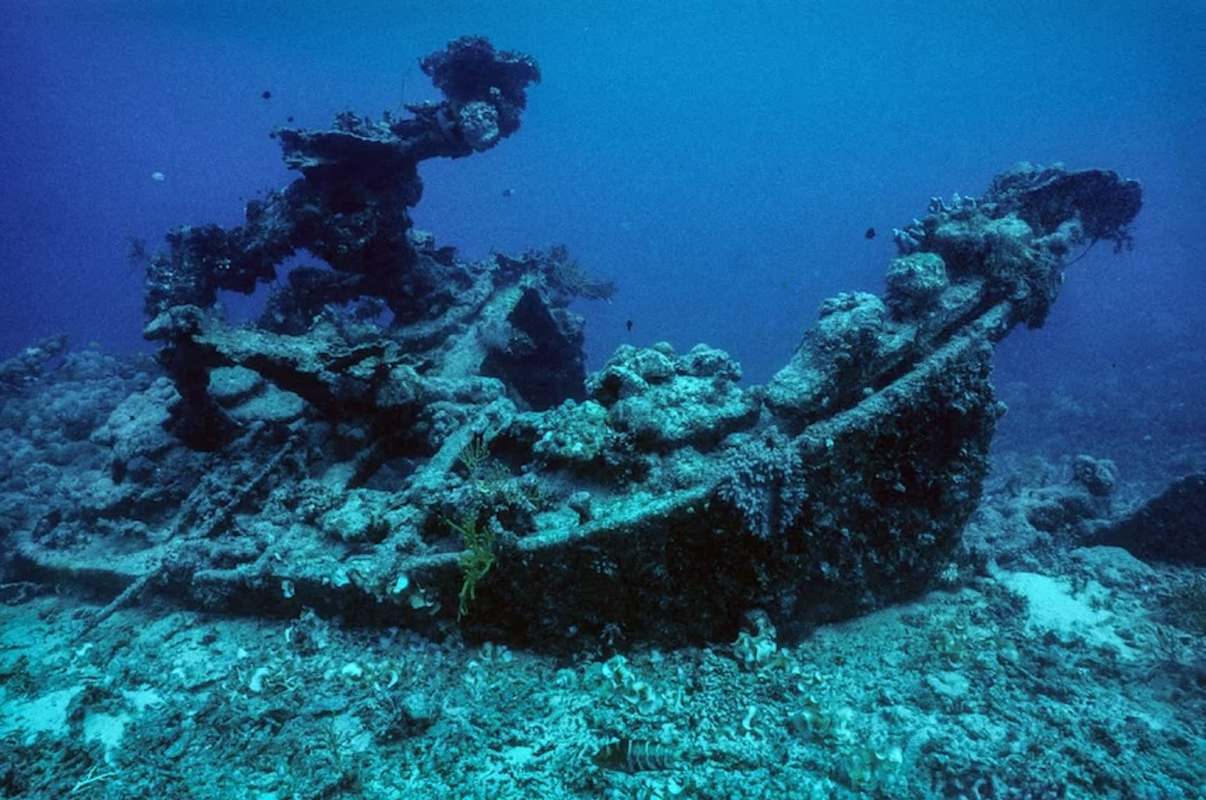
In 1967, what began as an ordinary spearfishing outing near Queensland led to an unexpected breakthrough in one of Australia's eeriest maritime puzzles. Peter Rubiolo and two companions checked out a strange object protruding from the water and found it was a missing shipwreck later linked to gold, mass death, and a remarkable survival story.
What happened?
According to the Australian Broadcasting Corporation, Home Hill resident Peter Rubiolo was in a small dinghy with friends when they noticed an unusual shape breaking the surface. "When we hit it with the spear, steel rings a certain way, we realized it was a wreck," Rubiolo said.
The find eventually helped identify the site as the SS Gothenburg, ABC News reported. Rubiolo later recovered a porthole and brought it to Brisbane, where a shipwreck historian used the broad arrow on it to connect the wreck to a government vessel.
Built in England and measuring 197 feet, the steamship ran between Palmerston, now Darwin, and Adelaide under contract to the South Australian government. In 1875, it hit the Great Barrier Reef while carrying 205 pounds of gold. About a day after the collision, the ship went under, and roughly 100 people were killed.
Only 22 survivors were recorded. Some rowed about 31 miles to Holbourne Island and stayed alive by eating raw seabird eggs. In a 2011 public lecture, marine archaeologist Vivienne Moran said the vessel was seen as so trustworthy that it was nicknamed the "floating bank" and apparently had no insurance.
On Holbourne Island, survivor James Fitzgerald carved the castaways' names inside the shell of a turtle they had killed for food.
TCD Picks » Quince Spotlight
💡These best-sellers from Quince deliver affordable, sustainable luxury for all




Why does it matter?
Sites like this can act as underwater historical records and, in many cases, as grave sites. Moran described the scene after the sinking as "a sea of heads."
The disaster also set off a desperate push to recover the treasure. Diver James Putwain later brought up the chest of gold after reportedly seeing what he called the "melancholy sight" of two women's bodies still locked together at the base of the ship's stairs.
After the treasure was taken away, the wreck's whereabouts gradually faded from memory.
According to the Queensland Museum, about 900 shipwrecks occurred on the Great Barrier Reef, but only around 120 are believed to have been found.
What's being done?
The SS Gothenburg is now protected under Commonwealth law, so it cannot simply be approached as a curiosity or a place to scavenge. Anyone wanting to explore the wreck needs a permit, and the site is covered by a strict non-disturbance policy.
McAllister said shipwrecks are generally found either through historical detective work or by chance. "When you see the wreck it's not a wreck like in the Hollywood movies where you open the door, swim in and swim back out again," Rubiolo said.
McAllister also said: "I am always so struck that these ships were often grave sites for people who lost their lives."

Get TCD's free newsletters for easy tips, smart advice, and a chance to earn $5,000 toward home upgrades. To see more stories like this one, change your Google preferences here.