


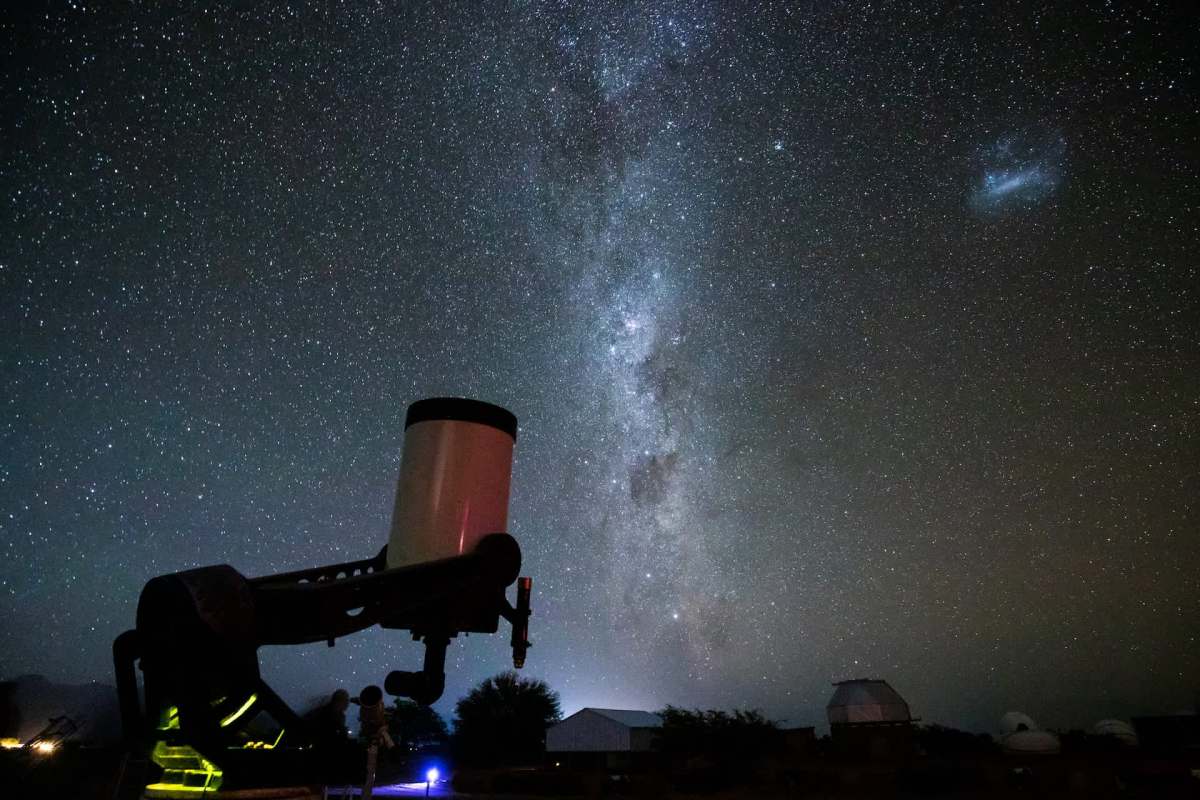
A new warning from astronomers suggests that the race to fill low Earth orbit with internet satellites could come with a steep cost on the ground. Some of the world's most important telescopes may lose a meaningful share of what they can see.
That threat could grow sharply if Elon Musk moves ahead with a much larger satellite network, including a proposed fleet of orbital data centers, according to Fast Company.
What's happening?
As satellite traffic increases overhead, the European Southern Observatory says ground-based astronomy could face "devastating consequences."
The report says satellite counts have surged during the Starlink era. Last month, around 10,400 Starlink satellites were in orbit, and before 2022, humanity had launched only about 14,450 satellites in total.
"Until now we have managed, but it's getting worse," said Olivier Hainaut of the ESO's directorate of operations.
Even satellites too faint to see with the naked eye could cause major losses, according to the observatory's simulations. In that scenario, Europe's Very Large Telescope at Chile's Paranal Observatory could lose 28% of its field of view, while brighter satellites could create wider disruption, with the wide-field telescope at Chile's Vera C. Rubin Observatory potentially seeing many nightly images spoiled for hours.
TCD Picks » Quince Spotlight
💡These best-sellers from Quince deliver affordable, sustainable luxury for all




The risk extends beyond the current constellation to include Musk's proposed million-satellite system of solar-powered data hubs in space.
Why does it matter?
Satellites can scatter light unpredictably, leaving streaks across images and making it harder to observe distant galaxies, track asteroids, and study major cosmic events.
Ground-based observations help scientists monitor space weather and near-Earth objects, and they support discoveries that feed into education, engineering, and planetary defense efforts. The problem also affects ordinary people's ability to experience a dark, unobstructed night sky.
What's being done?
To limit the damage, the European Southern Observatory is calling for a 100,000-satellite cap. That proposal is grounded in simulations that explore how a rapidly expanding satellite population could affect some of the world's most powerful telescopes.
Space-based internet, data, and energy projects are shifting from niche experiments into everyday infrastructure debates.

Get TCD's free newsletters for easy tips, smart advice, and a chance to earn $5,000 toward home upgrades. To see more stories like this one, change your Google preferences here.






