


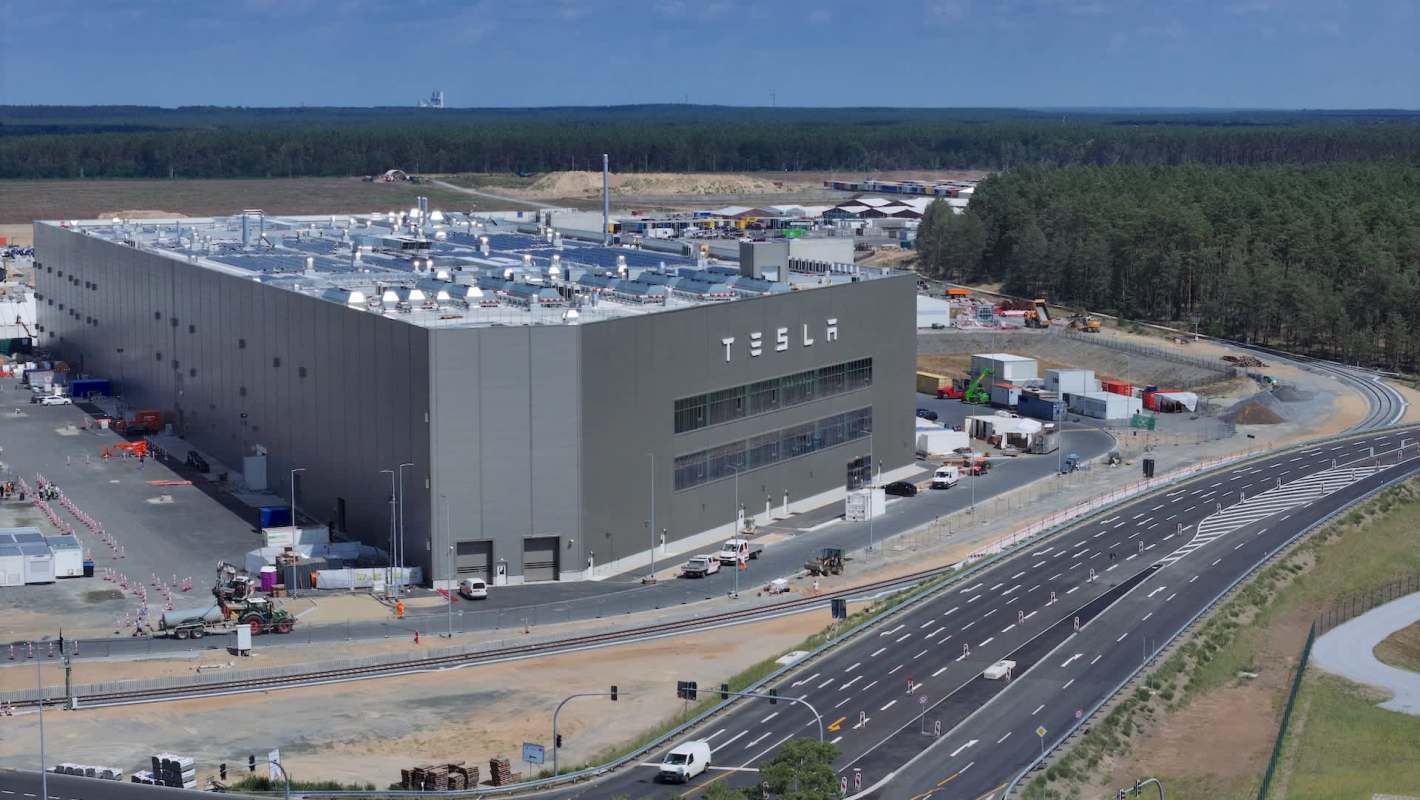
Tesla is giving startups access to part of its battery production line in Germany in a bid to improve how EV batteries are made at scale.
What's happening?
At Gigafactory Berlin-Brandenburg, Tesla's new Cell Giga Challenge allows startups to try manufacturing ideas on a working battery cell production line, according to Electrek.
The initiative arrives as Tesla works to scale 4680 battery cell production in Grünheide to 18 gigawatt-hours per year, a volume that would make the site one of Europe's largest cell operations.
JUNI, a startup platform, said the program is for startups "that make battery cell manufacturing faster, better, and more scalable." Tesla is collaborating with Juni on the initiative, which is operated by UNITE gGmbH and supported by Germany's federal economics ministry and EXIST.
Top teams could ultimately land paid pilot projects with Tesla's cell team after a process that includes screening, interviews, a pitch day, and pilot discussions. Applications are open until July 24, 2026, before the program begins in August, and Tesla is seeking technologies tied to materials, equipment, operations, automation, and artificial intelligence.
Why does it matter?
For consumers, better battery manufacturing could matter in several important ways. Lower production costs could eventually help bring down EV prices; faster and more reliable processes could improve availability; and stronger quality control could support battery longevity and safety.
TCD Picks » Quince Spotlight
💡These best-sellers from Quince deliver affordable, sustainable luxury for all




This is an early-stage industrial program, not a direct product launch. Even if promising startups land pilot projects, it could take months or even years for their ideas to affect the vehicles customers can actually buy.
If battery production becomes more scalable in Europe, that could strengthen regional supply chains and help more drivers access cleaner transportation options that reduce tailpipe pollution.
What's being done?
Tesla said applicants should show that their technology "measurably improves quality, speed, cost, safety, or scalability" and see the company "as a customer and cooperation partner."
For startups, the program offers a rare opportunity: access to a live production environment and a path to a paid pilot with a major manufacturer.
If you're considering an EV or already own one, charging a car's battery at home is often significantly cheaper than relying on public chargers, which can add up to hundreds of dollars in annual savings. Qmerit helps homeowners interested in installing Level 2 chargers by offering free, instant installation estimates.
Installing solar panels can increase those savings even more, since charging with your own energy is cheaper than using public stations or pulling power from the grid. EnergySage makes it easy to compare quotes from vetted installers and save on solar.

Get TCD's free newsletters for easy tips, smart advice, and a chance to earn $5,000 toward home upgrades. To see more stories like this one, change your Google preferences here.






