The early universe just got a little less mysterious.
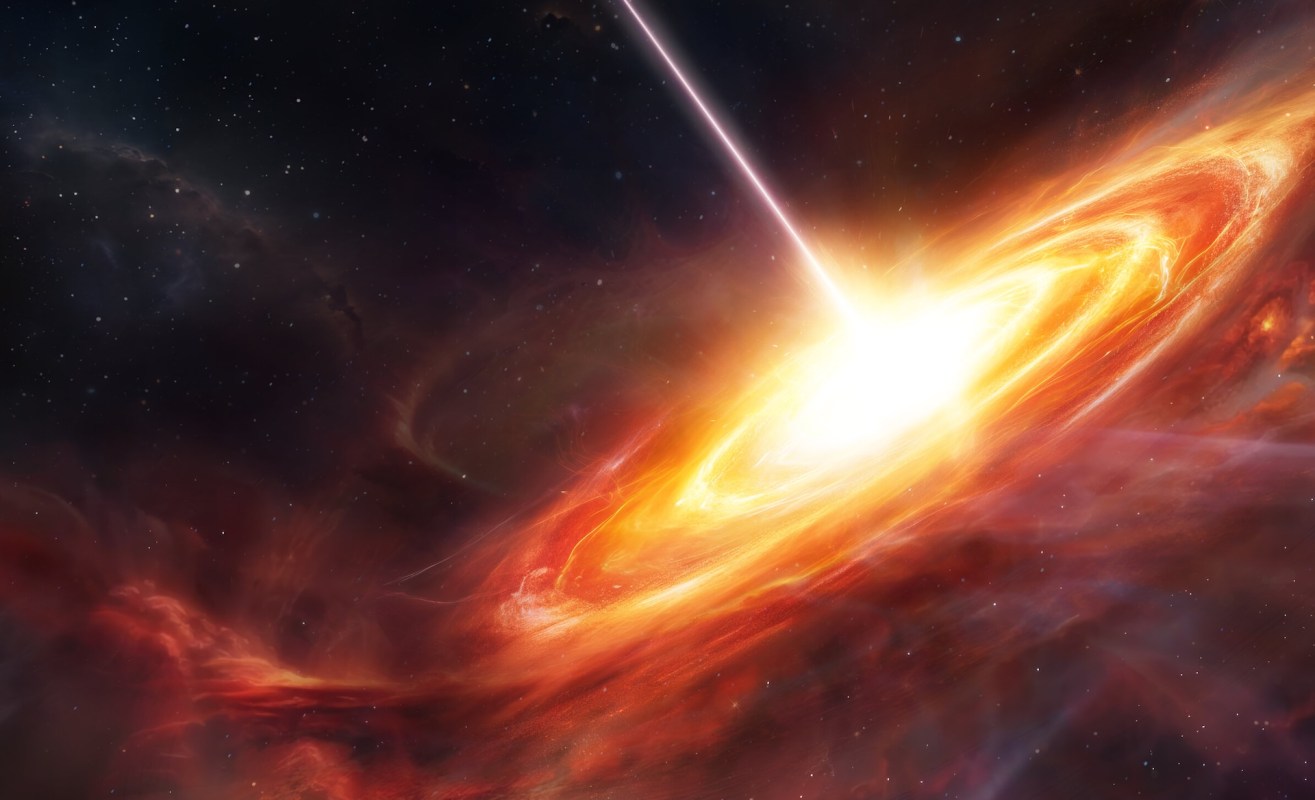
Using ESA's Euclid observatory, astronomers have found 31 quasars from the universe's early era, and two of them now set the record as the earliest quasars ever observed.
What happened?
Among Euclid's discoveries are intensely bright galaxy cores fueled by enormous black holes, giving researchers a view into a time when the universe was still very young.
According to Phys.org, the two oldest of these objects are being seen as they were about 670 million years after the universe began, when it had reached only around 5% of its current age.
Just over 13 billion light-years away, the record-setting pair are EUCL J172902.75+641018.1 at redshift 7.77 and EUCL J125308.55+705432.3 at redshift 7.69, making them the oldest quasars yet observed.
The oldest two were emitting light comparable to that of about a trillion suns. That kind of brilliance is typical of quasars, whose supermassive black holes pull in matter and release huge amounts of energy.
TCD Picks » Quince Spotlight
💡These best-sellers from Quince deliver affordable, sustainable luxury for all




Finding 31 ancient quasars in a single sweep is a major result for Euclid, a telescope designed to study the large-scale structure of the universe and help scientists better understand how it evolved.
Why does it matter?
These findings could help researchers tackle one of astronomy's biggest questions: How did giant black holes grow so quickly after the universe began?
The farther away astronomers look, the further back in time they see. These newly discovered quasars serve as cosmic snapshots from the dawn of galaxy formation, providing scientists with fresh evidence of how early galaxies, black holes, and radiation shaped the young universe.
What's being done?
Euclid is still early in its mission, which means this discovery is likely only the beginning.
As it continues scanning the sky, the telescope is expected to uncover more distant objects and build a fuller map of the universe's earliest structures, according to Phys.org.
Scientists can now use these 31 quasars as targets for follow-up observations with other observatories. That should help researchers estimate the masses of the black holes involved, study the material around them, and learn more about the era when the first galaxies transformed the cosmos.
Euclid's latest haul shows how quickly new technology can reshape our picture of cosmic history. With 31 ancient quasars already identified, the telescope is opening a new window onto the early universe — and that window is only getting wider.

Get TCD's free newsletters for easy tips, smart advice, and a chance to earn $5,000 toward home upgrades. To see more stories like this one, change your Google preferences here.