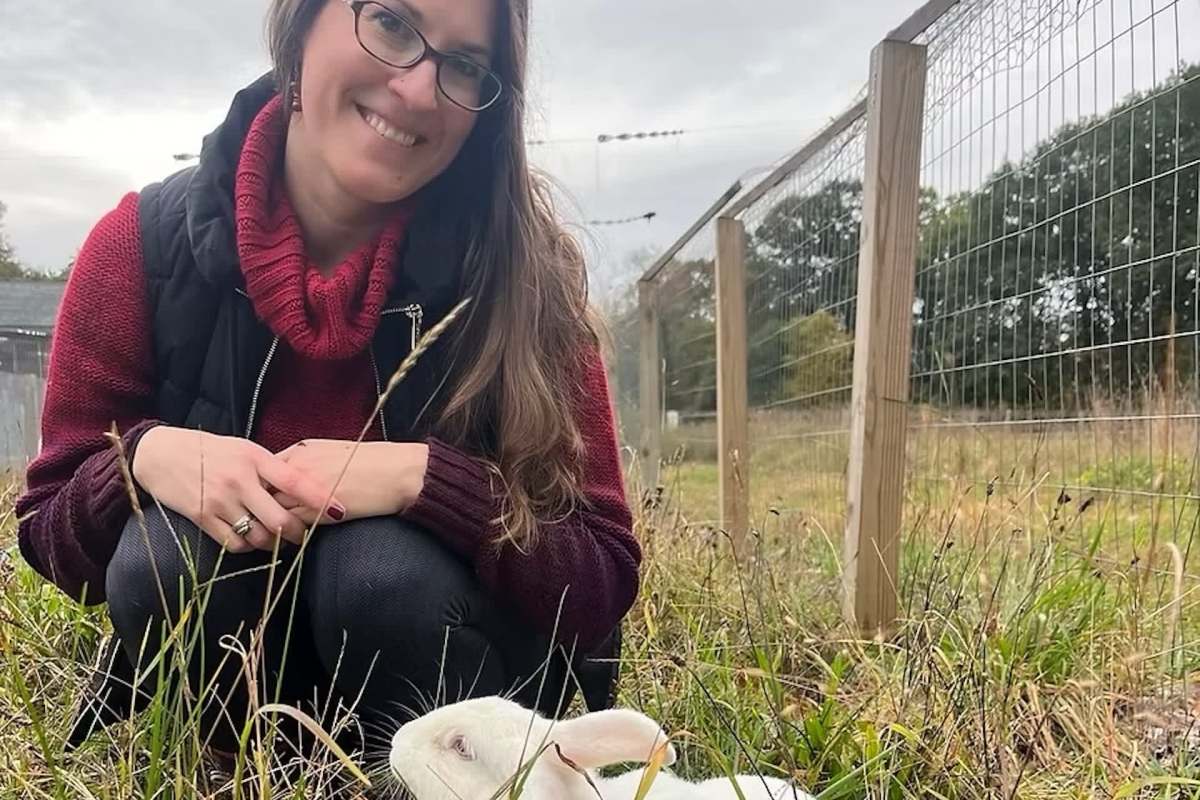
For veterinary technician Mallory Cormier, a job in a United States rabbit research facility that looked like a career opportunity eventually became the reason she walked away — and, later, the reason she began trying to save rabbits like the ones she had once been ordered to euthanize.
After that chapter ended, she launched a nonprofit focused on giving former lab rabbits a life beyond cages.
What happened?
Humane World for Animals reported that in 2015 Cormier accepted a position at a biopharmaceutical rabbit lab because it offered more reliable pay and a path to advancement, and she believed she could still act in the animals' best interests.
What she encountered instead was regular euthanasia of healthy young rabbits bred for research.
The female rabbits had been engineered to make a protein in their milk for a hemophilia treatment. Cormier said the routine was especially painful when baby rabbits were taken away and killed at just a few weeks old.
"The babies—they're bopping around; they're adorable. It's heartbreaking," she said.
TCD Picks » Good Store Spotlight
Get 10% off your next purchase with code TCD10

She stayed for two years, thinking she might be able to improve life for the animals, but her mental health kept worsening. Finding out that another lab produced the same protein without using animals made the situation feel even more unbearable.
Cormier left in 2017 and later created Save the Buns to place retired lab rabbits in homes.
By June, the rescue had saved 21 rabbits, and Cormier wants to reach many more.
Why does it matter?
Cormier said the experience left her with depression, panic attacks, and a lasting sense of shame and regret.
Humane World for Animals estimates that about 111,000 rabbits — including breeds like New Zealand whites and black-and-white Dutch rabbits — are still in U.S. laboratories.
Many are euthanized once researchers no longer need them, even though they are healthy and could be adopted.
Kathleen Conlee, vice president for animal research issues at Humane World for Animals, said there are too few rabbit-focused rescues to absorb all the animals labs could potentially release. She said many facilities also still do not have a system for sending rabbits to adopters or shelters instead of euthanizing them.
What's being done?
Save the Buns became an official nonprofit in 2020, and Cormier later expanded its capacity with a barn that, Humane World for Animals said, has insulation, climate control, and large windows to help rabbits adjust after living in windowless labs.
To make the rabbits' first days less stressful, Cormier uses dim lighting, quiet music, hiding places, and slowly introduces fresh greens.
She is also working directly with research facilities. Under Save the Buns' "Bun Club," labs can agree to transfer eligible rabbits to the rescue instead of euthanizing them.
Humane World for Animals reported that she signed her first two research labs up for Bun Club this year.
She takes a cooperative approach, keeping partner labs unnamed, Humane World for Animals said, and speaking to employees with empathy because she understands the emotional strain of that work.
As Cormier put it: "Those bunnies do not have to be euthanized. My ultimate goal is to get some of those bunnies out."
Former lab worker and Save the Buns board member Katrina Letourneau described Cormier's impact more simply: "It was a dark circumstance, and she was the light that brought me to the light."

Get TCD's free newsletters for easy tips, smart advice, and a chance to earn $5,000 toward home upgrades. To see more stories like this one, change your Google preferences here.