


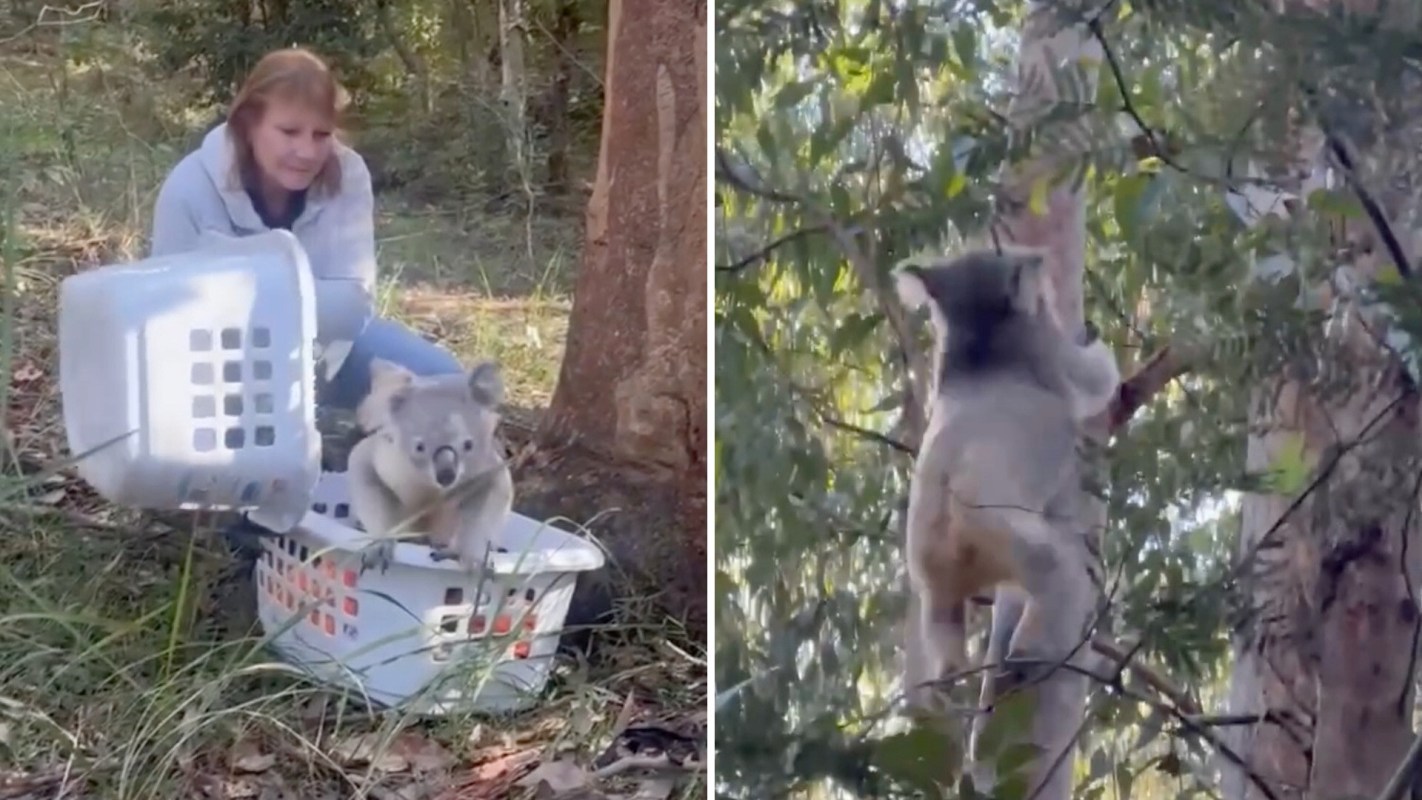
A koala once thought to be too badly injured to return to the wild has been given a remarkable second chance.
The crash left Tony with impaired vision in one eye, but after recovering in care, he was ultimately released back into the bushland.
What happened?
In August 2025, a car strike at Bolton Point left Tony in need of rescue, according to Hunter Wildlife Rescue (@hunter_wildlife_rescue).
Early assessments suggested the problem with his right eye could prevent him from ever being released.
Hunter Wildlife Rescue said that, after time and patience in care with koala carer Debbie, "his sight returned."
A later reassessment by Port Macquarie Koala Hospital found Tony was "a strong, healthy male around 6-7 years old, fully recovered and ready to be wild again."
TCD Picks » Quince Spotlight
💡These best-sellers from Quince deliver affordable, sustainable luxury for all




In the rescue group's video, Tony races off and climbs a tree at the release site.
Hunter Wildlife Rescue said Daryn McKenny, a Gomeroi man and lead researcher for Miromaa on Country, welcomed Tony to Country and selected the most suitable place for his release.
Why does it matter?
Tony's recovery is a reminder of how uncertain the future can be for wild animals after vehicle strikes.
An injury that initially seemed life-changing did not end up defining his future, thanks to careful treatment and reevaluation.
Returning a healthy adult animal to the wild can help support local populations while preserving the animal's natural life, rather than forcing it into permanent captivity.
The case also shows the value of patience in rescue work.
An initial assessment is sometimes only part of the picture, and Tony's turnaround shows why continued care can make the difference between a dead end and a release.
What's being done?
Tony's release appears to have depended on a full chain of care: an emergency response after the crash, rehabilitation with a koala carer, medical reassessment by specialists, and release planning informed by deep local ecological knowledge.
Hunter Wildlife Rescue said McKenny has spent more than 10 years monitoring koala colonies in the Sugarloaf Range and has worked with Newcastle University, the Koala Conservation Society, the Koala Strategy Team, and government koala advisory groups.
That kind of local expertise can help ensure an animal is returned to a suitable habitat.
Driving carefully in wildlife-heavy areas, staying alert near dawn and dusk, and contacting a licensed wildlife rescue group when an injured animal is spotted can all help reduce harm.
Tony's story shows how recovery often depends on a network of carers, researchers, and community members working together over time.

Get TCD's free newsletters for easy tips, smart advice, and a chance to earn $5,000 toward home upgrades. To see more stories like this one, change your Google preferences here.







