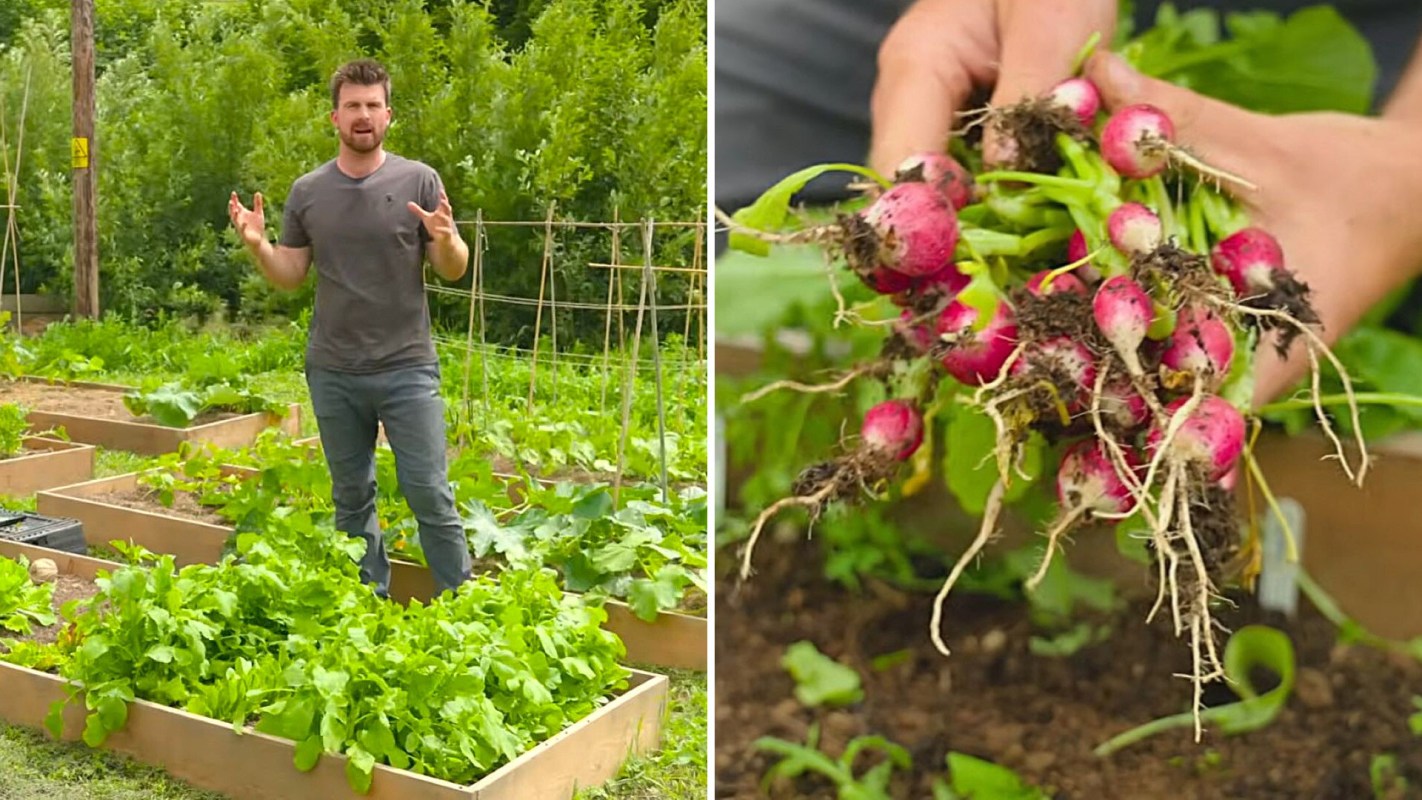
A tiny garden can answer a very big question: How much food can a small space really produce?
One gardener showed how six tightly managed beds yielded roughly 3.3 pounds (1.5 kilograms) of harvest in one go, giving a self-sufficiency experiment its first real data point.
What's happening?
Measured by weight, the first haul included 8.3 ounces (235 grams) of radish leaves, 9.6 ounces (272 grams) of radish roots, about 2.0 pounds (900 grams) of zucchini (courgettes), and 3.6 ounces (103 grams) of edible cucumber and zucchini leaves.
All of it came from a six-bed self-sufficiency project by Huw Richards (@HuwRichards), a compact plot he is using to test how much food an intensively planted garden can produce over time.
Even at an early stage, the total came to just over 3.3 pounds (1.5 kilos) of food from a single harvest.
Richards said in the video that he intends to record future yields in a spreadsheet and compare their value with organic retail prices.
TCD Picks » Quince Spotlight
💡These best-sellers from Quince deliver affordable, sustainable luxury for all




The video also captured the setbacks that come with growing food. Richards said extreme heat caused some radishes to run to seed, and he waited to plant more brassicas until a rat problem appeared to be sorted out.
To keep the beds working in the meantime, he added new sowings of radish, spring onions, and mixed leaves, as well as fresh Chinese cabbage plantings.
Why does it matter?
The project proved informative for both new and old gardeners alike. Instead of suggesting that every crop performs perfectly, the video showed how a small garden can stay productive even when weather, pests, and timing force changes.
Salad greens, herbs, spring onions, tomatoes, and zucchini can be surprisingly expensive at the store, especially when bought organic. Even small harvests can help offset those costs while providing fresher produce than food that may have traveled long distances to supermarket shelves.
Gardening can also support physical and mental well-being. It gets people outdoors and moving, offers a screen-free routine, and can help reduce stress while making healthy food easier to access.
As one commenter put it, "It's really great that you do these demonstration gardens to show people what is possible in a small space."
What can I do?
You do not need a large homestead to grow a meaningful amount of food. A few raised beds or even containers can provide quick wins with crops such as lettuce, radishes, peas, spring onions, and zucchini.
Richards' harvest emphasized the importance of staying flexible. If one crop struggles, another can help make up the difference, and even leaves that many gardeners ignore can still become part of a meal. For beginners, that mindset can stretch grocery savings.
Richards celebrated the milestone with a simple reminder of the payoff: "This is why you grow your own food."
Another commenter captured the grounded realism behind the project.
"It's easy to focus on the losses — like the squirrel damage, but weighing the harvest shows that there is more to the garden than the loss," they said.

Get TCD's free newsletters for easy tips, smart advice, and a chance to earn $5,000 toward home upgrades. To see more stories like this one, change your Google preferences here.