


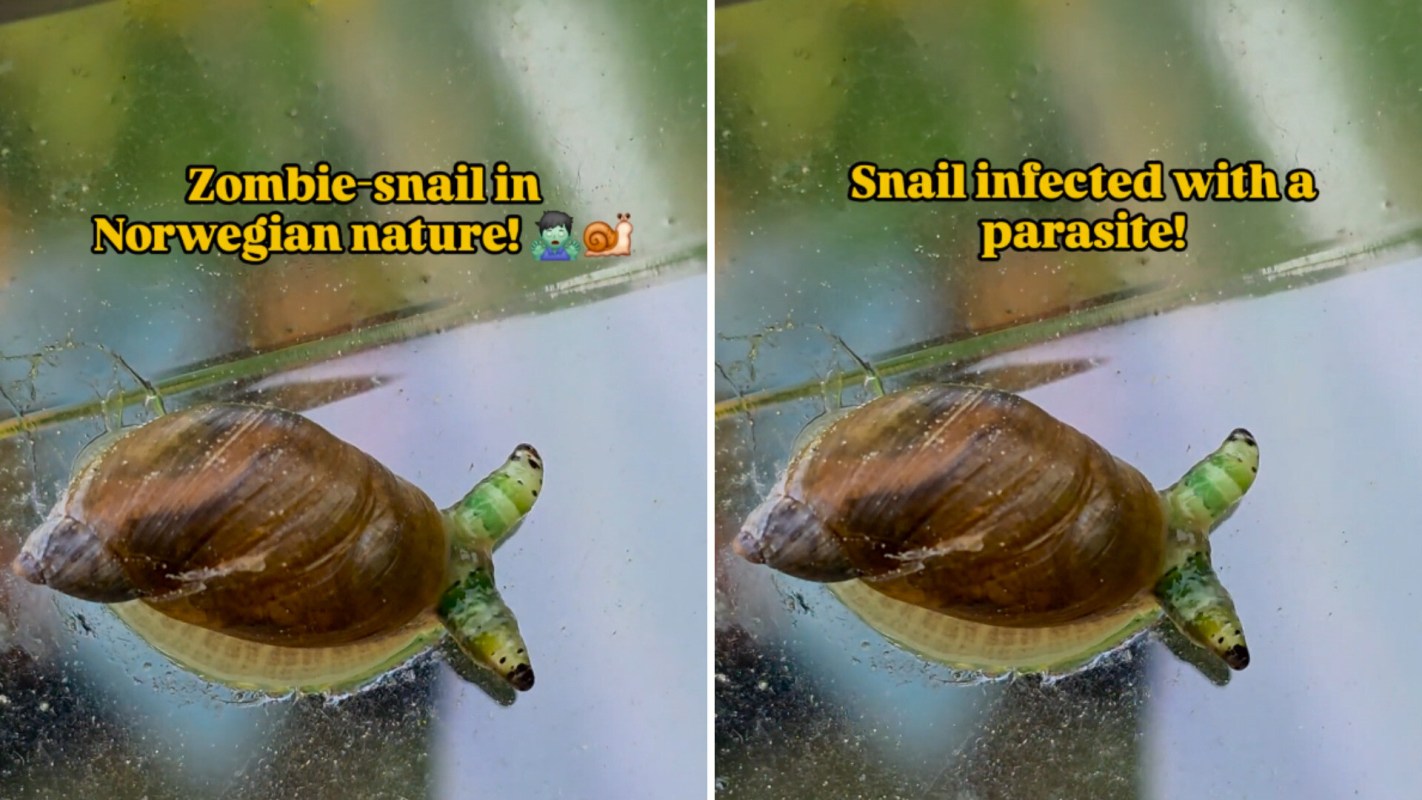
An apparently ordinary stop in a Norwegian greenhouse took a gruesome turn when an amber snail was found with a "pulsating" tentacle.
The gardener believed the snail had been infected by a parasite that effectively turns it into bait for birds and a "zombie."
What happened?
The original poster on Reddit's r/NatureIsF******Lit forum said the strange sight in the tentacle appeared to match Leucochloridium paradoxum, a parasitic flatworm, in the amber snail they had noticed a few days earlier.
(Click here to watch the embedded video if it doesn't appear).
The flatworm's survival strategy relies on birds. After an infected snail is eaten, the parasite reproduces in the bird's digestive tract, and its eggs are later released in the bird's droppings, which can infect additional snails.
To draw birds in, the worm grows into the snail's eyestalks and pulses there, creating the look of a caterpillar or grub and the pulsating effect.
TCD Picks » Quince Spotlight
💡These best-sellers from Quince deliver affordable, sustainable luxury for all




The poster also said the parasite changes how the snail behaves, drawing it out of shaded hiding places and into more exposed spots where birds are more likely to see it.
"Apparently, there are only around 25 registered sightings of this parasite here in Norway, so I was pretty blown away to just stumble into one," the gardener wrote.
One commenter wrote, "They can actually live through this process. Eventually the parasites will pop out the eyes stalks if the snail doesn't get eaten, and the snail will regrow new eyes."
The original poster concluded, "Absolutely wild to see in person."
What can I do?
If you spot unusual wildlife activity in your yard, garden, or local park, the best first step is usually to observe. Take clear photos or video from a safe distance instead of handling the animal, especially if it appears sick, stressed, or covered in parasites.
For rare or surprising finds, documenting the location and date can also be useful. Local naturalist groups, biodiversity projects, or museum collections may be interested in reports of uncommon sightings, particularly if they help build a clearer picture of where species are appearing.

Get TCD's free newsletters for easy tips, smart advice, and a chance to earn $5,000 toward home upgrades. To see more stories like this one, change your Google preferences here.






