


At least one HEB grocery store customer says a recent "sale" label created more confusion than clarity.
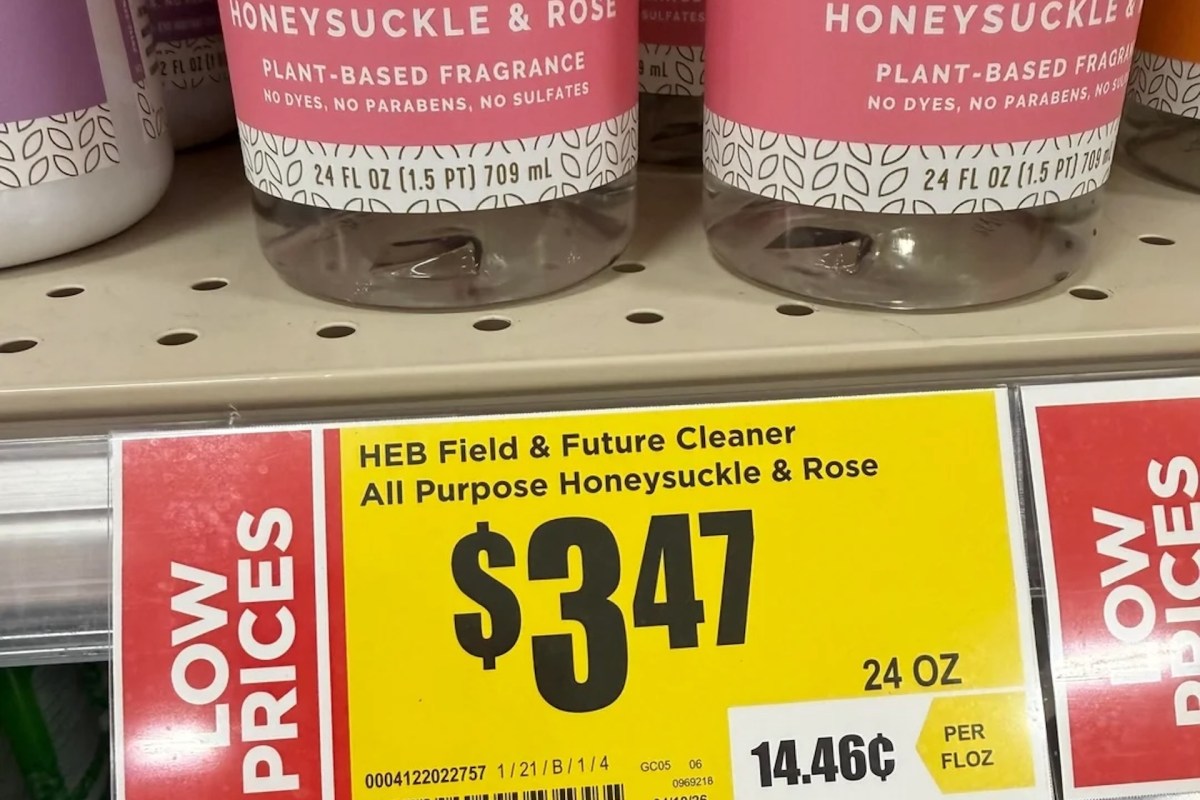
The Texas shopper pointed to a "Low Price" sign that appeared to cover an older shelf sticker with a cheaper amount still visible.
What happened?
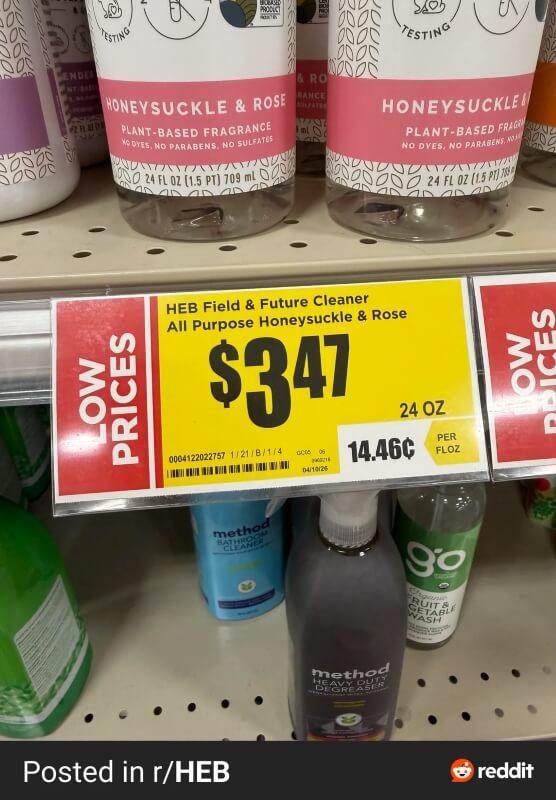
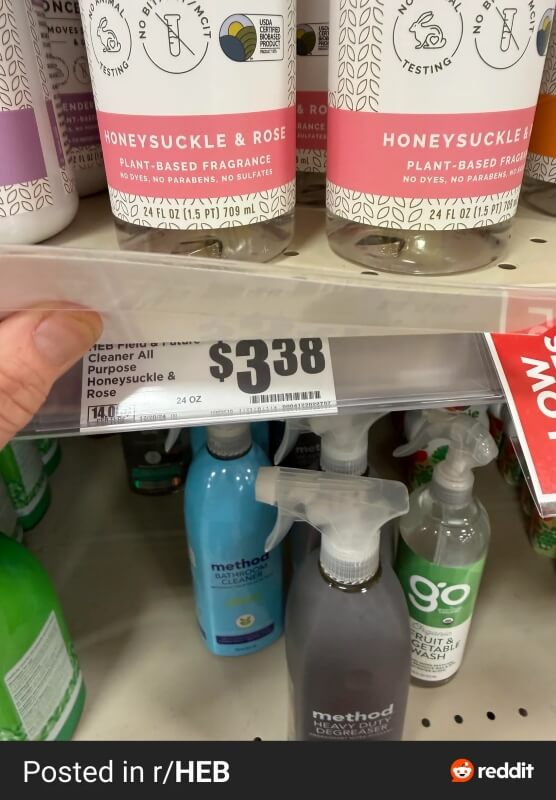
The complaint centered on a photo posted to Reddit's r/Anticonsumption forum that appeared to show a promotional "Low Prices" tag placed over what was a lower previous price at Texas grocery chain HEB. While the striking yellow "Low Prices" tag advertised 24-ounce containers of HEB Field & Future Cleaner at $3.47, the hidden, less eye-catching white tag showed that same cleaner selling for $3.38.
Beyond the HEB image, the discussion broadened into other examples of confusing grocery pricing. Those topics included buy-one-get-one offers that seemed to leave higher prices in place after they ended, and unit labels that switched between ounces and milliliters, which can make comparison shopping harder.
In the same Reddit post, another shopper claimed, "In my local supermarket they had cooking oil double the price but offer buy 1 get 1 free. But when the offer expired the price was kept doubled."
One commenter added, "A lot of them are doing this now it seems. I see a lot of this at Kroger/fred Meyer."
TCD Picks » Quince Spotlight
💡These best-sellers from Quince deliver affordable, sustainable luxury for all




A third commenter warned about digital displays: "Wait, until you see more and more stores start using electronic price tags. Walmart has already started doing in some stores."
Why does it matter?
Unclear or potentially misleading pricing can have an immediate effect on grocery budgets.
Many shoppers rely on shelf tags, sale signs, and unit pricing to figure out what they can afford in a given week, especially as staples such as oil and flour remain expensive.
Promotions such as buy-one-get-one-free can push people to buy more than they originally planned, which can mean extra packaging, more food sitting in the fridge, and more money spent on items that may never get used.
When unit pricing is inconsistent, like with per ounce on one product and per fluid ounce on another, it becomes more difficult to compare products fairly.
Frustration over grocery pricing can also erode trust in the businesses that serve entire communities. When shoppers feel they need to second-guess every label, routine errands can become more stressful and less transparent.
What can I do?
Before trusting a sale sign, you can read the shelf tag closely, compare the unit price, and use your phone to check the math if something seems off.
Bringing a written list into the store can also make a difference, since it may reduce the pull of flashy promotions tied to items you did not plan to buy.
If a shelf label seems especially important, taking a quick photo before checkout can make it easier to sort out a mismatch at the register. After paying, look over the receipt before leaving the store. If something seems off, ask an employee or manager to confirm the price.
For repeated issues, shoppers can also contact local consumer protection offices or weights-and-measures agencies, which may track pricing complaints.
"Check the tags. Check the math. Don't buy anything you didn't plan before you entered the store," one commenter advised.
Another commenter wrote: "It says low, not lower! lol I hate this timeline."

Get TCD's free newsletters for easy tips, smart advice, and a chance to earn $5,000 toward home upgrades. To see more stories like this one, change your Google preferences here.






