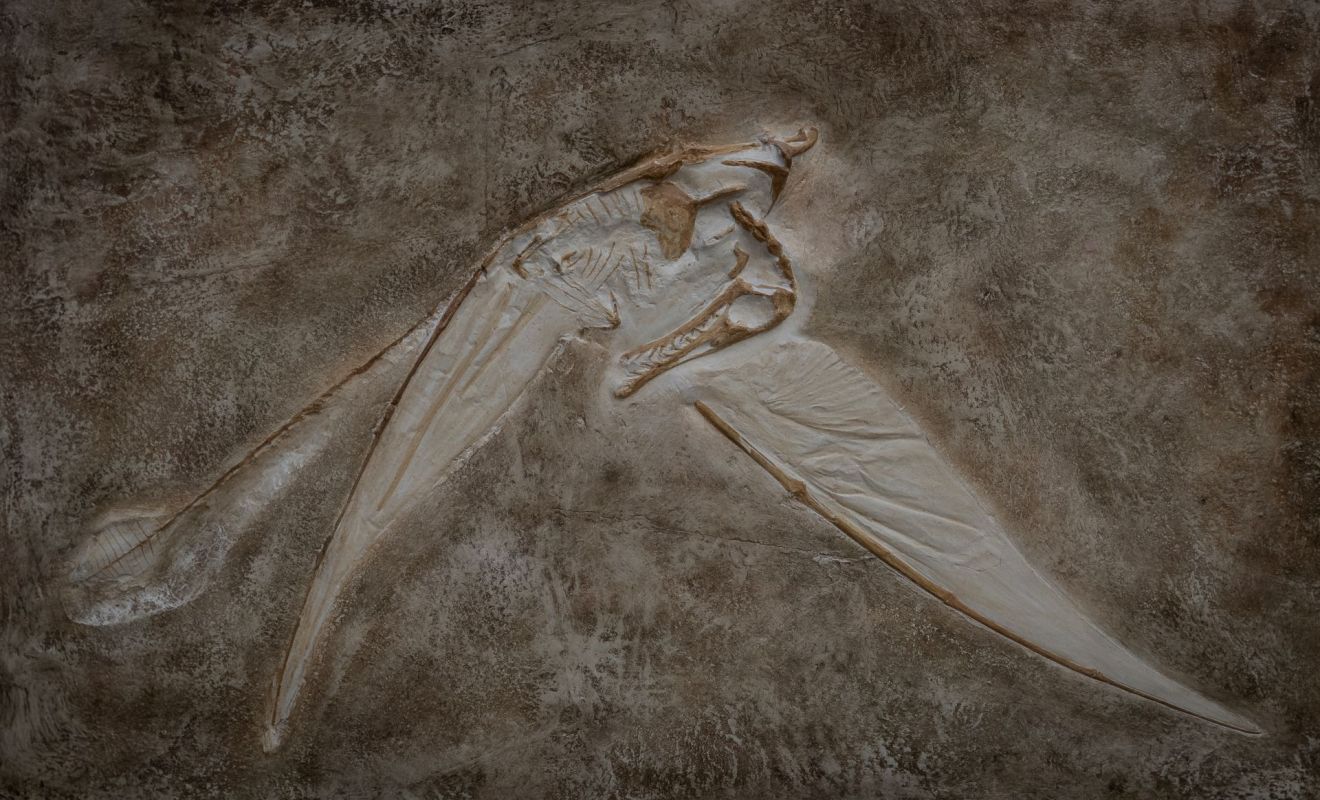
Scientists studying a 113-million-year-old pterosaur fossil from Brazil uncovered steroid biomarkers preserved inside the animal's hollow wing bones.
Those molecules pointed to a diet heavy in fish and squid, giving researchers a rare chemical signal from a creature that died more than 100 million years ago.
The specimen's remarkable state of preservation gave clues about what this flying reptile ate and what ancient environmental conditions allowed such fragile details to last for so long.
What happened?
A study published in the journal iScience examined an exceptionally preserved pterosaur from Brazil's Romualdo Formation and identified steroid biomarkers still present within its hollow wing bones, according to Vice.
The chemical evidence indicated that the animal fed mostly on fish and cephalopods, such as squid, while also consuming some land-dwelling animals. Delicate evidence like this is unusual because soft tissues and faint molecular traces normally disappear long before a fossil is recovered.
The pterosaur likely died over the ocean and later came to rest on the seafloor, where sulfur-oxidizing bacteria began breaking down the body.
TCD Picks » EDF Spotlight
💡EDF's Vital Signs newsletter delivers stories about game-changing solutions close to home and around the world




During that process, some of those microbes appear to have helped create mineral deposits that sealed tissue traces inside calcium carbonate. Researchers also believed that low-oxygen, sulfur-rich waters played a role in preserving the fossil in such extraordinary detail.
Why does it matter?
Fossils often show scientists what an ancient animal looked like, but this one goes much further, offering a molecular-level snapshot of how it lived. That gives researchers a much clearer picture of prehistoric food webs and the ecosystems that supported them.
Finds like this can also deepen scientists' understanding of how life responds to changing environments over long stretches of time. The same fossil contains clues about the chemistry of the ancient seafloor, the microbes involved in decomposition, and the unusual conditions that made this level of preservation possible.
The more researchers learn about how organic compounds survive in nature, the better they can interpret Earth's history, including past ocean conditions, biodiversity changes, and extinction patterns.
The discovery is a reminder that some of the biggest scientific breakthroughs do not always come from giant skeletons or dramatic new fossil finds. Sometimes, a single molecule can reshape what scientists know about an entire species.
Calling the specimen a "time capsule" seems apt. It preserves not only the remains of a pterosaur but also a faint chemical record from a world that has long vanished.
What's being done?
Scientists are increasingly combining fossil analysis with chemistry, microbiology, and imaging techniques to study ancient animals in greater detail than ever before. Instead of relying only on bone structure, researchers can now search for molecular traces that reveal diet, habitat, and even the environmental conditions surrounding death and burial.
Brazil's Romualdo Formation remains one of the world's most important sources of pterosaur fossils, and discoveries like this show why protecting scientifically significant sites matters so much. Once a fossil is damaged, looted, or poorly handled, information at this level can be lost for good.
The more complete the fossil record becomes, the more clearly scientists can trace how ancient life adapted, interacted, and disappeared.

Get TCD's free newsletters for easy tips, smart advice, and a chance to earn $5,000 toward home upgrades. To see more stories like this one, change your Google preferences here.