


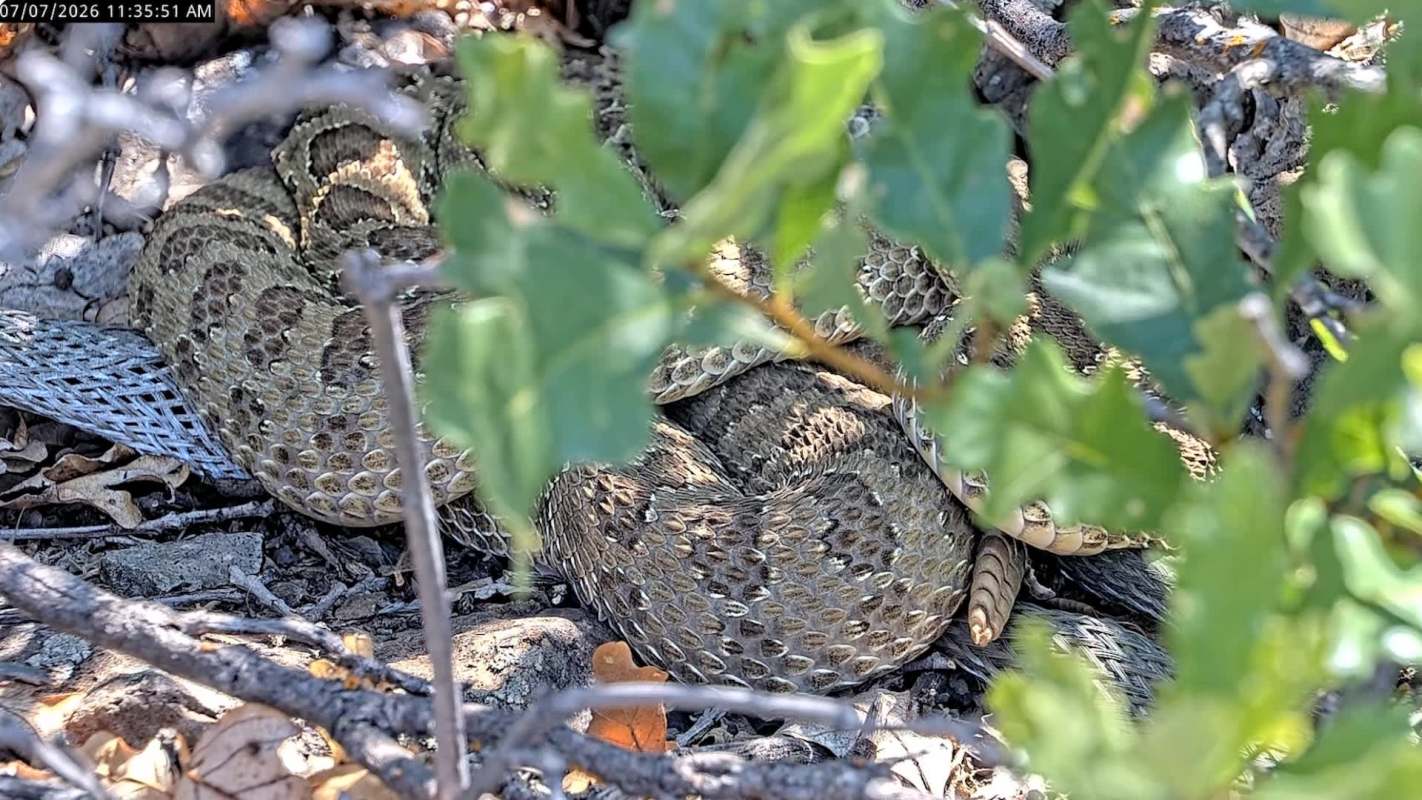
A livestream in Larimer County is once again showing one of Colorado's more unusual animal gatherings: a prairie rattlesnake mega-den that draws hundreds of snakes in the warmer months.
It offers a close look at wildlife. It also serves another purpose: replacing fear with familiarity.
What's happening?
The Colorado RattleCam, which streams a large prairie rattlesnake den for public viewing, gets more than 2 million views a year. According to The Coloradoan, the third-year project is run jointly by Cal Poly, Central Coast Snake Services, and Dickinson College.
Project RattleCam has cameras in three locations. There's one in Colorado, one in California, and another in Pennsylvania.
On undisclosed private land in Colorado, a camera watches a rocky outcropping where the snakes have left hibernation to hunt and bask in the spring sun. The Coloradoan noted that the solar-operated system includes HD video and infrared for nighttime viewing.
That activity shifts throughout the year. Snakes generally emerge in April and May, with most moving downhill in early June to hunt in nearby meadows and shrublands. Pregnant females return from late August to early September to give birth, while the rest of the den comes back in late September and October.
TCD Picks » Quince Spotlight
💡These best-sellers from Quince deliver affordable, sustainable luxury for all




Pirate, Aggie, Twitchy, Thor, Ramen, and Lasagna are among the snakes viewers have gotten to know through the project's "Name a Snake community science contest." The feed has made it possible for researchers and viewers to tell more than 40 individuals apart by their markings, and Project RattleCam also says den members can "babysit" the young.
Why does it matter?
Rattlesnakes often cause alarm, but they play an important role in the ecosystem. As predators, they help keep rodent populations under control, which benefits farms and even human health by limiting pests that spread disease.
Prairie rattlesnakes are long-lived animals with predictable seasonal routines. Project RattleCam notes, via The Coloradoan, that they typically live about 10 to 20 years, with some reaching more than 60 years, while females give birth to live young instead of laying eggs.
What's being done?
Project RattleCam functions as both a public education effort and a scientific resource. Because the camera is solar-powered, scientists can study seasonal movement and social behavior.
The stream provides a safer way to learn about rattlesnakes than trying to find them in the wild. It also gives hikers, landowners, and pet owners a better sense of when snakes are concentrated near dens and when they have dispersed into the surrounding habitat.
In snake country, experts generally recommend staying on trails, watching where you step or place your hands, keeping dogs close, and never attempting to handle a snake. Understanding when emergence and birthing periods happen can make those precautions even more effective.
The naming contest helps people recognize individual snakes rather than a faceless cluster of wildlife, easing some of the fears people may have.

Get TCD's free newsletters for easy tips, smart advice, and a chance to earn $5,000 toward home upgrades. To see more stories like this one, change your Google preferences here.






