


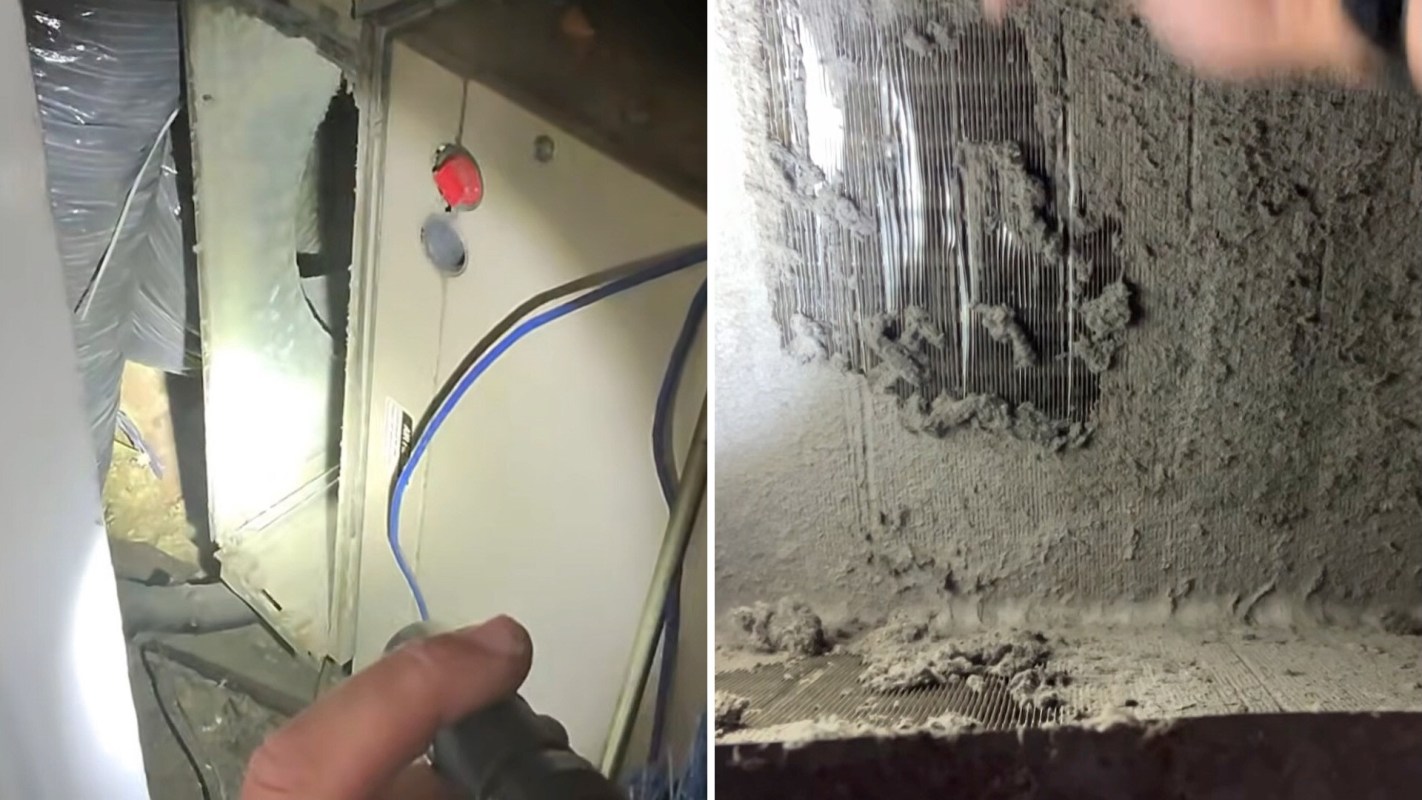
A frozen air-conditioning system on an emergency service call in New York led one HVAC technician to a sight no homeowner wants to see: an evaporator coil hidden under a heavy layer of grime.
His reaction was immediate: "Was there ever a filter?"
What happened?
At a Long Island home undergoing a major renovation, New York HVAC technician Mikey Pipes documented an urgent no-cooling visit after both central AC systems froze up. With the house already hot, the equipment seemed to be straining under dust buildup and lack of maintenance.
Viewers can see the moment on YouTube when Pipes opens the air handler and finds an evaporator coil he describes as "completely caked with dirt, dust, construction debris, and years of neglect." In the footage, he adds, "That is a solid layer of dirt on this coil."
The dirty coil was only part of the problem. Pipes also flagged dirty ductless mini-split filters, low airflow, weak supply air, wiring concerns, and what he said looked like a clogged drain. One commenter wrote, "One of the filthiest coils I've ever seen."
Why does it matter?
This kind of buildup is more than just unpleasant — it can get expensive fast.
TCD Picks » Quince Spotlight
💡These best-sellers from Quince deliver affordable, sustainable luxury for all




When dust blocks an evaporator coil or airflow drops because of a neglected filter, an AC system has to work harder and run longer to cool the same space. That can mean higher electricity bills, weaker cooling performance, and a greater risk of icing, breakdowns, and emergency service calls.
A basic filter replacement may cost only a little, while an emergency visit, deep cleaning, or major repair can cost much more. A full system replacement, meanwhile, can cost more still.
There is also an environmental impact. An overworked AC unit uses more energy than a clean, properly maintained system, which means more pollution tied to cooling a home that still may not feel comfortable.
What can I do?
Protect your HVAC system before, during, and after renovation work. That means checking that filters are installed correctly, replacing them on schedule, and making sure construction dust is not being pulled directly into return vents.
Homeowners with ductless systems should also clean mini-split filters regularly, especially during high-use summer months or dusty renovation projects.
If airflow suddenly feels weak, rooms are not cooling evenly, or ice forms on the unit, shut the system down and call a professional instead of forcing it to keep running.
Pipes said the episode highlights a simple lesson: "This is exactly why homeowners need proper HVAC maintenance, especially during renovations."
Routine maintenance can be one of the cheapest cooling "hacks" available, since spending a little on filters and seasonal service can help avoid wasted energy, keep indoor temperatures steadier, and reduce the odds of a much larger repair bill later. For older systems that continue to struggle, it may also be worth asking a contractor whether newer heat pump systems would make more sense.

Get TCD's free newsletters for easy tips, smart advice, and a chance to earn $5,000 toward home upgrades. To see more stories like this one, change your Google preferences here.






