


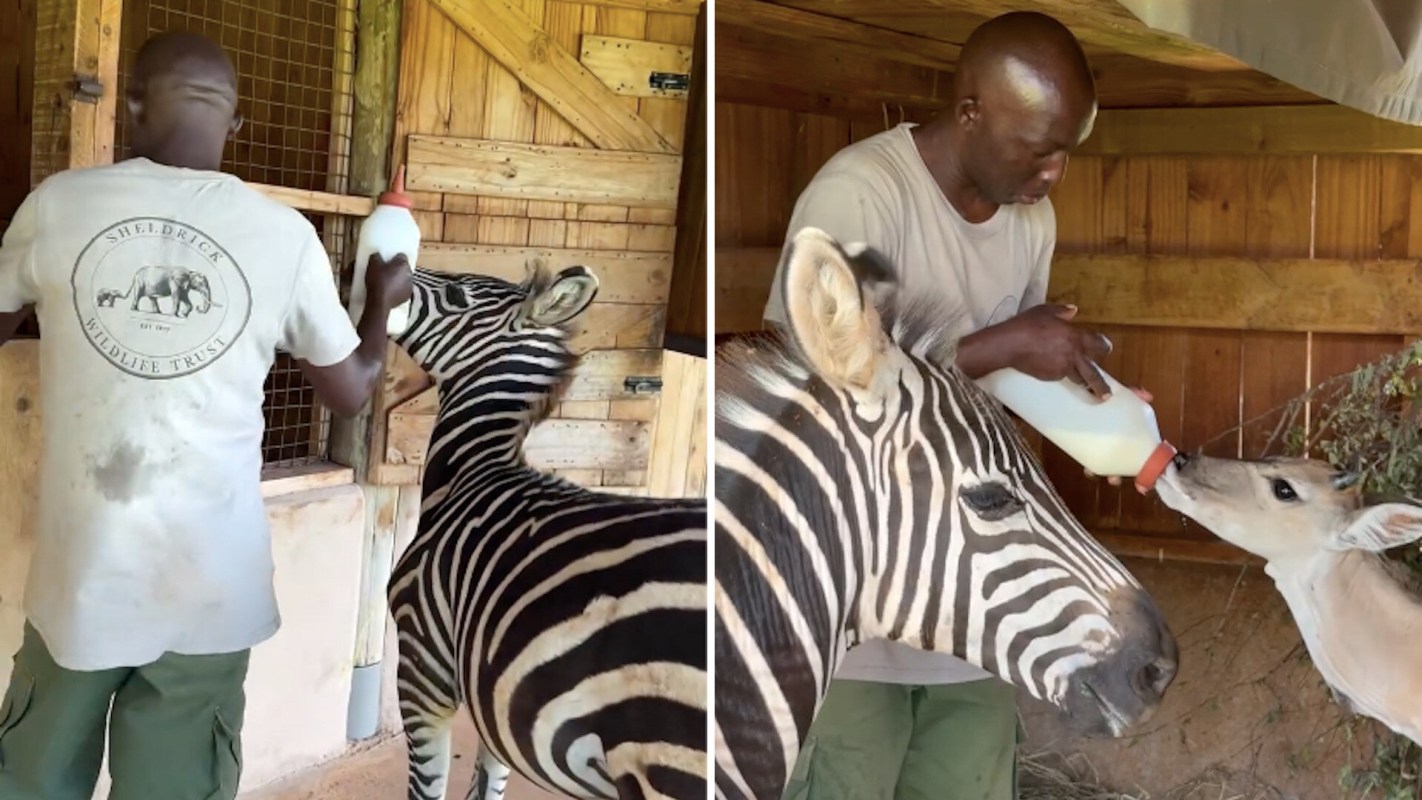
A bottle, a patient keeper, and a few future friends are helping one young antelope find his footing again.
A new Instagram post shows Richard, an orphaned eland, taking a small but meaningful step from rescue toward life with a herd.
What's happening?
The Instagram reel shared by the Sheldrick Wildlife Trust follows keeper Peter and Brutus the zebra as they give Richard, a recently rescued orphaned eland, his afternoon bottle and help him adjust to his new environment.
As Peter pulls out the bottle of milk, Brutus hurries to his side, hoping it's for him. Peter opens the stable doors to show Richard standing, slightly hesitant about all the commotion. The clip later shows Richard bravely taking the bottle into his stable, with Brutus standing close for comfort, and possibly sharing.
New rescues are typically kept in a quiet phase that the trust calls "stable rest," according to the Sheldrick Wildlife Trust, so they can recuperate and begin to trust the people caring for them.
Even before that period is over, keepers start carefully introducing newcomers to other orphans. As Peter put it, "That way, they'll already have friends when they're ready to join everyone out in the bush."
TCD Picks » Quince Spotlight
💡These best-sellers from Quince deliver affordable, sustainable luxury for all




By the time of the update, the trust said Richard had already joined the orphan herd and was fitting in with the rest.
Why does it matter?
The post offers a close-up look at one part of wildlife rescue: Healing is not only about food and shelter. Young animals that have lost their mothers may also need calm, routine, and carefully managed social contact before they are ready to join a larger group.
It shows rehabilitation as a slow, thoughtful process built through repeated care, including feeding, resting, bonding, and gradually rebuilding confidence.
For social animals in particular, the transition back toward group life can be just as important as the initial rescue itself.
One commenter wrote, "I just think you are all great, what you do for those animals is beautiful."
"What a beautiful sight. Such a kind keeper and the animals so happy," another added.
Another commenter wrote, "Richard has an emotional support zebra. Lucky boy."
What's being done?
Returning an orphan to the bush comes only after several quieter steps. As the post shows, the trust first gives a rescued animal time to recover, bottle-feeds and closely monitors it, and then slowly introduces it to companions before it heads back out.
That kind of gradual transition can make a major difference for a social animal. Rather than forcing a sudden change, keepers help new arrivals build familiarity and trust first, which can ease the move into the larger orphan herd.
Emergency rescues often draw attention, but follow-up care, staffing, and habitat protection are what help animals truly recover.

Get TCD's free newsletters for easy tips, smart advice, and a chance to earn $5,000 toward home upgrades. To see more stories like this one, change your Google preferences here.







