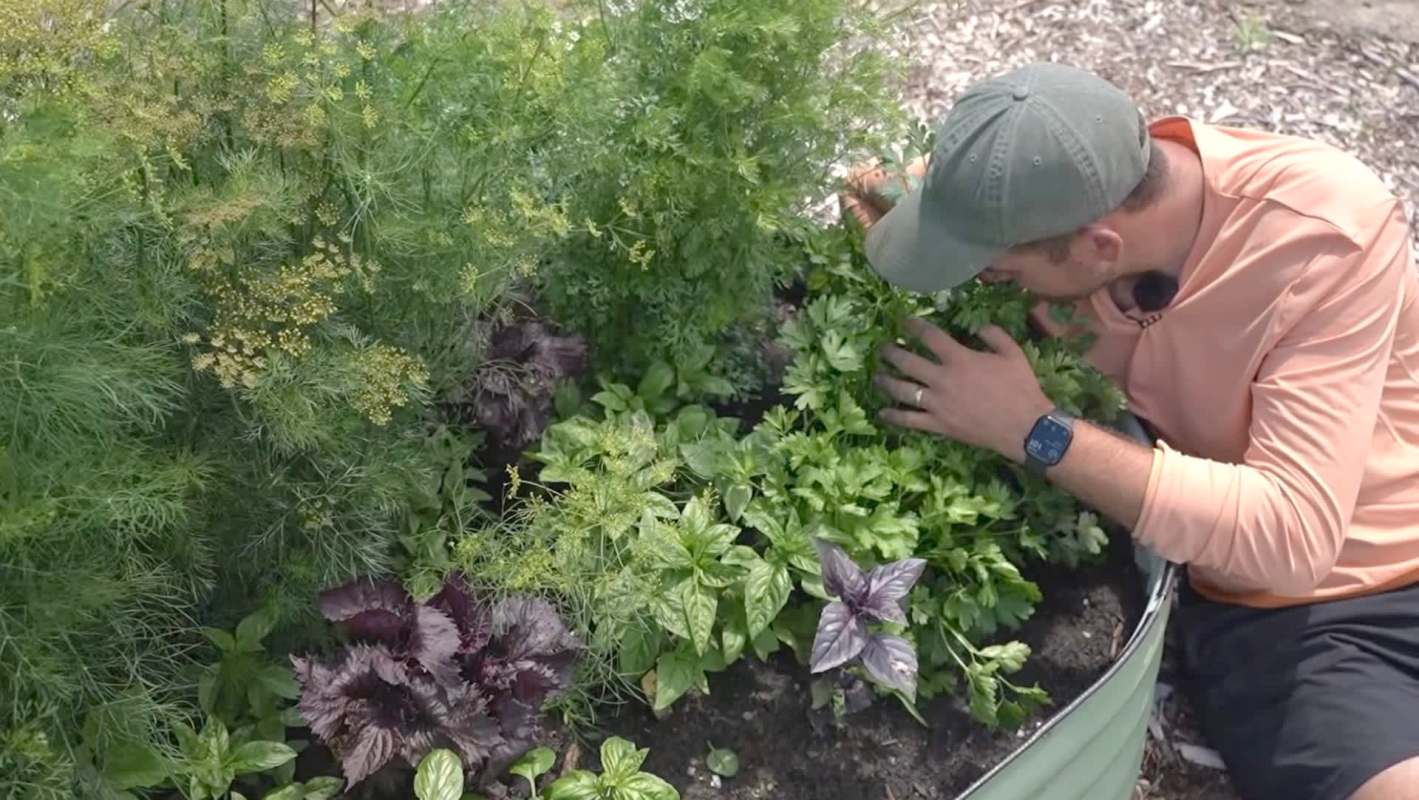
Some gardeners harvest herbs timidly, taking just a leaf or two so the plant will keep going. But for fast-growing pantry staples, a much deeper trim can be a better strategy for keeping them full and healthy through summer.
Although it may feel counterintuitive, when done the right way, a hard cut can help lanky herbs grow back thicker and more productive.
What's happening?
In a recent YouTube video, the gardening experts at MIgardener share a lesson on a more aggressive approach to managing herbs. In the clip, the creator explains that cutting plants back more heavily can actually be more effective than taking small, incremental harvests.
For herbs such as basil and mint, that kind of heavier pruning can be beneficial. Regularly cutting stems back helps keep plants from shooting upward, flowering too soon, or developing woody growth, while encouraging more branching and tender new leaves.
The tutorial breaks down which herbs respond well to this method, how low to make the cuts, and why repeating those larger harvests over the summer can improve overall production. In short, taking more at once can lead to greater usable growth later.
What can I do?
If you grow basil, mint, or other vigorous herbs, consider changing how you harvest them. Instead of removing just a few leaves from the top, cut stems back far enough to prompt side shoots and denser regrowth. The aim is to keep the plant compact and productive rather than letting it rush toward flowering.
TCD Picks » Quince Spotlight
💡These best-sellers from Quince deliver affordable, sustainable luxury for all




It also helps to harvest regularly. Waiting too long can leave herbs tall and uneven, while consistent cutbacks train them into a bushier shape. If you are unsure how far to go, start with one plant and watch how quickly it rebounds in warm weather.
A few simple habits can stretch your harvest further: Grow herbs in sunny spots, keep them watered, and pick them often enough that they do not become overgrown. Container growing can make that easier, and if pests become an issue, it's worth exploring ways of controlling pests without chemicals.
The payoff is simple: fuller plants, more kitchen-ready leaves, and less money spent on grocery-store herbs. Sometimes a more thorough harvest is exactly what helps a plant thrive.
Why does it matter?
Herbs are one of the easiest ways to save money on grocery costs with an at-home garden. A single store-bought packet of basil or mint can be expensive for the amount it contains, and it often wilts before it all gets used. Keeping plants productive at home can mean a steady supply of fresher, better-tasting ingredients.
Keeping herbs trimmed back can help slow bolting and reduce the tough, woody stems that make them less pleasant to use. That leaves more tender growth for pesto, teas, salads, sauces, and garnishes.
One commenter supported the tips highlighted by MIGardener, saying more thorough harvests have kept the plants healthy and fruitful.
"My herbs are doing fantastic this year. And hard cutting really benefits me and the plants!" the user wrote.

Get TCD's free newsletters for easy tips, smart advice, and a chance to earn $5,000 toward home upgrades. To see more stories like this one, change your Google preferences here.