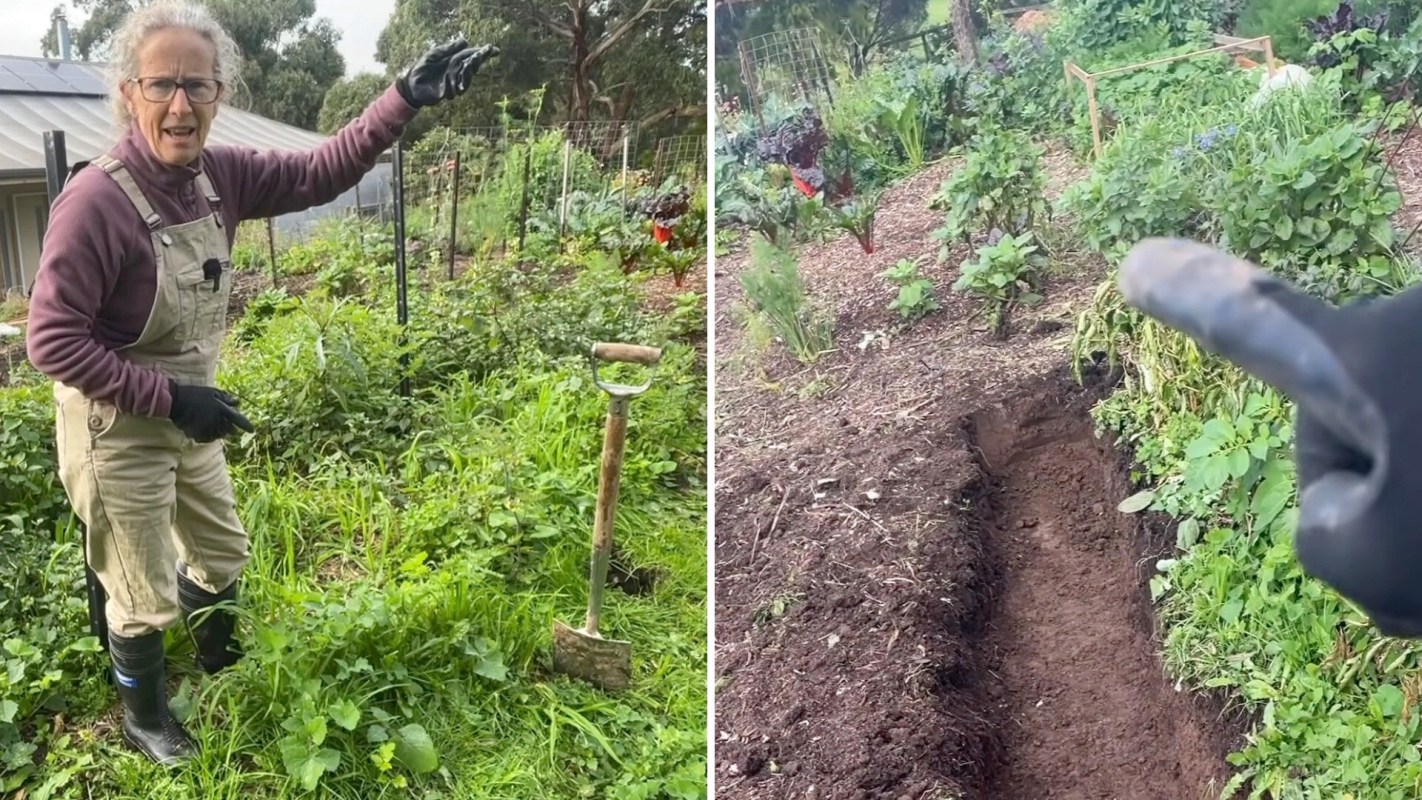
A simple garden path can do a lot more than keep muddy boots out of the beds.
In a new video, Hatton's Valley Permaculture gardener Linda showed how a walkway in her vegetable garden can double as a water-saving feature when it is dug deeper and packed with compostable material.
What's happening?
Linda, the gardener behind Hatton's Valley Permaculture (@huttonsvalleypermaculture), filmed herself working in a neglected part of her vegetable garden, where a former path had been overtaken by weeds, grasses, and self-seeded tomatoes.
Instead of just cutting everything back, she converted that space into a deep compost trench meant to catch rainfall and share stored moisture with the beds on both sides.
In the YouTube demo, Linda pointed to older compost paths in her garden as proof of concept, saying they had already helped nearby plants stay productive through dry weather.
In the video caption, Linda explained that "the deeper the path the more it benefits the garden beds on each side of it" because of both nutrients and stored moisture.
TCD Picks » Quince Spotlight
💡These best-sellers from Quince deliver affordable, sustainable luxury for all




To build it, she first took the best soil from the path and used it to raise a neighboring bed, then excavated further and filled the trench with woody material, manure, green garden waste, and fresh wood chips.
She also said the path was placed on contour so water would stay in the garden system rather than running downhill.
One commenter wrote, "[Love] this idea and the nearest thing that I could do in my narrow raised beds, is to do a bit of trench composting in between the seedlings."
"I saw one of your videos a few years ago and have been using compost paths ever since. Thanks for all your informative posts," added another.
Why does it matter?
For home gardeners, a setup like this can mean less watering, healthier soil, and more resilient food production during hot summers.
Built this way, a path can hold onto rain from wetter periods and make that moisture available more gradually than surface watering alone.
Growing even part of your own food can help lower grocery bills, especially for expensive produce such as peppers, cucumbers, pumpkins, and greens.
Gardening can provide benefits beyond the dinner table, too. Digging, hauling mulch, and tending beds offer regular physical activity, while time outdoors has long been associated with lower stress and improved mood.
Building a more self-sustaining garden system can make that routine feel less like constant maintenance and more like an investment.
There is an environmental upside as well: Better moisture retention can conserve water, while composting garden waste in place helps recycle organic matter instead of sending it elsewhere.
What can I do?
Linda's project shows that gardeners do not need a massive property to adapt this idea.
In a smaller yard, raised-bed setup, or even between rows, some version of trench composting or deep mulched paths may help improve soil structure and water retention over time.
Her process also highlights a few practical precautions: Save high-quality topsoil for the places where crops will grow, pull weeds before they can drop seed, and avoid putting invasive roots into the material used to build the system.
Starting with woody debris at the bottom can also create a hugelkultur-style base that helps hold moisture.
Linda said the payoff is simple: "lots of carefree gardening."

Get TCD's free newsletters for easy tips, smart advice, and a chance to earn $5,000 toward home upgrades. To see more stories like this one, change your Google preferences here.