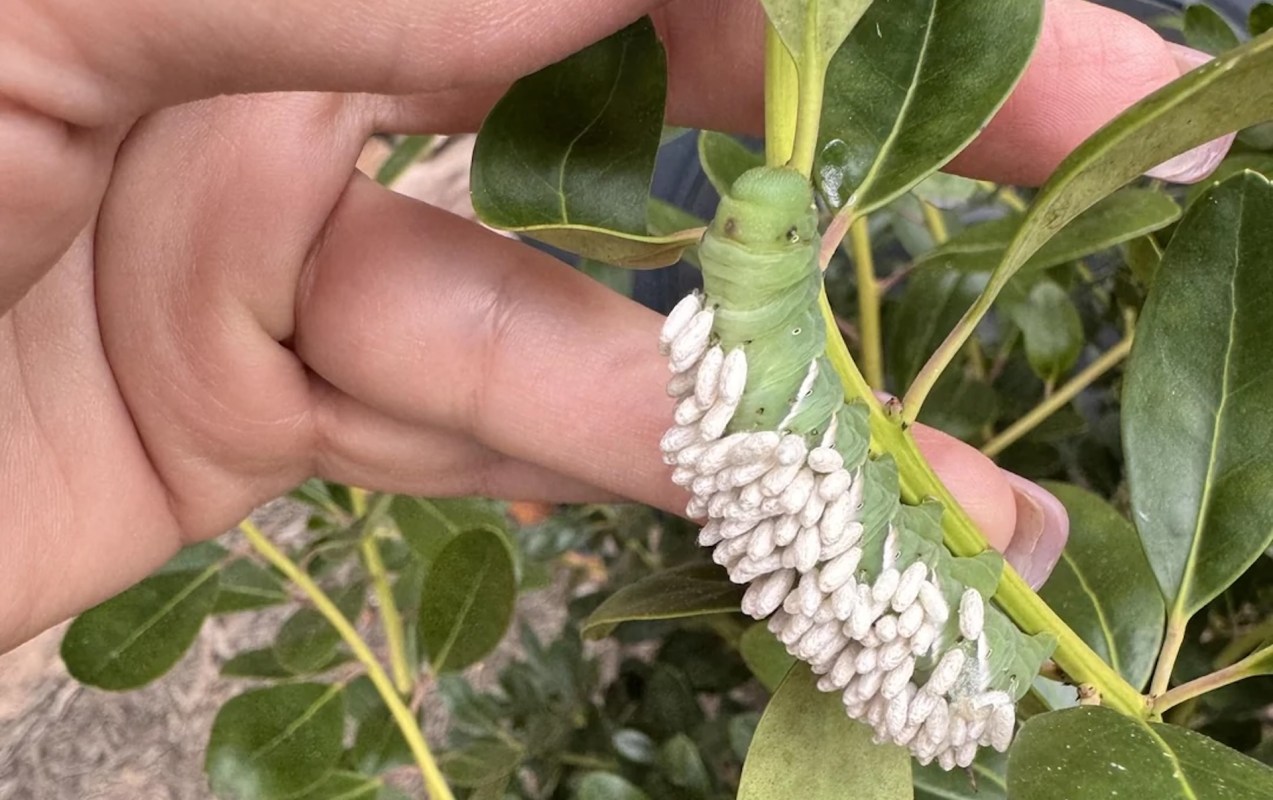
White capsules clinging to a caterpillar on an inkberry turned out not to be the start of an infestation, but evidence of a highly effective natural form of pest control already at work.
Commenters reacted to a picture of the mystery with both revulsion and appreciation, explaining that the white "eggs" on the tomato hornworm actually meant the garden was getting free help.
What happened?
In the r/gardening thread, users identified the caterpillar as a tomato hornworm, a well-known garden pest, and said the white structures were not eggs but rather the pupae or cocoons of parasitic wasps.
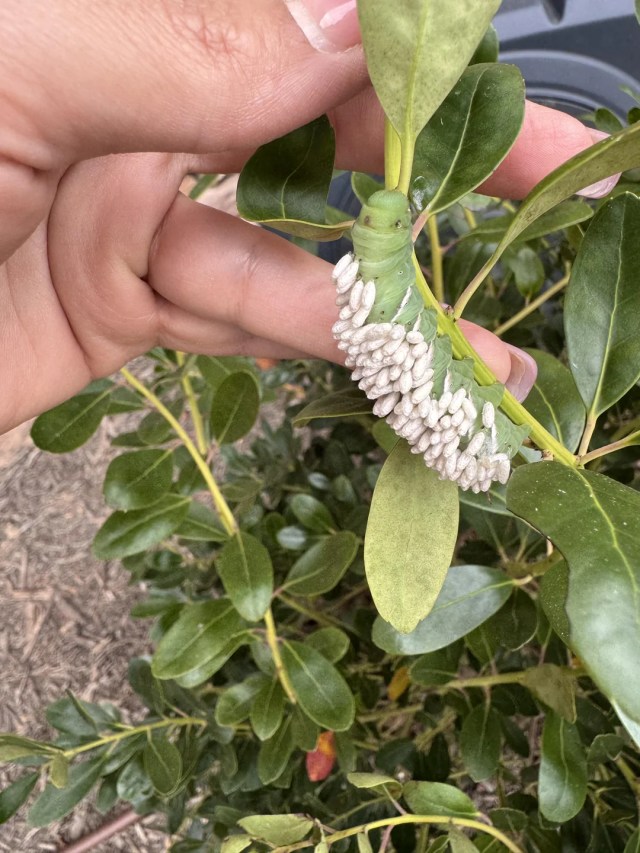
"That's a tomato hornworm, which you don't want, carrying eggs of a parasitic wasp, which you do want!" one commenter said. "The eggs will hatch and devour the worm. Worm problem solved!"
Another popular reply noted, "I just need to be pedantic: they are not eggs, they are pupa. But yes, they are from parasitic wasps and are very beneficial for your garden!"
Why does it matter?
For people growing tomatoes and other nightshade plants, hornworms are a serious problem because they can strip foliage quickly.
TCD Picks » Quince Spotlight
💡These best-sellers from Quince deliver affordable, sustainable luxury for all




In this case, though, a natural predator will eventually stop the pest, protecting the plant without any chemical sprays.
When a yard or garden can support them, beneficial insects can handle a large share of pest control on their own.
While "parasitic wasp" may sound alarming, commenters repeatedly described these insects as helpers in the garden, not the aggressive, nest-building wasps many people worry about.
Replacing even part of a traditional lawn with native plants, clover, buffalo grass, or xeriscaping can create habitat for pollinators and other beneficial insects while also saving money and time on mowing, lowering water bills, and reducing maintenance.
A full lawn overhaul is not necessary to see benefits. Even a partial lawn replacement can help homeowners support healthier ecosystems while making outdoor spaces easier and less expensive to care for.
What can I do?
If you find a hornworm covered in white cocoons, experienced gardeners say not to interfere.
One commenter wrote, "Leave it right where it is."
That gives the wasps time to finish developing and continue controlling other hornworms in the area.
Gardeners can also make their yards more welcoming to helpful insects by planting a wider mix of native species instead of relying on a monoculture lawn.
The original poster later wrote, "For my previous ignorant self it was [a nightmare], but since I posted, I look at it with admiration."
As another commenter summed it up: "The enemy of your enemy is your friend."

Get TCD's free newsletters for easy tips, smart advice, and a chance to earn $5,000 toward home upgrades. To see more stories like this one, change your Google preferences here.