


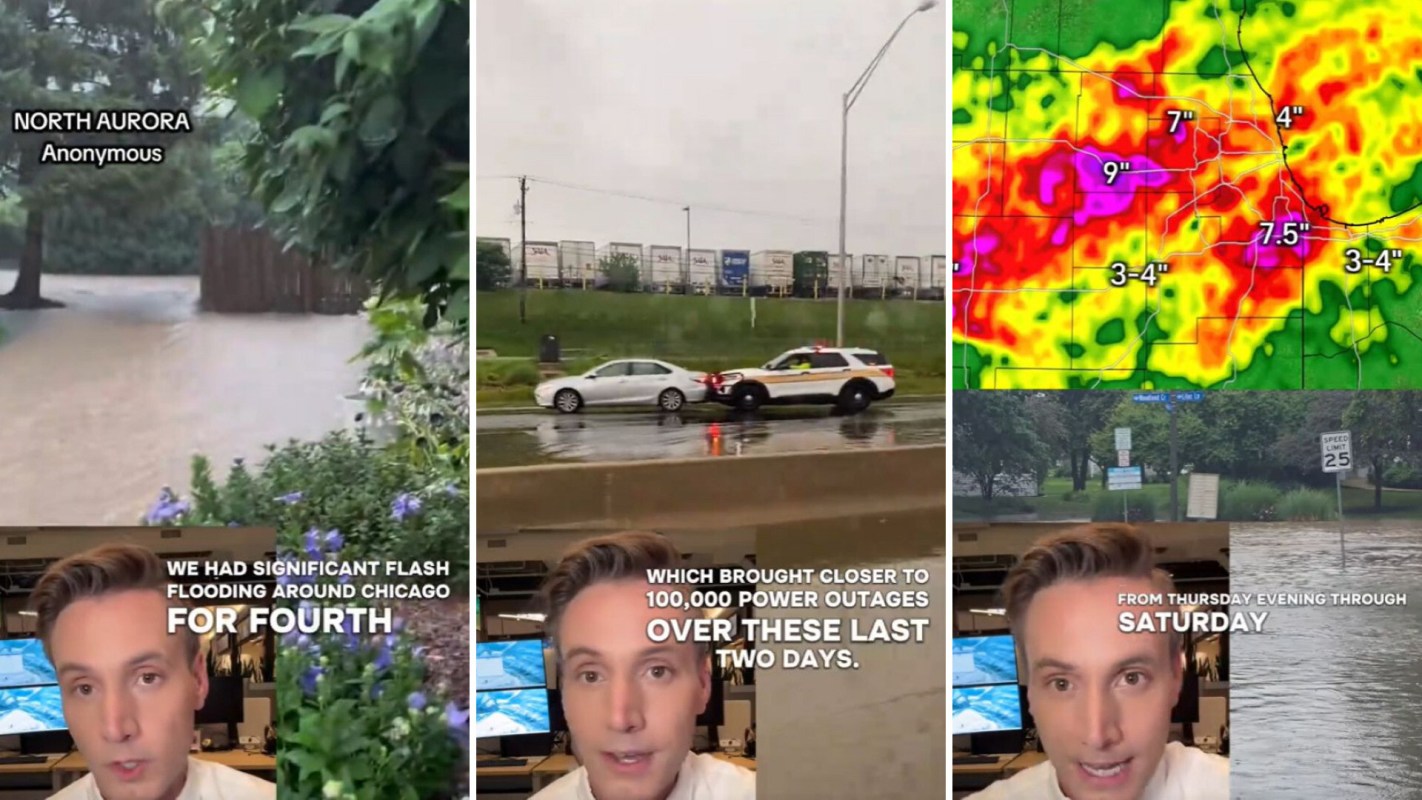
Instead of a beautiful Fourth of July weekend, the Chicago region experienced wave after wave of severe weather, with storms bringing drenching rain, power failures, and flash flooding.
Over a 48-hour span, rainfall in some suburbs climbed past 8 inches, leaving residents to deal with flooded basements, waterlogged yards, and a tough cleanup.
What happened?
Meteorologist Kevin Jeanes (@jeanesweather) said in a video posted to TikTok that the area was hit by "significant flash flooding" after "not one, not two, but four rounds of storms."
From Thursday evening through Saturday evening, total rainfall reached 5 to 9 inches, with the heaviest bursts exceeding 5 inches per hour.
Wind gusts in the 60-70 mph range accompanied the storms and led to about 100,000 power outages, Jeanes said.
He identified Sugar Grove, Aurora, and Elgin as some of the suburbs that took on heavy rain.
TCD Picks » Quince Spotlight
💡These best-sellers from Quince deliver affordable, sustainable luxury for all




"Aurora is flooding," one user wrote, while another added, "Glad I don't live in Park Ridge anymore!"
As the storms moved through, homes flooded, roads became hazardous, and power service was interrupted during the busy holiday weekend.
Why does it matter?
Flash flooding can turn dangerous quickly, especially in a dense metro area where roads, underpasses, and neighborhoods can fill with water in minutes.
Heavy rain and widespread outages do more than create inconvenience — they can also trap drivers, damage homes, spoil food, and cut people off from cooling during hot, humid weather.
Worsening extreme weather disasters endanger lives and livelihoods by damaging homes, workplaces, and public infrastructure.
Flooded basements can lead to mold and costly repairs; downed power lines can threaten community safety; and repeated storm damage can strain household budgets, insurance systems, and local economies.
Scientists have warned that the warming atmosphere can intensify heavy rainfall because warmer air can hold more moisture.
While no single storm can be attributed to rising global temperatures, events such as these fit into a broader pattern of more disruptive and costly weather extremes affecting communities across the country.
What can I do?
Staying out of floodwater and monitoring local weather alerts remain important, even after the worst of a storm seems to have passed. Flooded roads can be deeper and faster-moving than they look, and power outages can create additional hazards inside homes and around neighborhoods.
Anyone dealing with storm damage can document losses with photos, report outages and hazards to local officials and utilities, and begin drying out wet areas as quickly as possible to reduce mold-growth risk.
Residents can also check whether emergency management offices have cleanup guidance or recovery resources available.
Households can reduce risk by building basic emergency kits, keeping backup batteries and flashlights on hand, reviewing insurance coverage, and signing up for local emergency alerts.
Communitywide solutions include stormwater upgrades, reliable drainage systems, and grid improvements that can help neighborhoods better withstand future severe weather.

Get TCD's free newsletters for easy tips, smart advice, and a chance to earn $5,000 toward home upgrades. To see more stories like this one, change your Google preferences here.







