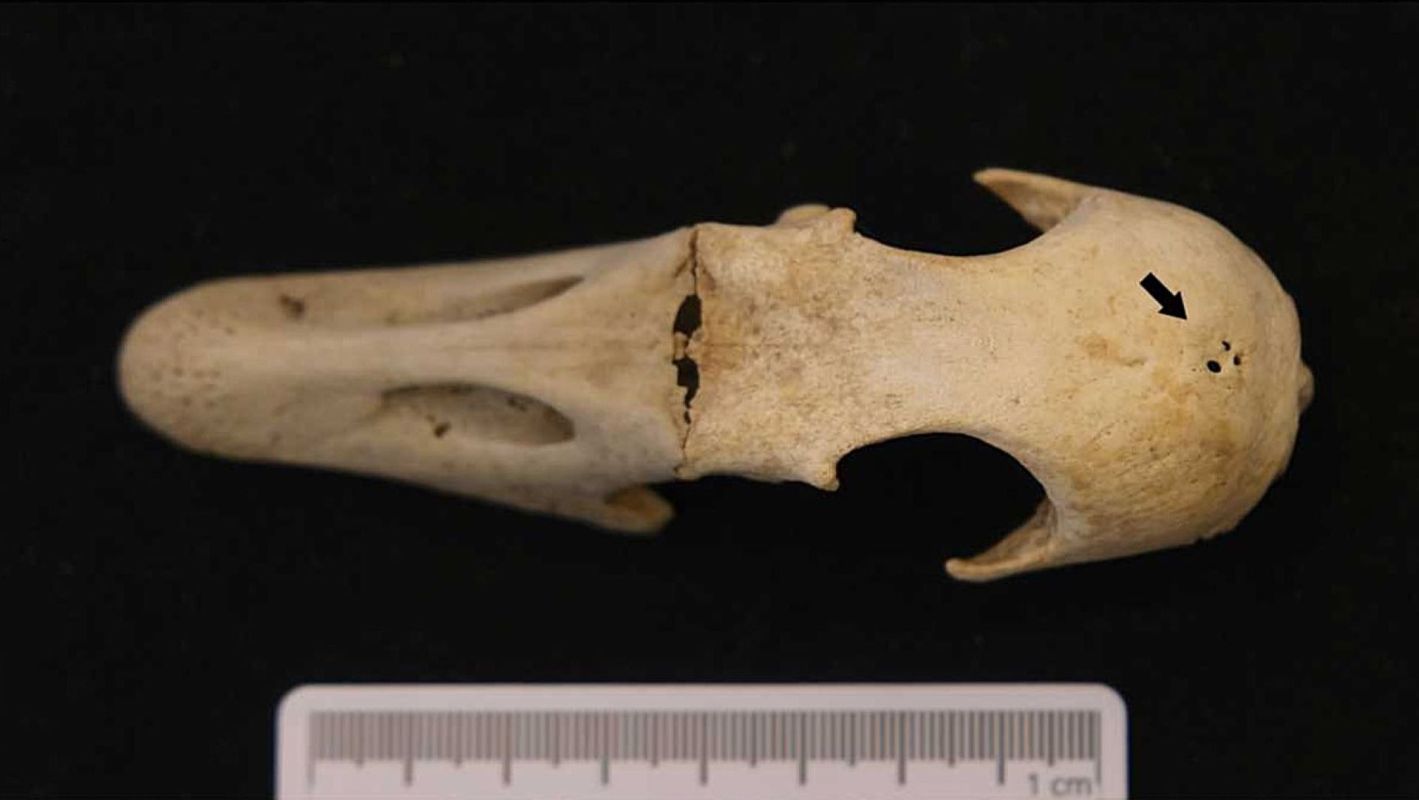
Researchers studying four unusual goose skulls from Germany say the remains provide the first archaeological evidence of crested geese, a domesticated breed recognized by the fluffy tuft of feathers atop its head.
The birds lived in the late 17th century, and their remains may also offer a glimpse of how unusual-looking breeds of animals were valued by wealthy households.
What happened?
Archaeology News reported that the skulls came to light during excavations carried out from 2021 to 2023 at Flecken Zechlin in Brandenburg, about 62 miles (100 kilometers) from Berlin.
Archaeologists recovered the bones from a former lavatory shaft, where they were mixed with food waste and the remains of other domestic animals.
What made the finds immediately distinctive was the cranium: all four skulls had openings in the top.
In one bird, the defect was so severe that a section of the skull was missing.
TCD Picks » EDF Spotlight
💡EDF's Vital Signs newsletter delivers stories about game-changing solutions close to home and around the world




Because the remains were so well preserved, researchers were able to examine them closely and rule out causes such as post-burial damage, animal gnawing, butchery, disease, parasites, and poor nutrition.
After weighing other explanations, the researchers found the closest match in crested ducks, which are bred for their distinctive feather tufts. In those ducks, the crest is linked to abnormal skull formation that can leave parts of the bone unsealed.
They concluded that the goose skulls showed "the same pattern," making the find the first archaeological evidence of crested geese.
Why does it matter?
The discovery helps fill a missing piece in the history of domestic animals.
Historical paintings from the Netherlands had already depicted geese with visible feather crests in the 1600s, but artwork alone could not confirm whether they were actually present in northern Europe.
The skulls now offer physical evidence that crested geese had reached northern Germany by the late 17th century.
The finding also raises questions about how long humans have bred animals for appearance despite possible health costs.
Studies on crested ducks have tied the trait to elevated deaths around hatching, as well as problems with balance, hearing, and vision. No equivalent research exists yet for crested geese, but their close relation to ducks means they may have faced similar problems.
What are people saying?
In the study, researchers M. Groot and M. Wandelt write that the findings "prove crested geese were present in northern Germany by the late 17th century," while also showing that archaeologists can identify the trait in excavated bird remains.
The researchers said the birds may have been kept as markers of status in wealthy households and were likely prized for their "unusual appearance."
Differences among the four skulls — with some openings tiny and others much larger — indicate that the trait did not affect every bird in the same way.

Get TCD's free newsletters for easy tips, smart advice, and a chance to earn $5,000 toward home upgrades. To see more stories like this one, change your Google preferences here.