


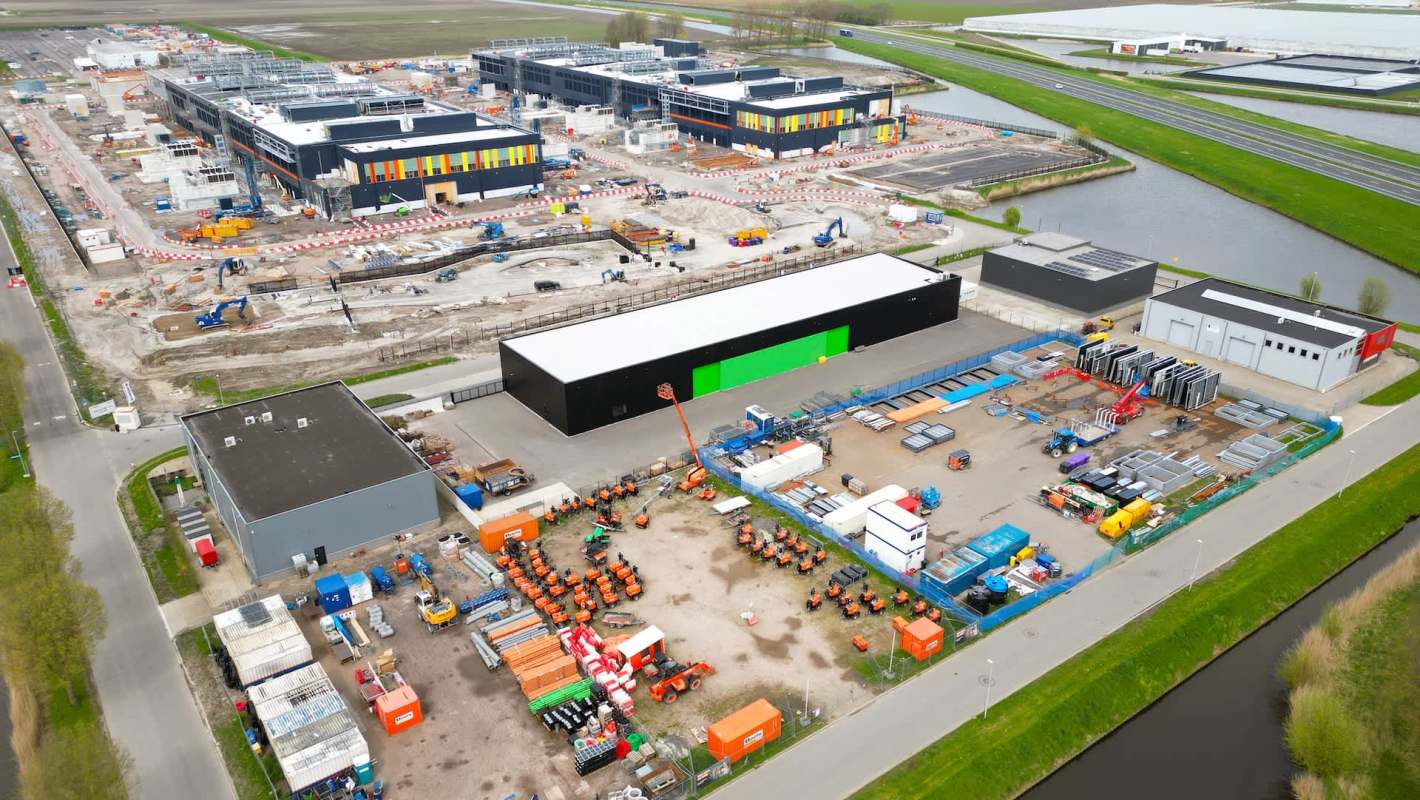
Ahead of a closely watched vote on a proposed two-year data center moratorium in Maryland, a Prince George's County sidewalk became the setting for a standoff between anti-data-center demonstrators and supporters arguing over the facilities' future.
The dispute reflects a growing debate over whether the data centers powering AI belong in local communities, raising questions about land use, power demand, water consumption, and jobs.
What's happening?
Matching orange shirts and hats marked the group that came to argue that Prince George's County should welcome data centers. Across from them, dozens gathered outside Largo's Wayne K. Curry Administration Building, where the county council holds meetings, to demand a ban on data center permitting and construction.
After the county's moratorium on artificial intelligence data centers expired on June 30, lawmakers are set to revisit the issue.
7News reported that the Prince George's County Council is expected to consider another two-year halt this week, and council member Wala Blegay told the station she believes the measure has the support to pass.
Opponents have said the county is moving too slowly, and that while the moratorium is still good news for the movement, the government should focus on adopting a permanent ban.
TCD Picks » Quince Spotlight
💡These best-sellers from Quince deliver affordable, sustainable luxury for all




"We're obviously happy to see a two-year moratorium," Selah Goodson Bell told the outlet. "I think people want the opportunity to rest and recollect themselves, continue to strategize. We think the issue is that it falls short of what everybody has been asking."
Prince George's County already has five data centers, raising concerns about how many more the area could realistically support and how another could have harmful effects on the community.
"There are many other ways people have wanted to develop land that actually bring local, accessible jobs to the masses of numbers," said Goodson Bell. "There's also the risk of blackouts. We're seeing hot summer days like today that force people to crank up their A/C. Imagine not even being able to keep your home cool."
"They're everywhere in the U.S. and other countries, and we have to know technology is going to move forward," said Ursula Franklin.
Why does it matter?
Data centers are becoming increasingly central to the modern economy, especially as AI tools expand. They store and process massive amounts of information, helping power everything from cloud services to business operations.
AI can also offer real advantages, including improving logistics and helping utilities optimize cleaner energy systems.
At the same time, these facilities can put serious strain on local infrastructure. Large data centers can consume enormous amounts of electricity and vast amounts of water for cooling. That has raised concerns about grid reliability during heat waves, rising utility costs, and whether communities are being asked to absorb environmental burdens without receiving enough direct benefits in return.
Blegay pointed directly to those concerns, saying, "We don't necessarily know how much water it's going to take. The electricity grid is an issue, as electricity costs are going up. I think we have to make a decision. We don't have the infrastructure for any type of data center."
The widespread AI boom has also fueled concerns beyond energy use and environmental factors, including security risks, misuse, and unintended social consequences.
What's being done?
County leaders appear to be leaning toward buying more time.
County executive Aisha Braveboy previously issued an executive order in September 2025 that stopped data center permitting, months after the planning board approved a major data center proposal at the former Landover Mall site, 7News reported. That project remains on hold.
County council chair Krystal Oriadha confirmed that a vote on a two-year moratorium is coming in early July, 7News reported. Residents who oppose new facilities have said that temporary action is welcome, but it is not enough.
"At this point, [the moratoriums are] stalling tactics because what the people have asked for is a permanent ban," Goodson Bell said.
The county also appears to be considering other ways to boost the local economy as it faces looming revenue losses tied to the Washington Commanders' expected departure from Landover, the scrapped FBI headquarters plan in Greenbelt, and the permanent closure of Six Flags.
Blegay said officials are exploring other options, including new tourism and business opportunities, adding that tax revenue from data centers "may not be worth the squeeze."
"I just feel that if we know that this is coming, whether we want it or not, eventually we'll have to accept it," Franklin said.
Meanwhile, Goodson Bell summed up the opposition's preferred vision for the land, saying, "Everyone in this area has been clear they prefer there to be a worker's co-op or more grocery stores, even more retail businesses."

Get TCD's free newsletters for easy tips, smart advice, and a chance to earn $5,000 toward home upgrades. To see more stories like this one, change your Google preferences here.






