


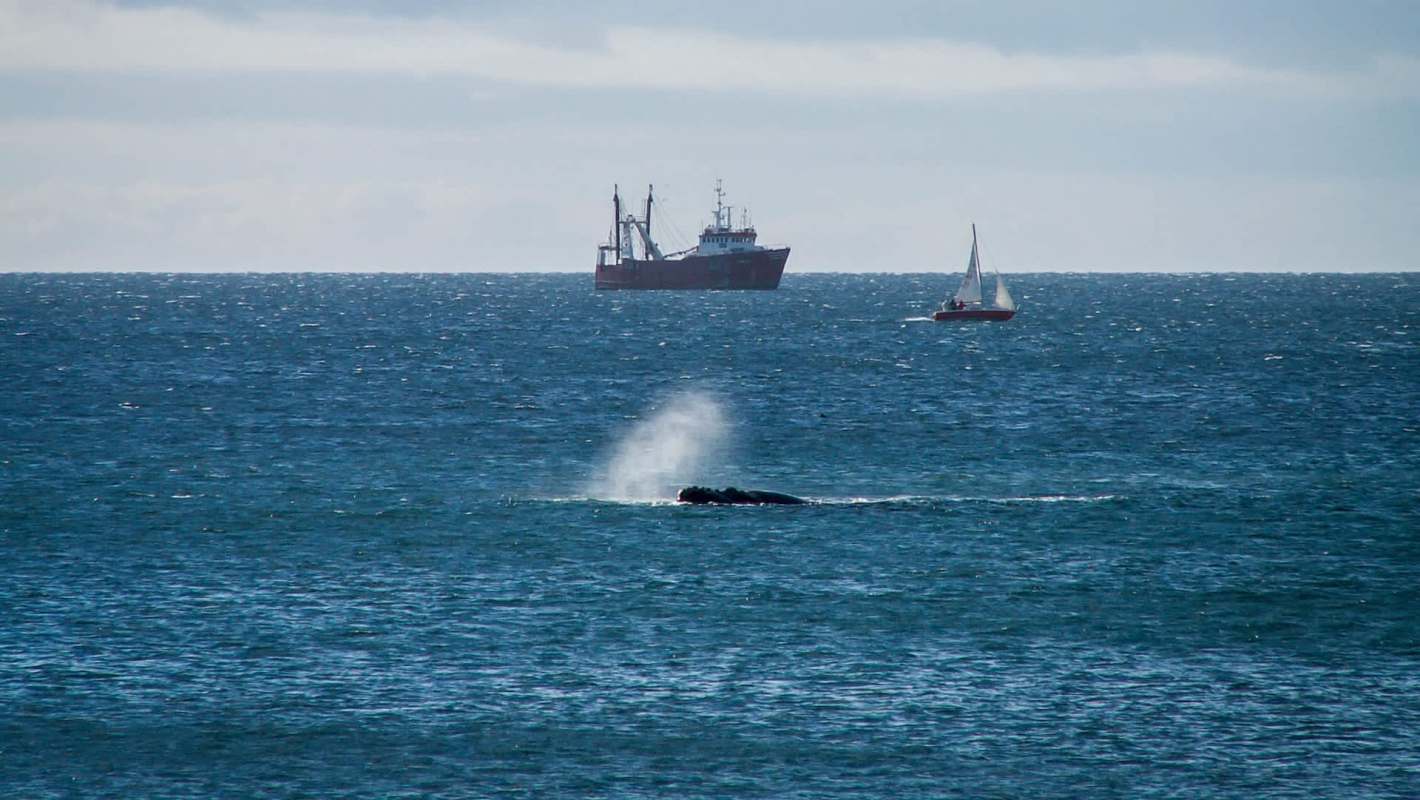
A North Carolina museum is doing more than teaching visitors about the coast — it is also helping protect one of the rarest whales by warning nearby ships to slow down.
From Ocean Isle Beach, the Museum of Coastal Carolina has joined a network that uses ship-tracking technology to help protect the endangered North Atlantic right whales, of which only about 380 remain.
What's happening?
According to WHQR, the Museum of Coastal Carolina, which is operated by the Ocean Island Museum Foundation, is now one of roughly 60 East Coast groups sending automated notices that urge larger vessels to reduce speed.
From early November through late April, those alerts ask ships 65 feet and longer traveling in seasonal management areas to slow to 10 knots.
Jamie Justice, who leads programs and exhibits for the Ocean Island Museum Foundation, said the museum uses an antenna that reaches about 50 miles through ships' automatic identification systems, or AIS.
Justice stated how the AIS alert is programmed to keep reappearing until a vessel cuts its speed.
TCD Picks » Quince Spotlight
💡These best-sellers from Quince deliver affordable, sustainable luxury for all




She also noted that NOAA and Marine Information Systems are working on alerts tied to whale sightings, and "they can send it out 15 days continuously."
Why does it matter?
The stakes remain high, said Michael Tift, an associate professor at the University of North Carolina Wilmington who also directs the marine mammal stranding program.
"There are only approximately 380 individuals left on the planet, and of those 380 individuals, about 70 of them are reproductively active adult females, who are the ones that can contribute to the population growth," he said.
This year brought 23 calves, which is better than recent years, but Tift said the species will need many more births to truly recover — around 50 calves in a year would help the population grow.
Human-caused risks pose a great danger to not only these whales but many other species, such as one incident where a baby humpback whale was entangled in nets in the Baltic Sea.
Tift said the leading causes of death are "vessel strikes, either from large or small vessels, as well as entanglement and gear associated with fishing," according to WHQR.
That danger is not limited to massive cargo ships. Dr. Tiffany Keenan said the kinds of mid-size boats once considered in a proposed federal speed rule are "primarily like those large sport fishing boats that you see going out offshore to do sport fishing."
She added, "There was a young calf that was killed by one of them a year before last."
What's being done?
The AIS warning system uses existing maritime technology to encourage slower speeds in real time.
Scientists are also improving tracking and identification methods, such as aerial surveys to identify whales based on physical appearance. Keenan noted that right whales can be recognized from the air by distinct white markings on their heads that stay the same throughout their lifespan.
She explained that "they have these callosities or kind of white patterns on their heads, so just like a fingerprint, essentially."
The regulatory outlook is less clear. As WHQR reported, a plan to expand speed limits to some vessels between 35 and 60 feet stalled after opponents raised concerns about cost and navigational safety.
"We want to do what we can to make the ocean accessible for everyone, people and animals," Justice said.

Get TCD's free newsletters for easy tips, smart advice, and a chance to earn $5,000 toward home upgrades. To see more stories like this one, change your Google preferences here.






