


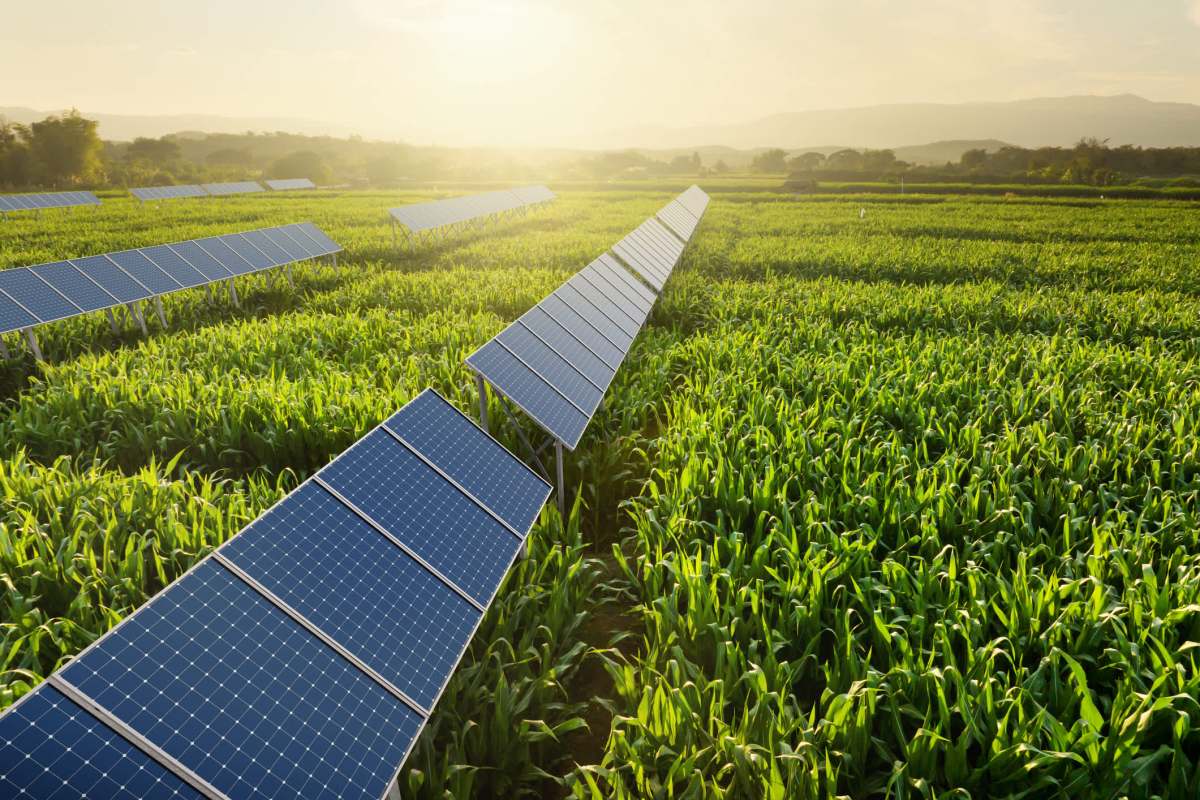
While residents in rural communities are excited about solar power, there's still the question of whether solar farms could be taking up the land necessary to grow crops.
Researchers at the University of Wisconsin, Madison, are investigating a different approach: Could it be possible to have farmland that produces food, houses animals, and supplies electricity all at the same time?
What happened?
Scientists at the Kegonsa Research Campus are testing agrivoltaics, an approach that uses the same acreage for both solar power and agriculture.
Just west of Lake Kegonsa, the nearly 17-acre project features 5,424 solar panels installed in different configurations. According to Wisconsin Public Radio, those projects allow scientists to study sunlight, crop performance, grazing, water use, soil carbon, and wind.
The array started operating in 2025, is planned to remain in use for 25 years, and produces enough electricity to power about 1,000 homes.
Ankur Desai, chair of the Department of Atmospheric and Oceanic Sciences at UW-Madison, told WPR that the research involves far more than simply placing panels in a field.
TCD Picks » Quince Spotlight
💡These best-sellers from Quince deliver affordable, sustainable luxury for all




The project relies on several flux towers, including one that stands 100 feet tall, to gather atmospheric data. The instruments measure moisture, wind, and the exchange of energy and gases between the land and the atmosphere, WPR reported. Desai said the Kegonsa site is among the few agrivoltaic locations in the world that use them.
Why does it matter?
If agrivoltaics proves effective at scale, it could help tackle two major challenges at once: adding more low-cost clean electricity to the grid while keeping productive farmland in use.
More solar power can help reduce pollution linked to asthma and heart disease, while a stronger supply of renewable electricity can help shield families from volatile energy prices.
The concept may also strengthen farm operations. Scientists are studying whether panel shade can help some crops and livestock while also tracking potential long-term benefits for water conservation and soil health.
For homeowners inspired by projects like this, EnergySage can help you go solar with free tools and save money by comparing competitive bids from local installers.
What are people saying?
Desai emphasized that these are not small experimental plots.
"What we're talking about here are utility-grade solar arrays that need to provide power for the grid, so they need to be relatively large," he said, per WPR.
He also pointed to the complexity of designing them well.
"To allow farming to happen requires a lot of consideration about the spacing, what crops you can grow, and how much that changes things like the local water cycle or nutrient delivery," he said.
"The world needs energy to do all the things it wants to do and that demand is only increasing with time. That energy needs to come from multiple sources, and right now with a changing climate and with all of the demands on energy, solar energy is one of our best options globally and nationally and in Wisconsin."

Get TCD's free newsletters for easy tips, smart advice, and a chance to earn $5,000 toward home upgrades. To see more stories like this one, change your Google preferences here.






