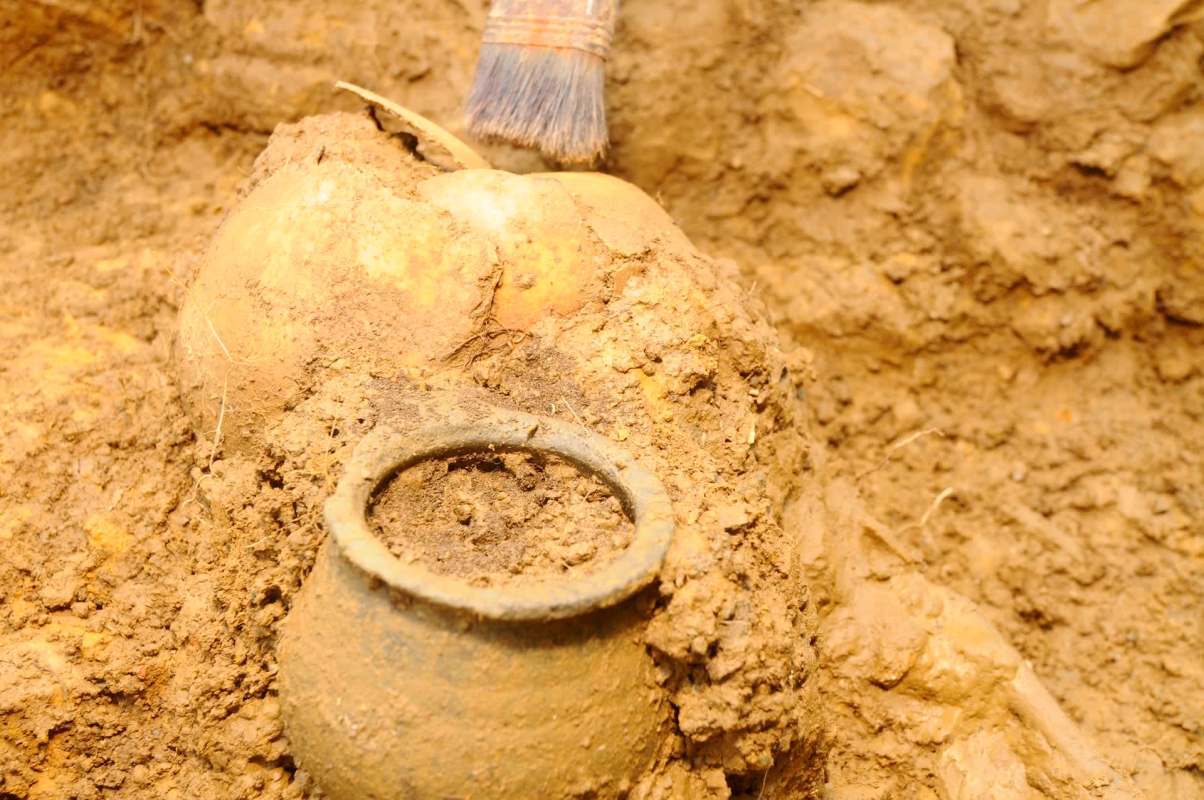
At Hadrianopolis in northern Turkey, archaeologists uncovered a Roman-era burial placed inside an enormous ceramic storage jar. Researchers said it appears to be the first find of its kind in the inland western Black Sea region.
What happened?
According to Heritage Daily, the discovery was made near present-day Eskipazar in Karabük Province, where archaeologists identified a pithos tomb — a burial inside a large clay jar typically used in antiquity to store and transport goods such as grain, olives, and wine.
The jar contained human skeletal remains as well as several grave goods: seven pottery vessels, an oil lamp, a knife, two bone hairpins, and a bronze coin.
Because the coin belongs to the reign of Roman Emperor Probus, who ruled from A.D. 276 to 282, researchers date the burial to the late third century.
The bone hairpins suggest the deceased may have been a woman, although researchers said more analysis is still required to determine the person's sex and age.
Researchers said this form of burial had not previously been recorded either at Hadrianopolis or elsewhere in the inland western Black Sea region.
TCD Picks » EDF Spotlight
💡EDF's Vital Signs newsletter delivers stories about game-changing solutions close to home and around the world




Why does it matter?
The find further elevates the importance of Hadrianopolis, a settlement whose history extends back more than 3,000 years.
According to Heritage Daily, the city was founded by the Hittites around 1300 B.C. and later developed into a Roman center on a trade corridor connecting the Black Sea coast, central Anatolia, and the Aegean Sea.
The tomb also contained examples of Pontic Sigillata, a red-slipped tableware widely used around the Black Sea during Roman times.
The burial offers new clues about trade, movement, and cultural exchange in the ancient city.
What are people saying?
Professor Ersin Çelikbaş, who directs the Hadrianopolis excavations, said the discovery marks an important moment for archaeology in the region.
"This is the first documented pithos burial discovered at Hadrianopolis and in the inland western Black Sea region," Çelikbaş said, according to Heritage Daily. "It provides valuable new evidence for understanding local burial customs during the Roman period."
Researchers also singled out the hairpins and pottery as particularly notable parts of the find.
Together, they suggest the tomb could reshape researchers' understanding of funerary practices in northern Anatolia while also reinforcing Hadrianopolis' role as a long-active hub of regional commerce and culture.

Get TCD's free newsletters for easy tips, smart advice, and a chance to earn $5,000 toward home upgrades. To see more stories like this one, change your Google preferences here.