


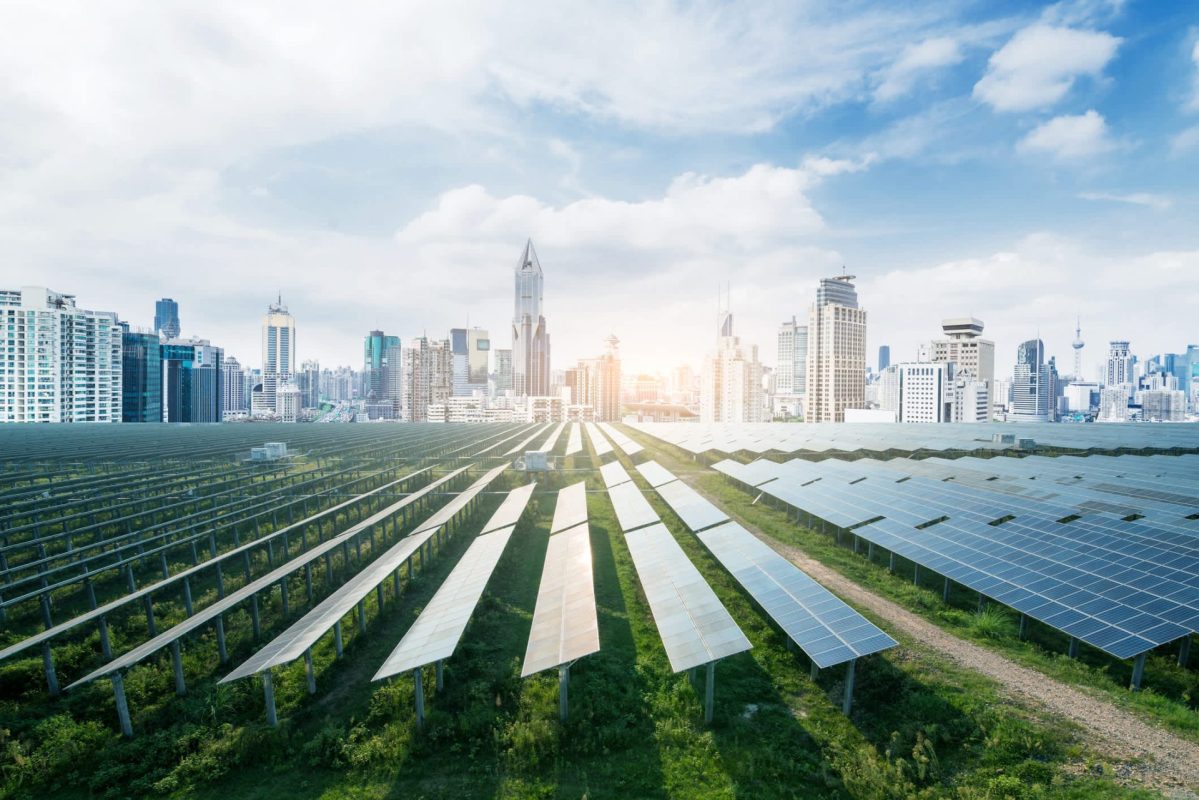
China's green-energy costs are speculated to drop in the next few years, an unidentified industry insider told the South China Morning Post.
The projection comes after it was reported that the country's power generation capacity reached 4.01 billion kilowatts by the end of May, the National Energy Administration said in a June 25 press release. Non-fossil energy stood out as a major driver of growth, accounting for 62% of the total installed capacity in May, the NEA reported.
China's massive clean-energy buildout may soon do more than cut pollution. It could make renewable electricity cheaper than coal.
Hithium chairman Wu Zuyu said China could see the full cost of green power — including generation, storage, and transmission — drop to about 0.30 yuan per kilowatt-hour within five years, according to the South China Morning Post, which is about $0.04 in U.S. dollars. The average cost of electricity in the U.S. is $0.18 per kWh, with some states seeing rates over $0.30.
What's happening?
At the World Economic Forum's "Summer Davos" on June 25, Wu Zuyu, the chairman of the energy-storage firm Lithium, said that the cost of energy-storage equipment is expected to hit a "0.1-yuan era," referring to the cost per kilowatt-hour, within the next five years, the South China Morning Post reported.
Zuyu also said that if prices for wind, solar power, and transmission networks were to reach 0.1 yuan, the overall cost of green energy could enter a "0.3-yuan era."
TCD Picks » Quince Spotlight
💡These best-sellers from Quince deliver affordable, sustainable luxury for all




"It will be cheaper than many traditional energy sources while also being cleaner, greener and easier to deploy," Wu said.
For comparison, estimates cited by the South China Morning Post put stand-alone power storage at roughly 0.35 to 0.60 yuan (roughly 5 cents to 9 cents) per kilowatt-hour, while coal-fired electricity carries a total cost of around 0.42 to 0.62 yuan per kilowatt-hour, depending on the province.
Yang Kun, executive vice chairman of the China Electricity Council, said in the NEA's press release that this will not only help protect China's energy but also accelerate the green, low-carbon transition and strengthen scientific and technological self-reliance.
Why does it matter?
If renewable power becomes dependably cheaper than coal in the world's biggest clean-tech manufacturing hub, the effects could extend far beyond China. Lower costs for solar, batteries, and storage systems can help make cleaner electricity more affordable for households, drivers, and businesses worldwide.
Electricity prices shape nearly everything, from utility bills and home heating and cooling to EV charging and the cost of goods tied to energy-intensive manufacturing and shipping.
Forbes reported in December that the estimated average end-user power cost in China in 2024 was around $100 per megawatt-hour, compared with $150 in the U.S. and $250 in the European Union, citing a report from the global energy consulting firm Wood Mackenzie.
China aims to peak emissions before 2030 and reach carbon neutrality by 2060, the South China Morning Post reported.
What's being done?
China is continuing to expand renewables, storage, and grid infrastructure, while companies pursue newer battery chemistries such as sodium-ion cells.
Wu argued at the World Economic Forum that batteries could become commercially viable and cost-effective in about five years, reducing pressure on lithium and copper supplies, the South China Morning Post reported.
"It will be cheaper than many traditional energy sources while also being cleaner, greener and easier to deploy," he said.

Get TCD's free newsletters for easy tips, smart advice, and a chance to earn $5,000 toward home upgrades. To see more stories like this one, change your Google preferences here.







