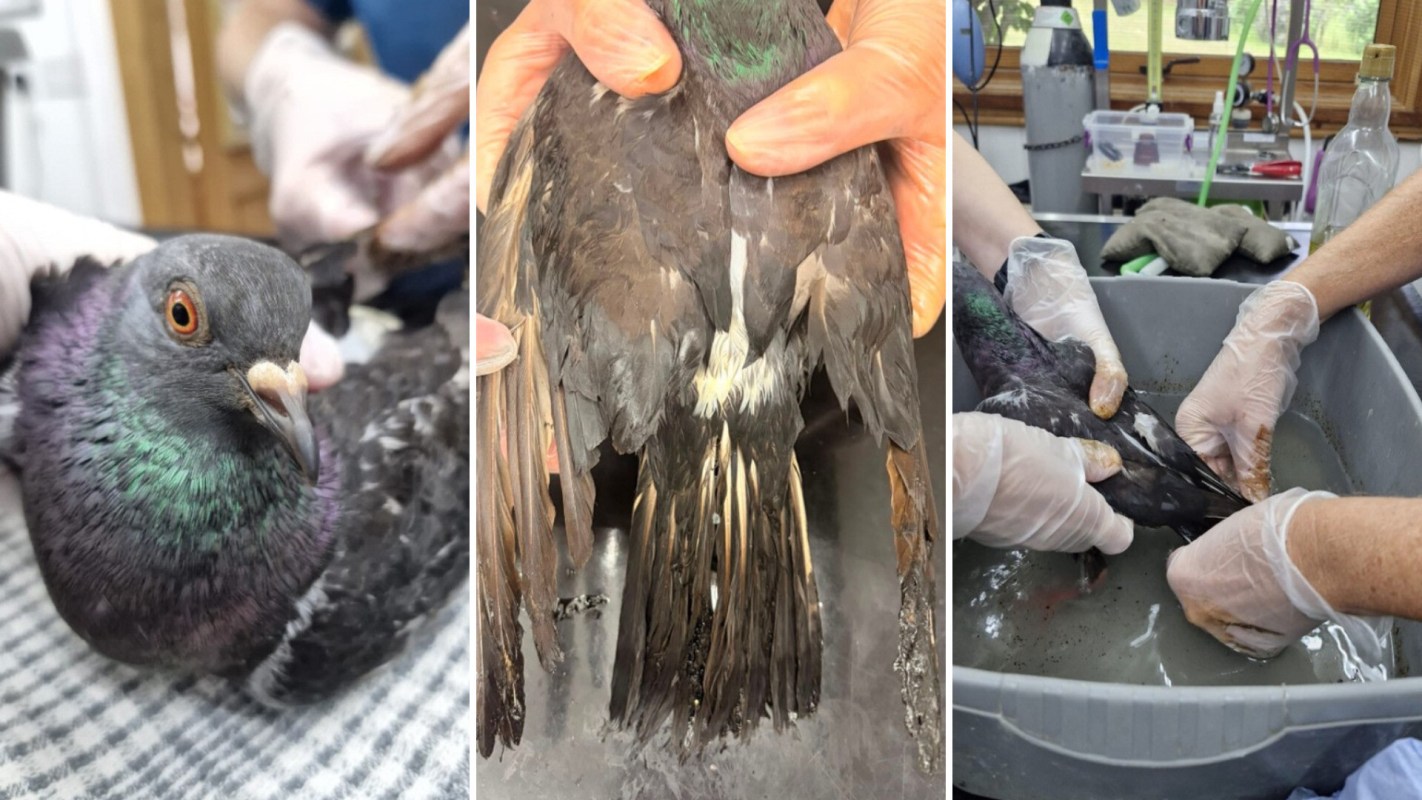
After a pigeon became coated in thick black tar, its rescue operation drew attention online, showing viewers just how severe the damage was and how much careful cleaning it took to help the bird recover.
What happened?
The bird's condition was bleak after its rescue. In a recent post from the Wildlife Aid Foundation, the organization shared a photo of the pigeon whose feathers were, in the rescue's words, "practically cemented together by thick black tar."
WAF added that the damage was so extensive that "surviving in the wild simply wasn't an option."
The rescue organization wrote that its veterinary team has been treating the pigeon with "lots of warm, soapy baths, and some well-earned rest in a cozy incubator."
The group said the tar, alongside injuries to the bird's wings, left him unable to use his feathers properly and made "every movement" painful.
The team wrote that the pigeon is "finally starting to turn a corner," even though "he's still got a few more baths ahead of him." Wildlife Aid added that "with every wash, more of the tar comes away and with it, his chance of returning to the wild grows stronger."
TCD Picks » Quince Spotlight
💡These best-sellers from Quince deliver affordable, sustainable luxury for all




Why does it matter?
Feathers are essential for flight, insulation, and protection. When they become matted with a substance such as tar, a bird may struggle to fly, stay warm, or escape predators. Even basic movement for birds can become exhausting or painful.
Other waste products — including sticky pollutants and petroleum residues — can harm wildlife far beyond large, headline-grabbing spills. A single animal that encounters tar in an urban or suburban setting can end up needing intensive medical care, specialized cleaning, and a long recovery.
Improper disposal, contaminated runoff, and hazardous materials in outdoor spaces can directly affect local animals people see every day, including pigeons.

Get TCD's free newsletters for easy tips, smart advice, and a chance to earn $5,000 toward home upgrades. To see more stories like this one, change your Google preferences here.