


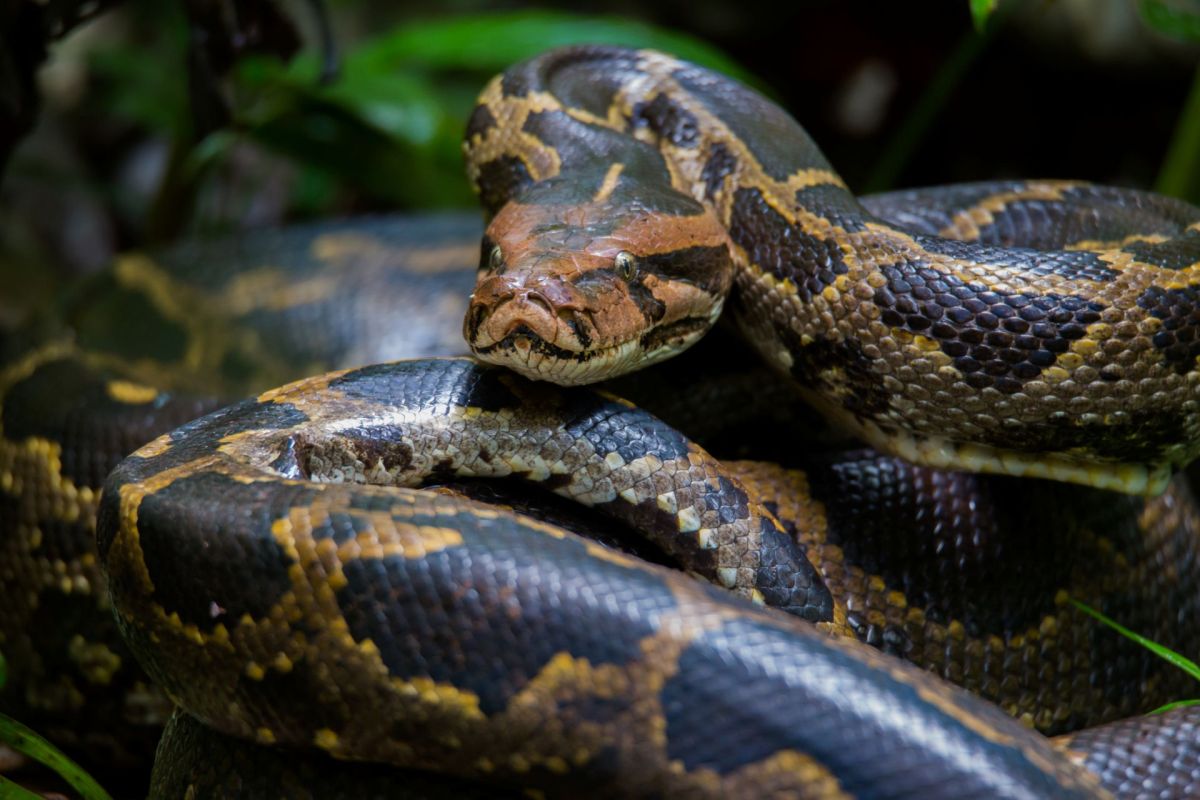
What began as the Jackson family's first official python hunt together became a near-fatal struggle after Carl Jackson grabbed a massive Burmese python and was pulled toward a canal.
Their catch in Big Cypress National Preserve measured 16 feet 10 inches and weighed 202 pounds, making it Florida's second-heaviest wild-caught Burmese python, according to Outdoor Life.
What happened?
According to Outdoor Life, Florida python hunter Carl Jackson was in Big Cypress on Jan. 13 with his wife, Tasha Jackson, and their children, 20-year-old Ryker and 16-year-old Jazzlyn, when he noticed a python track crossing a dirt road.
He said he first figured the snake was about 12 feet long, telling Outdoor Life, "as soon as I grabbed a hold I knew, 'ah crap,' I'd misjudged," he said. "It didn't even try to fight. It just started dragging me toward the canal."
After being dragged through thick brush and over an ant hill, Carl tried to stop the python from wrapping around him. Ryker and Jazzlyn rushed in to help, while Tasha taped the snake's mouth shut. Eventually, the family was able to best the invasive animal.
Only after the family had subdued and killed the snake did its full size become clear. The animal nearly filled the bed of the family's truck. The female snake was officially weighed at 202 pounds, and while it was being skinned, roughly 200 eggs were found inside its body.
TCD Picks » Quince Spotlight
💡These best-sellers from Quince deliver affordable, sustainable luxury for all




The 202 pound figure makes it the second heaviest pythons to ever be found in Florida.
Why does it matter?
Burmese pythons are not native to Florida. Their spread has largely been tied to the exotic pet trade, including snakes that escaped or were released and eventually established a breeding population in the Everglades.
These invasive snakes prey on mammals, birds, and reptiles. And removing just this one 202-pound female also removed 200 eggs from the breeding population.
Roads, canals, and other altered landscapes can also raise the chances of dangerous close contact. In this case, a preserve road, a canal bank, and an invasive predator combined to create a life-threatening situation for one family trying to help control the problem.

Get TCD's free newsletters for easy tips, smart advice, and a chance to earn $5,000 toward home upgrades. To see more stories like this one, change your Google preferences here.







