


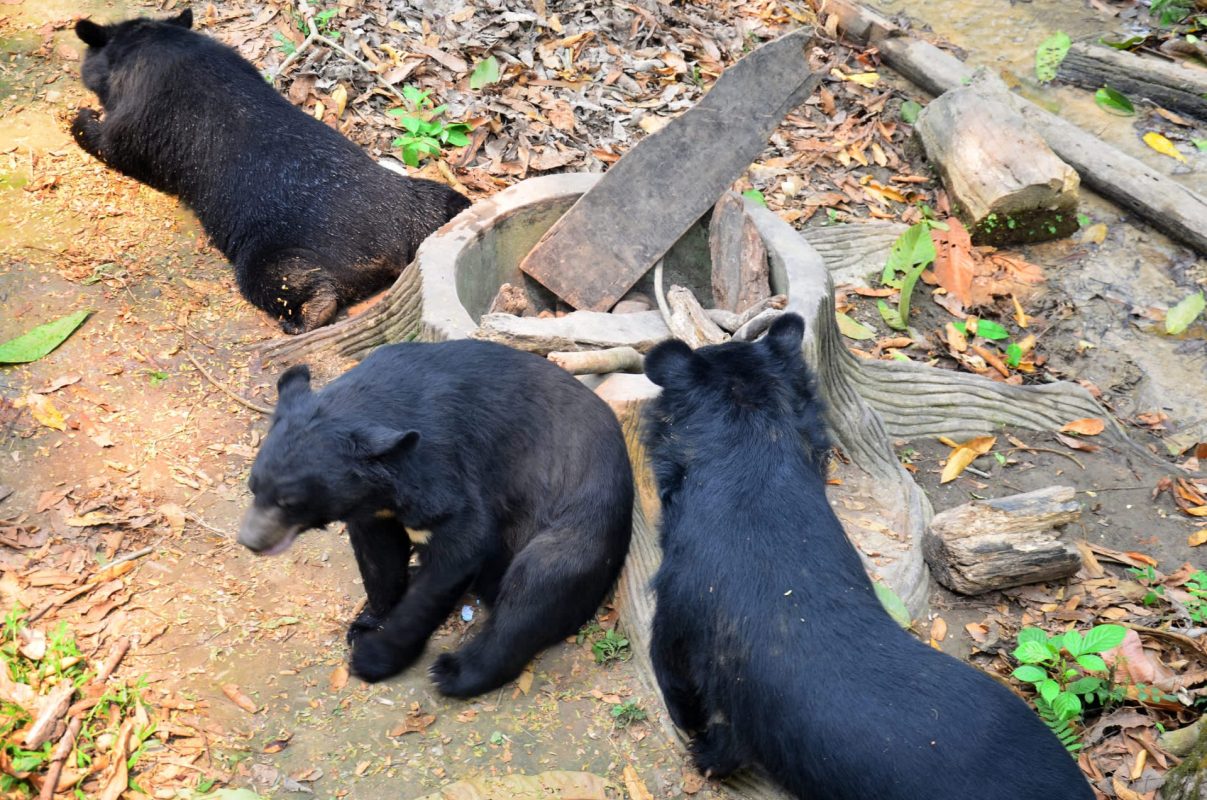
Twenty-seven young moon bears have been removed from an illegal bile farm in Laos in what rescuers described as the largest bear farm rescue in Southeast Asia.
The rescue was carried out by Lao authorities and Free the Bears at a site officials say had been operating as a bile farm while presenting itself as a zoo.
What happened?
According to Mongabay, a Chinese national owned the facility, which was registered as a zoo even though it was being used commercially to extract bear bile, helping it avoid oversight.
After the rescue, all 27 bears were taken to the Luang Prabang Wildlife Sanctuary in Laos, which is run by Free the Bears, Mongabay reported. The organization said the animals are Asiatic black bears, also called moon bears, between 1 and 3 years old and likely were taken from the wild as cubs.
The raid also revealed enough enclosure space for roughly 200 bears, suggesting the operation had been built for far larger expansion. In an image released by Free the Bears, a caged moon bear is seen inside the facility.
Why does it matter?
Bear bile farms remain a major animal welfare and conservation issue across Southeast Asia.
TCD Picks » Quince Spotlight
💡These best-sellers from Quince deliver affordable, sustainable luxury for all




On bile farms, moon bears are often kept in cramped cages while bile is removed from the gallbladder for traditional medicine, Mongabay reported. In addition to causing severe suffering, the practice can drive poaching and put more pressure on vulnerable wild populations.
Chris Shepherd, senior conservation advocate for the Center for Biological Diversity, told Mongabay that "there is no reason to rely on bear bile as there are many legal synthetic and herbal alternatives to bear bile that are equally effective or even better, and therefore the use of bear bile is unnecessary and not critical."
Rehabilitation is also a challenge. Because these bears were reportedly captured as cubs, Shepherd said they missed a critical window for learning survival skills from their mothers. That makes release back into the wild far more difficult.
For readers who want to back rescue and recovery work like this, the TCD Guide has a section on how to donate money to climate causes and support efforts that protect wildlife and habitats.
What are people saying?
Matt Hunt, Free the Bears CEO, described the rescue in blunt terms: "No animal should endure such cruelty." He added, "And we're so glad we can now bring these 27 bears to the safety of our sanctuary where they can join more than 150 other bears rescued over the past 23 years."
Shepherd said conditions inside bile farms are "horrific." He added that some rescued bears are so weakened or injured by confinement that surviving in the wild would be "impossible."

Get TCD's free newsletters for easy tips, smart advice, and a chance to earn $5,000 toward home upgrades. To see more stories like this one, change your Google preferences here.







