


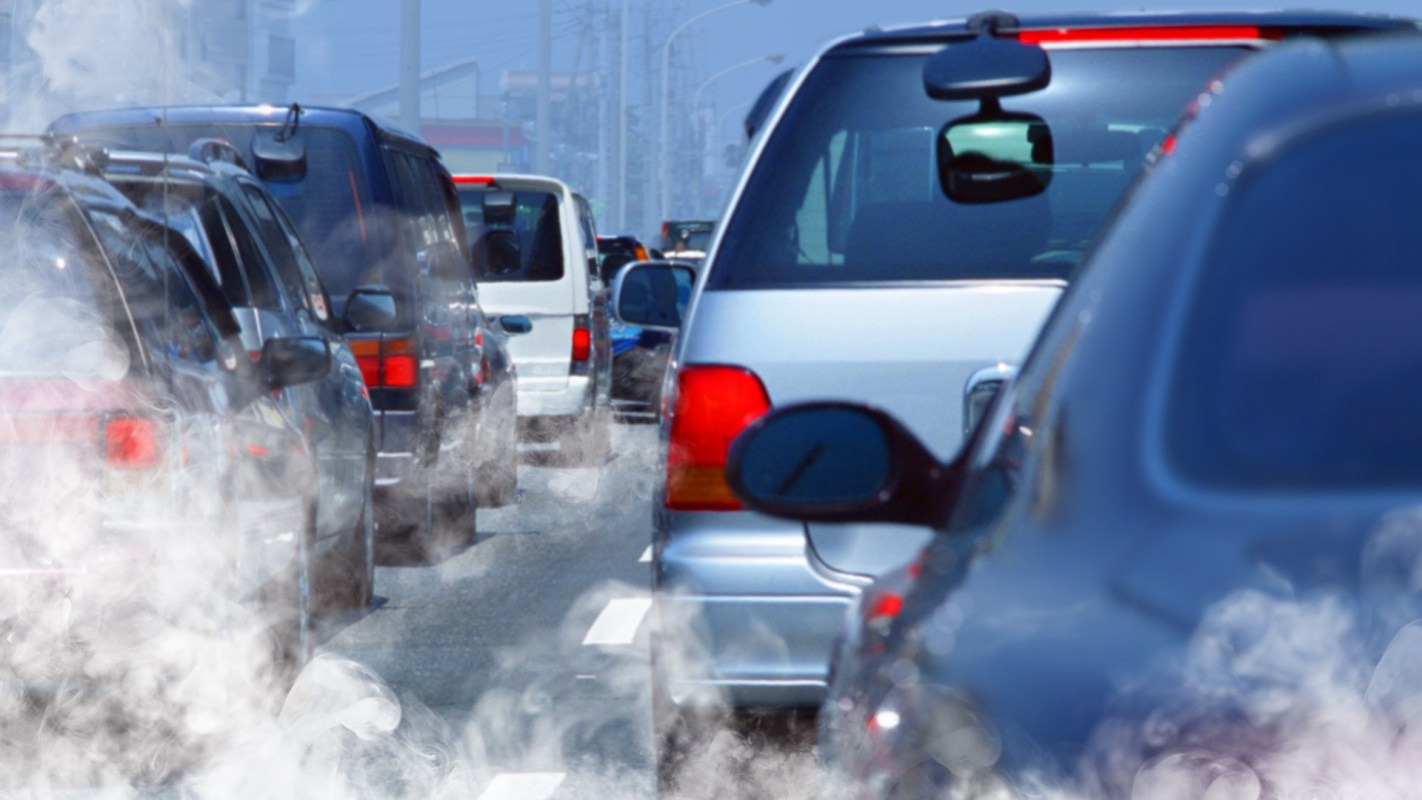
For many Southern Californians, vehicle pollution is part of daily life. A new report says that in San Diego County, it is linked to about one death and roughly one new pediatric asthma case each day.
Tailpipe pollution is also a public health concern, especially for families living near freeways, warehouses, and freight corridors.
What's happening?
A report published by the International Council on Clean Transportation found that vehicle pollution causes more than 8,300 early deaths and about 5,500 pediatric asthma diagnoses annually, KPBS reported.
Josh Miller, one of the study's authors, said the biggest contributors are medium- and heavy-duty vehicles, including 18-wheelers, large-box trucks, transit buses, and school buses. That matters in San Diego, where transportation is the region's largest source of fossil fuel pollution, KPBS reported.
Miller tied that burden to the county's freight footprint. "San Diego County also has the fifth-highest number of warehouses among counties in California," Miller said. "So, there is a very clear connection between the freight infrastructure and activity and the health burden that we're seeing."
Researchers used satellite data and mobile plume-chasing technology to measure pollutants such as NOx, carbon monoxide, and volatile organic compounds, then estimated the resulting health damage.
TCD Picks » Quince Spotlight
💡These best-sellers from Quince deliver affordable, sustainable luxury for all




Why does it matter?
The report points to the everyday consequences of traffic-related air pollution: asthma attacks, missed school days, emergency-room visits, and elevated risks of heart and lung disease.
Children are especially vulnerable because their lungs are still developing, which means repeated exposure can have lasting effects.
Lingzhi Jin, one of the report's researchers, said the places where emissions occur are a major part of the problem. "Emissions happen right along freeways and ports, near freight distribution hubs and in the densest neighborhoods," she said.
The communities facing the greatest burden are often those living closest to heavily trafficked roadways and logistics centers — "which is also why kids living near freeways and freight hubs might end up carrying so much of this asthma burden," Jin added.
Traffic pollution is not distributed evenly, and neighborhoods near freight activity can face a greater health burden than countywide averages suggest.
What's being done?
Researchers said those health harms should ease as zero-emission vehicles replace gas- and diesel-powered models, though they emphasized that the timeline for that shift will be crucial.
"The key questions are really how quickly can we electrify? And, especially, how quickly can we electrify trucks," Miller said. "Those are, really, a disproportionate contributor to air pollution."
Transition efforts are already visible locally. Ahead of California's 2030 fleet-purchase deadline — which KPBS reported will stop state and local agencies from buying new gas- or diesel-powered vehicles for their fleets — the San Diego Metropolitan Transit System has 40 battery-electric buses in service and expects to add nearly two dozen more this year. Also, the Helix Water District in El Cajon unveiled a large charging depot in March.
State policy is part of the push as well. KPBS reported that Gov. Gavin Newsom's new state budget would offer $3,500 in instant rebates for people buying new electric vehicles. Miller also said California could expand incentive programs "to build the case for electrifying trucks" and speed up charging infrastructure.

Get TCD's free newsletters for easy tips, smart advice, and a chance to earn $5,000 toward home upgrades. To see more stories like this one, change your Google preferences here.






