


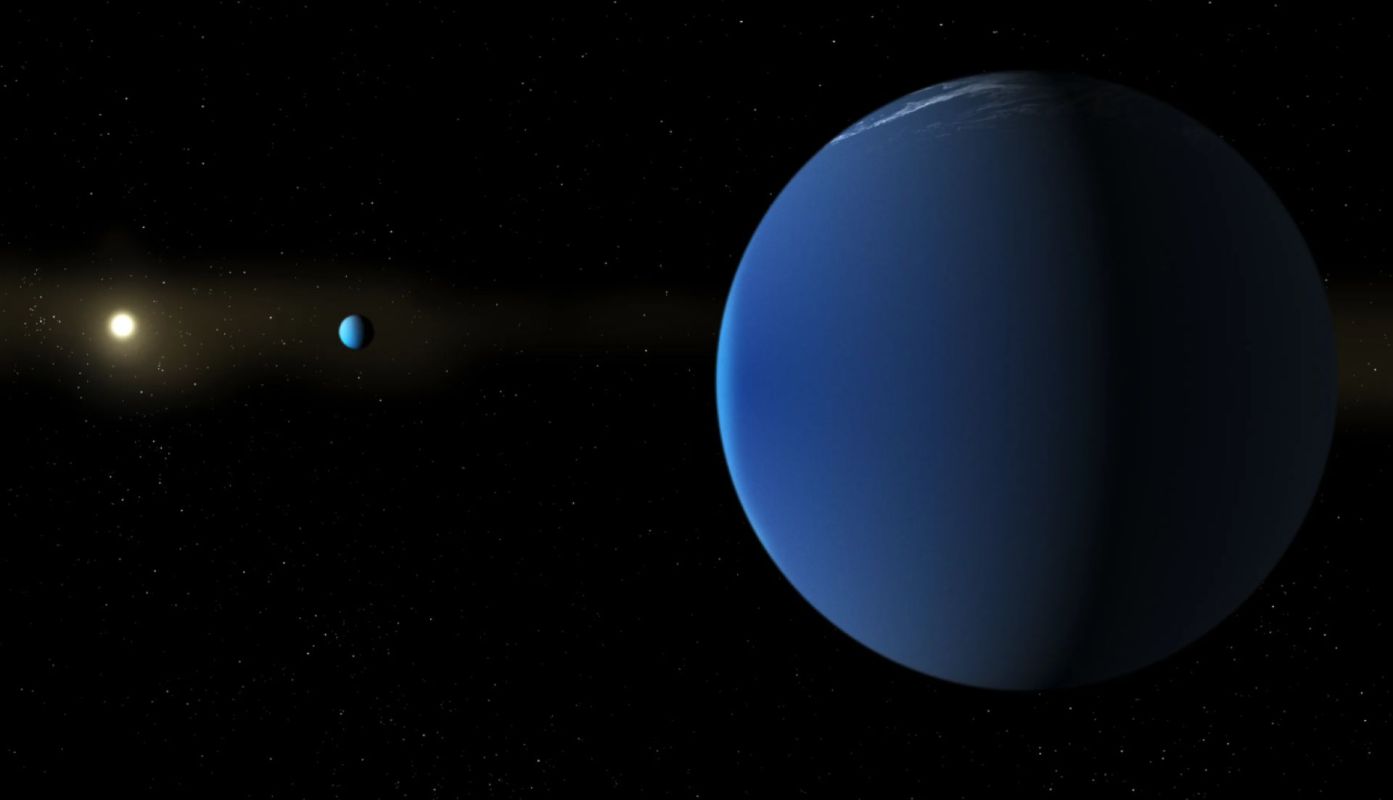
Two newly identified giant exoplanets are roughly Jupiter-sized, yet their material is so diffuse that each is less dense than cotton candy.
As especially extreme examples of the rare "super-puff" class, the planets could give scientists new clues about how some of the strangest worlds in space take shape, according to CBS News.
What happened?
Around TOI-791, a sun-like star in the constellation Volans about 1,110 light-years from Earth, astronomers first spotted the planets with NASA's Transiting Exoplanet Survey Satellite, or TESS, then used ground-based telescopes to measure just how lightweight they are.
They set a mark as the biggest planets ever measured below cotton-candy density, and their years are long by super-puff standards: 139 days for one world and 232 for the other.
In NASA's "cotton candy planets" artwork, the TOI-791 star appears beside the swollen pair, highlighting how large they are despite their low masses.
Scientists suspect the planets are composed mostly of hydrogen and helium, a possibility that future observations from the James Webb Space Telescope could help confirm.
TCD Picks » Quince Spotlight
💡These best-sellers from Quince deliver affordable, sustainable luxury for all




Why does it matter?
Super-puffs make up only a tiny share of the known exoplanet population: out of nearly 6,300 confirmed worlds, fewer than 40 fall into this category.
For comparison, Jupiter can be as much as 35 times denser than these two planets.
Such discoveries give researchers another way to test ideas about how planets form, how they change over time, and how some of them gradually lose material.
With missions including TESS and Webb, scientists are doing more than just finding planets — they are also probing what those worlds are made of and why so many look unlike anything in our own solar system.
What are people saying?
"These two planets have densities comparable to a nice blob of shaving foam fresh from the can," University of Oxford researcher George Dransfield said, per CBS News.
Dransfield said the "cotton candy" label may make people imagine pink planets, but the worlds are more likely to be white or blue, depending on their cloud cover.
"Ultimately, by studying exotic systems containing rare planet types, we add further pieces to the puzzle of planet formation and learn more about our place in the cosmos," he told CBS News.
Jon Jenkins of NASA's Ames Research Center said the real intrigue is that astronomers did not expect planets like these to show up at all: "The main reason these planets are interesting to study is that we didn't expect to see them at all. They represent a puzzle for us to solve about how giant planets like Jupiter and the super-puffs form."

Get TCD's free newsletters for easy tips, smart advice, and a chance to earn $5,000 toward home upgrades. To see more stories like this one, change your Google preferences here.






