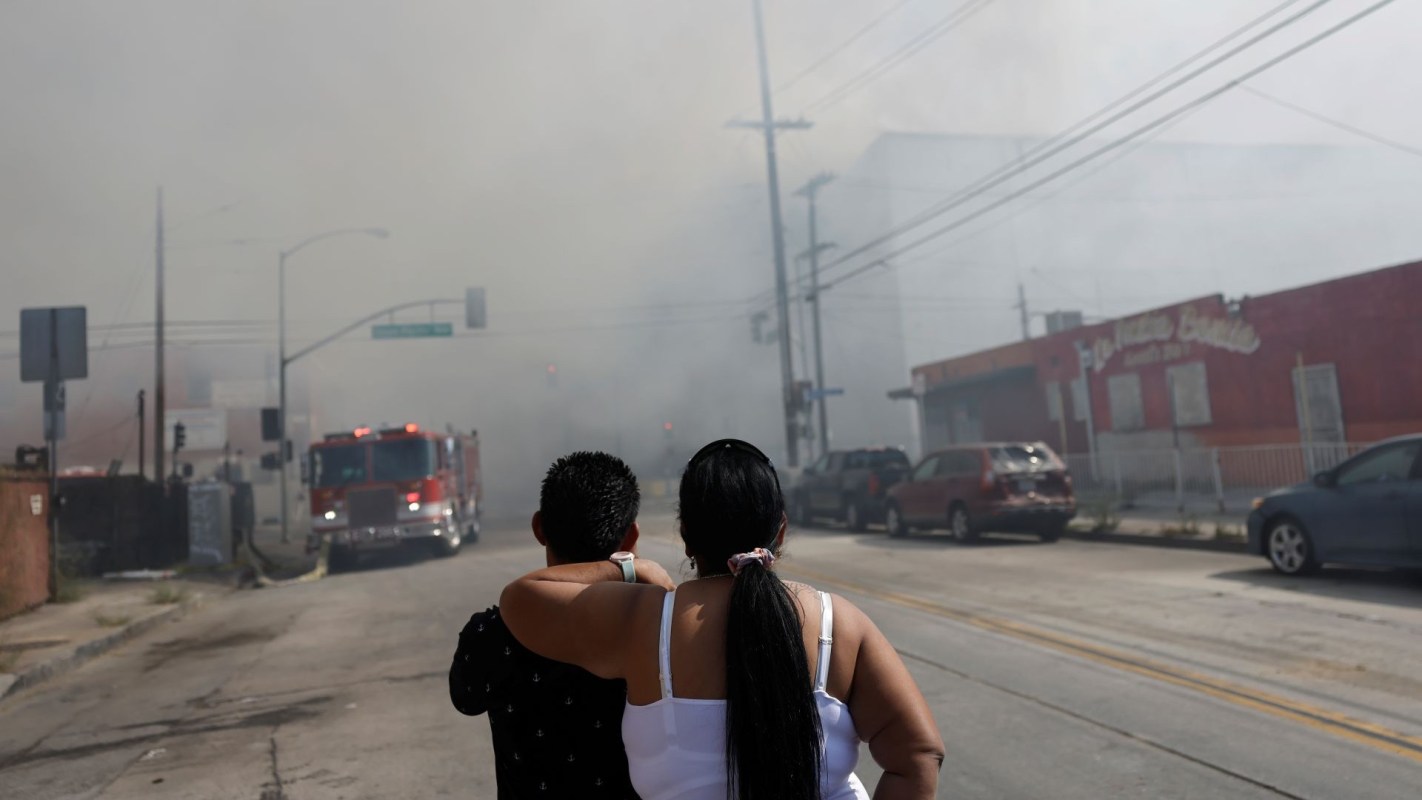
Two Southern California industrial incidents have left residents pressing for answers. Families either had to leave their homes or stay indoors, even though the facilities involved had already failed inspections and were still operating.
The incidents involved toxic smoke in Boyle Heights and a threat of an explosion in Garden Grove.
According to Palo Alto Online, regulators at the state and local levels were aware for years that both sites used hazardous chemicals, had documented issues there, and still signed off on plans or closed out violations before the emergencies occurred.
What happened?
In Boyle Heights, 84-year-old resident Manuel Valle rode through smoke-filled streets, handing out 50 N95 masks to neighbors while a fire burned for days at a Lineage food storage facility.
Anhydrous ammonia, the refrigerant used at the facility, is toxic and can cause severe respiratory harm. Valle rejected officials' claims that the air was not dangerous.
"This is a state emergency. Treat it like a state emergency."
TCD Picks » Quince Spotlight
💡These best-sellers from Quince deliver affordable, sustainable luxury for all




In Garden Grove, the Orange County Fire Authority told 50,000 residents to evacuate because officials feared a tank at GKN Aerospace might explode or release methyl methacrylate, a hazardous chemical. Residents were later given conflicting information about whether any leak had actually occurred.
Local councilwoman Ysabel Jurado said residents do not view such events as isolated emergencies.
"When a major industrial fire happens here, it's not viewed as an isolated incident. Residents see it as part of a larger pattern."
People living near warehouses and industrial plants are asking why businesses with known chemical risks were allowed to continue operating so close to homes, schools, and playgrounds.
Why does it matter?
Residents are questioning whether regulators are preventing danger or simply reacting after communities have already been exposed.
Both facilities had prior violations or other compliance problems on record, but those issues do not appear to have led to safeguards that make nearby families feel protected.
Garden Grove and Boyle Heights are both largely communities of color that already face heavy pollution burdens.
Jane Williams, who leads California Communities Against Toxics, said that "Luck, rather than strong protections," has spared residents from something even worse.
The companies' decisions and gaps in oversight also raise questions about industrial siting. In Lineage's case, the company said it stores food, not hazardous materials, and that it was not responsible for the fire. Except neighbors are still the ones breathing smoke, sheltering in place, or wondering whether the next accident could be worse.
What are people saying?
Residents and local leaders are not hiding their frustration.
Miguel Ocegueda Castillo, who lives near the Lineage warehouse, said: "I don't know what the local government is waiting for — for a tragedy to occur or something more serious or what … on top of what is already going on."
At a Garden Grove City Council meeting, resident Rodrigo Garay held up a blanket and said, "This is what I used for the whole week to sleep on."
Jurado said the issue goes far beyond emergency response alone.
"It's a public health issue, it's an accountability issue, and it's an environmental justice issue."

Get TCD's free newsletters for easy tips, smart advice, and a chance to earn $5,000 toward home upgrades. To see more stories like this one, change your Google preferences here.