


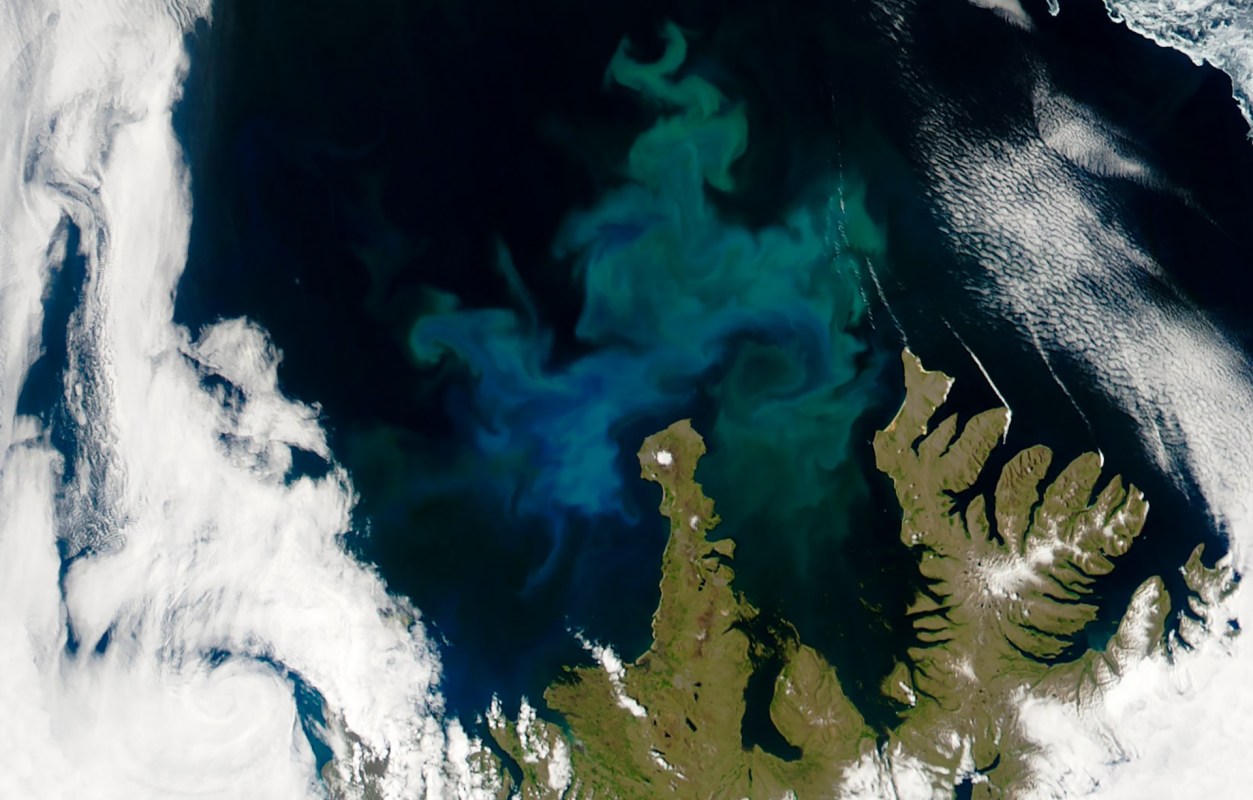
An assessment of Western Europe's waters found that no evaluated plankton region qualified as being in good health.
That has raised concerns because the drifting organisms help sustain fisheries, support coastal economies, and contribute to oxygen production.
What's happening?
Using a newly developed scoring method, scientists assessed plankton conditions across the North East Atlantic, covering waters from Portugal to Norway, to see whether those marine ecosystems could be considered healthy.
But there was a major challenge. Because industrialization had already altered these waters long before monitoring began, researchers do not know what a truly healthy historical baseline would have looked like.
According to Earth.com, the analysis sorted the region into 10 sea-area-and-habitat pairings. Six received a "not good" rating, three were labeled "uncertain," and one could not be scored due to incomplete data. None were rated "good."
At the broader regional level, the Celtic Seas and the Bay of Biscay/Iberian Coast were classified as "not good," while the Greater North Sea was rated "uncertain."
TCD Picks » Quince Spotlight
💡These best-sellers from Quince deliver affordable, sustainable luxury for all




For the study, published in the journal Ecological Indicators, researchers combined 23 plankton monitoring datasets from 13 institutions with satellite records and input from about 40 experts participating through OSPAR, which coordinates marine assessments in the region.
Some of the strongest and most persistent drops were seen in waters over the continental shelf, where both phytoplankton biomass and zooplankton abundance declined. The researchers associated those trends with warmer sea surface temperatures, changing nutrient balances, and lower pH levels.
Why does it matter?
Their small size hides an outsized role. Phytoplankton are responsible for about half of Earth's oxygen production, and plankton more broadly nourish fish populations while helping remove carbon from the atmosphere.
When plankton communities begin to shift, the effects can ripple through food webs, fisheries, and climate systems that people rely on.
Abigail McQuatters-Gollop, professor of marine conservation at the University of Plymouth, emphasized how often they are overlooked.
"I've been studying plankton for more than two decades, but for the most part they are totally under-appreciated," she said.
The findings also linked climate and pollution pressures. In this case, efforts to curb phosphorus pollution appear to have moved faster than reductions in nitrogen, creating an imbalance that may be changing which plankton species are able to thrive.
What's being done?
Researchers have said cutting carbon pollution is crucial, since warming seas repeatedly emerged as a major driver of change. They have also called for stronger controls on nutrient pollution, especially nitrogen, to reduce human pressure on already stressed marine waters.
The researchers said shrinking budgets have left several long-running plankton monitoring efforts paused or at risk. Because some of these records extend back to the 1960s, they are especially useful for detecting gradual ecological changes that might otherwise be missed.
The team also wants better coverage in coastal and estuarine waters, along with more modern tools, including imaging and environmental DNA, so researchers can detect plankton too small for traditional approaches.
"The warning is clear: plankton are changing across some of Europe's most important seas, and those changes matter far beyond the plankton themselves," McQuatters-Gollop said. "They affect food webs, fisheries, carbon cycling and the wider benefits people receive from the ocean."

Get TCD's free newsletters for easy tips, smart advice, and a chance to earn $5,000 toward home upgrades. To see more stories like this one, change your Google preferences here.






