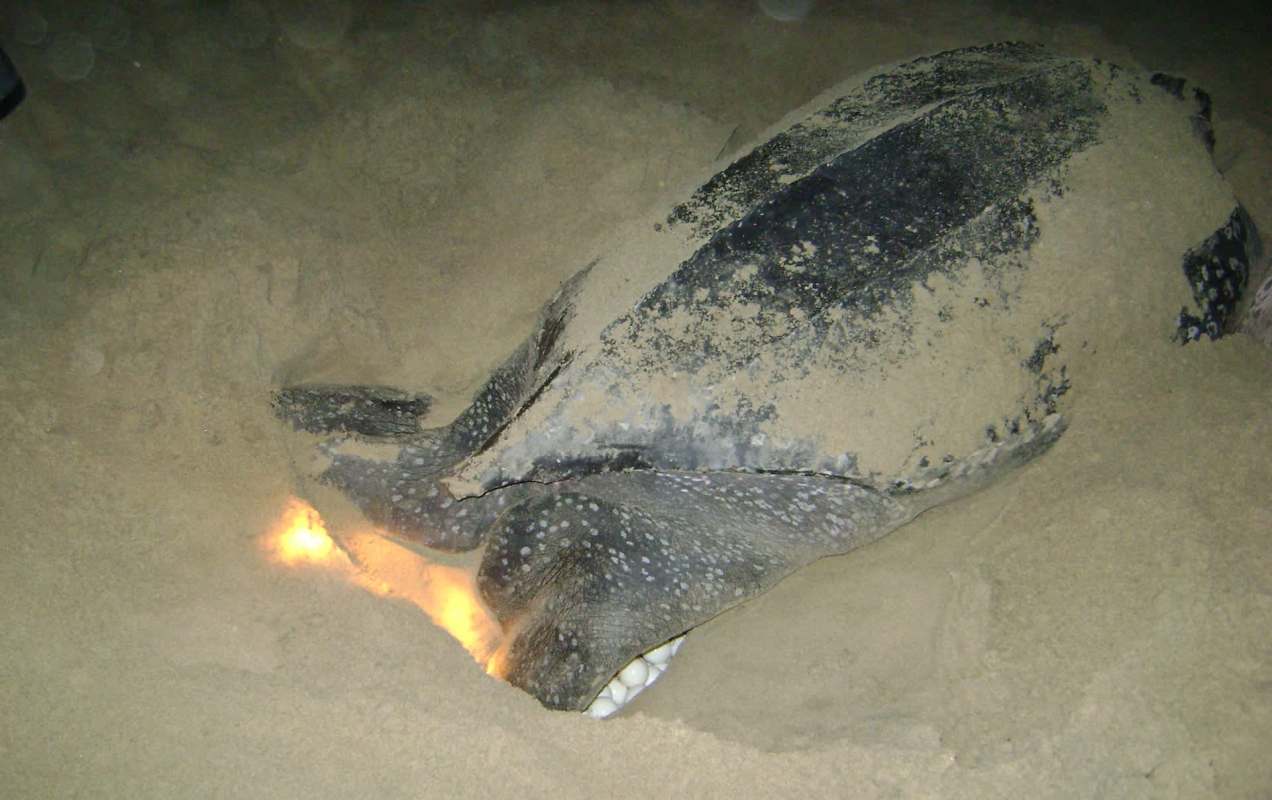
In 2026, biologists at Cape Hatteras National Seashore have already found four nests from endangered leatherback sea turtles. That single-season figure equals the combined total recorded there over the previous 11 years.
Along the Outer Banks of North Carolina, leatherback nesting has long been unusual, so this summer stands out for both local wildlife and the beach communities nearby.
What happened?
According to Island Free Press, the seashore's count of four leatherback nests this season is the most recorded in any year since turtle patrols began on these beaches in the 1980s.
Between 2015 and 2025, just four leatherback nests were logged across the seashore — one in 2022, one in 2023, and two in 2024. The 2026 season has already reached that same total by itself.
Sea turtle activity overall has been strong this season, too. As of June 23, the seashore had tallied 136 nests altogether, made up of 130 loggerhead nests, four leatherback nests, and two green turtle nests.
One of the four leatherback nests was found on Ocracoke Island, while the other three were on Hatteras Island.
TCD Picks » Quince Spotlight
💡These best-sellers from Quince deliver affordable, sustainable luxury for all




Why does it matter?
No other sea turtle grows larger than a leatherback. According to National Geographic, adults can exceed 6 feet in length and weigh up to 2,000 pounds. Rather than the hard shell seen in loggerheads and green turtles, they have a more flexible body covering with leathery, rubbery skin.
Leatherbacks are protected as an endangered species under federal law, and North Carolina sits near the northern edge of where they nest. That helps explain why nests there are much rarer than in places like Florida or the Caribbean.
Because leatherbacks feed mainly on jellyfish and travel vast distances, their health can also reflect broader ocean conditions.
Healthier coastal ecosystems support tourism, recreation, and local economies in places like the Outer Banks, while also helping preserve the wildlife that makes these shorelines so distinctive.
What's being done?
Decades of beach monitoring at Cape Hatteras National Seashore have supported the leatherback population. Nest surveys allow wildlife managers to identify trends, protect nest sites, and respond to rare events such as increased leatherback nesting.
That work also benefits the more common nesting species. With 136 total nests already documented this season, continued tracking gives biologists a clearer picture of how loggerheads, green turtles, and leatherbacks are using North Carolina beaches.
One season does not guarantee a lasting rebound, but four leatherback nests in a single year still represent a milestone.

Get TCD's free newsletters for easy tips, smart advice, and a chance to earn $5,000 toward home upgrades. To see more stories like this one, change your Google preferences here.