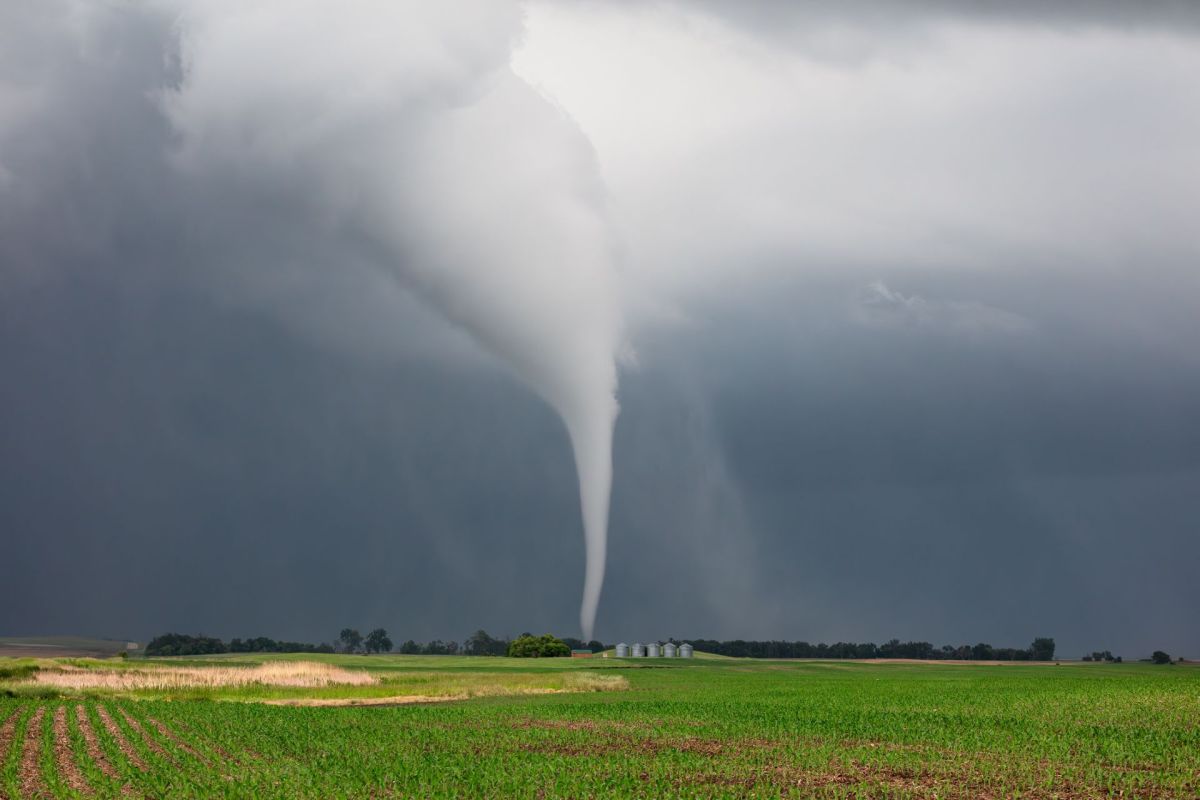
Illinois communities are enduring an exceptionally destructive year: 153 tornadoes have already been confirmed statewide, setting a record even as storm survey teams continue adding to the count.
Families and local governments are still coping with the toll from deadly spring and summer storms, which damaged homes, knocked out power across wide areas, and made rebuilding more costly.
What happened?
By June 23, the National Weather Service had verified 153 tornadoes in Illinois, Capitol News Illinois detailed for NPR Illinois, putting the state at a new annual high before the year was even halfway over.
The state had stayed below 74 tornadoes in any calendar year after 2006 until recent years began pushing that figure much higher.
State climatologist Trent Ford said improved reporting technology helps explain part of the long-term rise, though not all of it.
"We do see an increasing trend in tornadoes that is possibly attributed to climate change within the Midwest, but it's a very small increase," Ford said. "It's not a doubling of the frequency; that's not how climate change works."
TCD Picks » Quince Spotlight
💡These best-sellers from Quince deliver affordable, sustainable luxury for all




This year's total includes five confirmed EF-3 tornadoes. Among them were a March 10 storm in Kankakee County that killed three people and a June 22 tornado in Jefferson County that killed two more.
Why does it matter?
Extreme weather disasters threaten lives and livelihoods by destroying homes, disrupting power and communications, shutting down businesses, and making it harder for people to access shelter, medical care, and insurance support.
That creates a serious public health and safety concern while placing major strain on household finances, local infrastructure, and state budgets.
Ford noted that stronger outbreaks, early spring storms, and repeated severe weather events can leave both urban and rural areas struggling to get back on their feet, per Capitol News Illinois.
Those burdens could grow if federal disaster aid becomes more difficult to obtain.
Capitol News Illinois, citing a Politico analysis, reported that requests from Democrat-led states were approved only 23% of the time during the first year of President Donald Trump's second term, compared with 89% for Republican-led states. The analysis also found that blue-state requests took about twice as long to process.
What's being done?
Gov. JB Pritzker has been visiting affected communities and said the state expects to seek federal help for the June tornadoes through FEMA or the U.S. Small Business Administration, Capitol News Illinois reported.
The report added that low-interest SBA emergency loans have already been approved in some cases for businesses with uninsured damage.
Pritzker said the immediate priority is recovery work.
"We've got to make sure that we're literally clearing the streets, restoring power, all the things that need to be done immediately," he said. "Then we start to do an assessment with the local emergency management teams."
Preparedness is especially important in rural communities, where fewer shelters and weaker broadband access may create additional challenges.
Ford also emphasized that disaster recovery depends on cooperation at every level of government.
"That system is really important for communities be able to get back on their feet, for people to be able to rebuild," he said, "so it's extremely important that all forms, local, state, federal government are working together and in good faith."

Get TCD's free newsletters for easy tips, smart advice, and a chance to earn $5,000 toward home upgrades. To see more stories like this one, change your Google preferences here.