


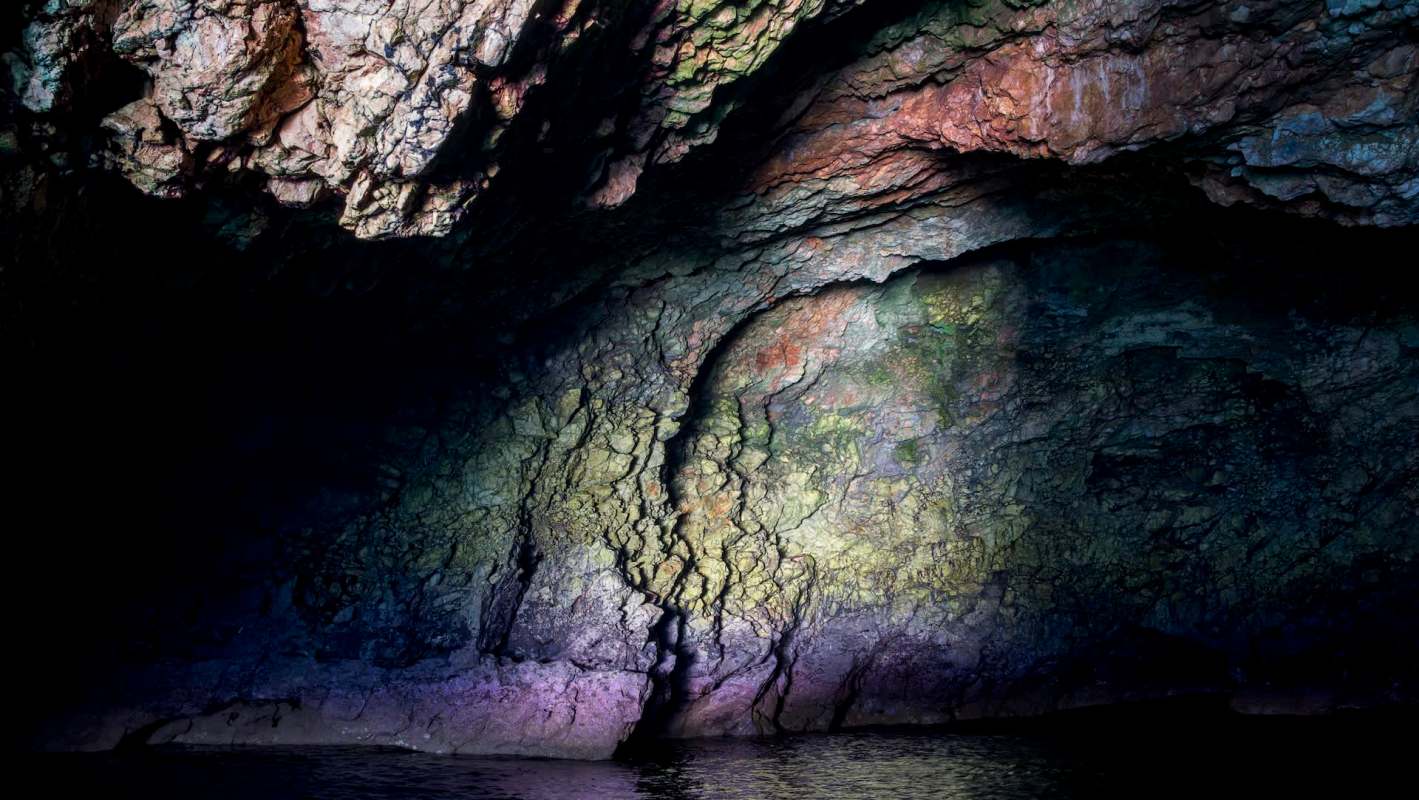
Researchers have, for the first time, recovered ancient human DNA directly from cave walls, with one key sample coming from a small red painted mark in Portugal.
The finding suggests prehistoric caves may preserve genetic traces left by people who painted there, touched the surfaces, or later moved through those spaces, giving scientists another way to study ancient rock art sites.
What happened?
To find out whether cave surfaces could hold ancient human DNA, researchers in Spain and Portugal sampled both painted areas and nearby bare stone. As National Geographic reported, the team collected 54 samples from 24 rock art panels and adjacent unpainted walls in 11 caves.
Only a few of those samples produced ancient human DNA. One of the most striking results came from a plain red dot in Portugal's Escoural Cave, identified as Panel 11.
That pigment was covered by calcite, a layer that likely helped protect the DNA over thousands of years. The genetic material was linked to a Homo sapiens individual who lived between 4,000 and 5,000 years ago, and perhaps much earlier.
Lead author Alba Bossoms Mesa, a doctoral researcher at Germany's Max Planck Institute for Evolutionary Anthropology, said she was surprised by the result.
TCD Picks » Quince Spotlight
💡These best-sellers from Quince deliver affordable, sustainable luxury for all




"I was very skeptical. I thought, 'This is too good to be true,'" she said. "There was always this waiting for the other shoe to drop, for something to go wrong. But no, it didn't. It's kind of amazing, I couldn't believe it."
The researchers said the result does not prove they found the artist's DNA. It may have come from the painter, from someone helping with the work, or from a person who touched the wall long afterward.
Why does it matter?
Until now, archaeologists have usually relied on bones or cave sediments to recover ancient DNA. If rock walls can preserve it too, researchers may gain a new way to learn who used these places and when.
This type of analysis could help answer longstanding questions about who made certain cave markings and whether some disputed artworks were created by Homo sapiens or Neanderthals.
Genevieve von Petzinger, a rock art specialist and Explorer with the FIRST-ART Team, said the breakthrough could open major new possibilities.
"It is now possible for researchers to recover DNA from somebody who leaned on a wall 20,000, 30,000, or 40,000 years ago—isn't that crazy?!" she said.
There are still limitations. The process is destructive, the success rate remains low, and some samples contain mixed human and animal DNA, making contamination a serious concern.
Scientists involved in the study, along with outside experts, have welcomed the findings while also stressing that the result should not be overstated.
Hipólito Collado Giraldo, an archaeologist and rock art specialist with the Extremadura Government in Spain, said, "For many years, researchers have been trying to achieve this goal, and until now it had remained beyond our reach."
Paleogeneticist Pere Gelabert of the University of Vienna called the research promising because "Simply identifying the biological sex opens a new path for the study of cave art."
At the same time, paleogeneticist Enrico Cappellini of the University of Copenhagen urged restraint.
"However, we must remain cautious, as authentic ancient human DNA was successfully recovered from only a few of the many rock art paintings sampled across the sites," he said.

Get TCD's free newsletters for easy tips, smart advice, and a chance to earn $5,000 toward home upgrades. To see more stories like this one, change your Google preferences here.






